

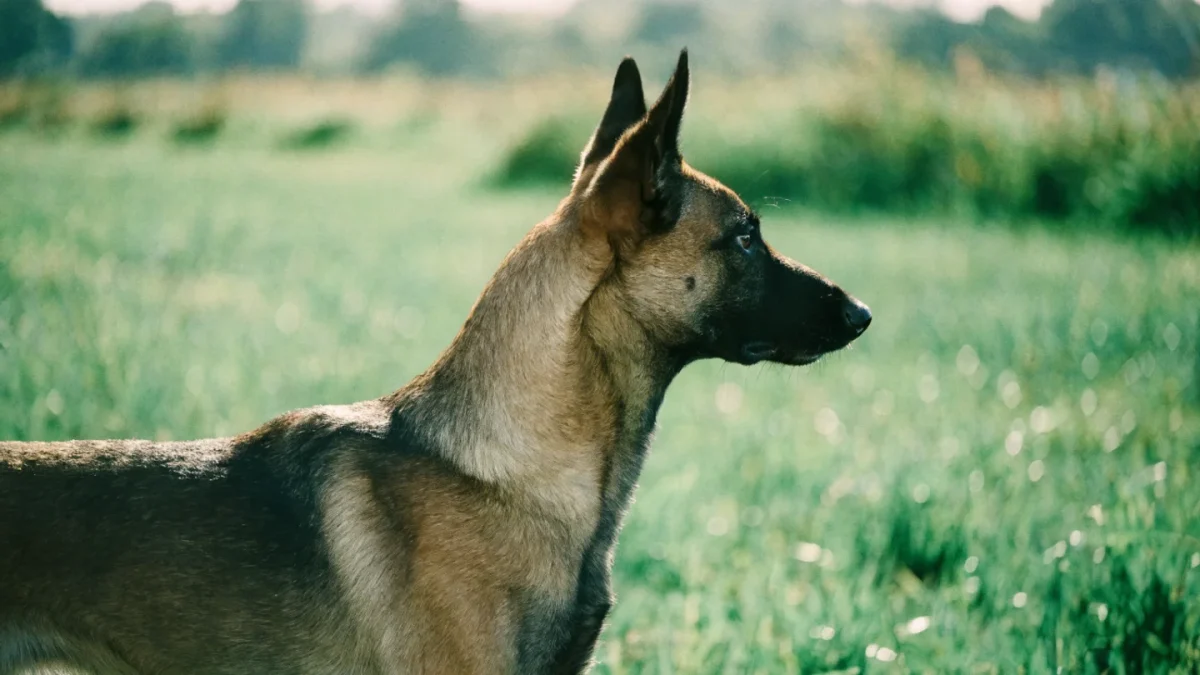
Here's something that surprises almost everyone who encounters the four Belgian Shepherd varieties side by side: the Malinois doing police work in airports, the silky Tervuren in the breed ring, the jet-black Groenendael at the agility trial, and the rough-coated Laekenois that most people have never heard of — they're genetically the same dog. Same breed, same core working temperament, same behavioral architecture. The coat is the costume. The dog underneath is identical.
That's not a simplification. Adolphe Reul said as much in 1891 when he surveyed Belgium's native shepherd dogs and argued they were one breed with regional variations. Modern genetic analysis backs him up. What separates the four varieties isn't biology — it's a handful of coat-type genes, a century of breed-club politics, and the fact that the United States registers them separately while most of the world classifies them as one.
Understanding the genetics here matters practically. If you're testing a Malinois for hereditary conditions, the relevant research covers all four varieties — and a condition found in Tervurens is almost certainly relevant to your dog. The coat is a detail. The genome is the story.
One Breed, Four Coats
The Belgian Shepherd exists in four recognized varieties, each named after the Belgian town or region where it was most concentrated:
Malinois (from Mechelen/Malines): Short, straight fawn coat with black overlay and black mask. This is the variety that dominates modern working-dog programs worldwide.
Tervuren (from Tervuren): Long fawn coat with black overlay and black mask. Genetically, a Tervuren is a long-haired Malinois. The coat length difference is controlled by a single gene — the FGF5 gene, where the recessive allele produces long hair.
Groenendael (from Groenendael): Long solid black coat. Same structure and drive as the Tervuren, differentiated by the dominant black coat color.
Laekenois (from Laeken): Rough, wire-textured fawn coat. The rarest variety, with a coat texture determined by additional coat-type modifiers that produce the distinctive harsh, dry feel.
The genetic distance between these four varieties is minimal. They share behavioral predispositions, structural characteristics, health profiles, and working capacity. The differences are cosmetic — literally skin-deep.
Coat Color Genetics
The Malinois fawn-with-black-overlay pattern involves several interacting loci:
A locus (ASIP gene): Controls the agouti pattern — the distribution of fawn and black pigment across individual hairs. The sable pattern (Ay) produces the fawn base with varying amounts of black overlay that characterizes both Malinois and Tervuren.
E locus (MC1R gene): The dominant allele (E) allows eumelanin expression, producing the black mask, ear tips, and hair overlay. Dogs must carry at least one E allele for the black mask to appear.
K locus (CBD103 gene): The wild-type allele (ky) allows the agouti pattern to express. This is standard in Malinois. The dominant black allele (KB) at this locus produces the solid black coat of the Groenendael.
L locus (FGF5 gene): Short coat (L) is dominant over long coat (l). A Malinois is L/L or L/l at this locus. A Tervuren is l/l. This means two short-coated Malinois that both carry the recessive long-coat allele can produce long-coated (Tervuren-type) puppies. How registries handle this varies: some register them as Tervuren, others as Malinois with a coat fault.
Health-Relevant Genetic Markers
The four varieties share most health predispositions, reflecting their shared gene pool:
- Epilepsy: Idiopathic epilepsy occurs across all Belgian Shepherd varieties. Research has identified the ADAM23 gene as a common risk gene for canine epilepsy, and genome-wide association studies have mapped risk loci on chromosomes 14 and 37 in Belgian Tervuren and Sheepdogs. However, the condition is highly polygenic with low penetrance, and current genetic tests identify risk alleles rather than providing definitive carrier/clear results.
- Hip and elbow dysplasia: Polygenic inheritance. Screening both parents through standardized evaluation programs reduces incidence but cannot eliminate it.
- Progressive retinal atrophy (PRA): Has been documented in the breed. DNA testing can identify carriers for some forms.
- Gastric dilatation-volvulus (bloat): A risk in all deep-chested breeds, including Belgian Shepherds. Genetic predisposition is suspected but the specific markers are not yet characterized.
- Degenerative myelopathy (DM): The SOD1 gene mutation associated with DM has been identified in Belgian Shepherds. DNA testing is available and recommended for breeding stock.
The Registration Split
The history of the Belgian Shepherd explains why the classification differs across countries. The Federation Cynologique Internationale (FCI) and most national kennel clubs outside North America register all four as one breed — Belgian Shepherd Dog — with four varieties that can interbreed within the same studbook. The American Kennel Club registers the Malinois, Tervuren, and Groenendael as three separate breeds (with the Laekenois added most recently in 2020), each with its own studbook.
This registration difference has practical implications. In FCI countries, crossing a Malinois with a Tervuren produces registerable puppies classified by coat type. In the United States, the same cross produces unregisterable offspring. Over time, this has created slight genetic divergence between the American and European populations of each variety — particularly in the Malinois, where American working-line breeding has increasingly prioritized operational drive characteristics.
What Genetic Testing Tells You
The Belgian Malinois breed guide covers the breed's full health profile. From a genetics perspective, DNA testing can identify coat color genotype (useful for predicting litter outcomes), carrier status for testable recessive conditions, and parentage verification. What it cannot yet predict reliably is working drive, temperament, or susceptibility to complex polygenic conditions like epilepsy and bloat. Those remain areas where pedigree analysis and breeder knowledge supplement what the laboratory can measure.
Frequently Asked Questions
Can a Malinois and Tervuren produce puppies together?
Genetically, yes — they're the same species and breed. Whether those puppies are registerable depends on the kennel club. FCI-affiliated registries allow intervariety breeding and register offspring by coat type. The AKC treats them as separate breeds, so AKC-registered crosses are not standard practice.
If the four varieties are genetically identical, why do they behave differently?
They largely don't. Behavioral differences between varieties are primarily the result of selection pressure within breeding programs, not genetic divergence. The Malinois has been selectively bred for maximum working drive for decades, particularly in KNPV and military programs, which has concentrated high-drive behavioral genetics in that variety's working lines. Tervuren and Groenendael breeding programs have historically placed more emphasis on conformation and moderate temperament.
Should I DNA-test my Belgian Malinois?
If you plan to breed, yes — carrier screening for DM and PRA is responsible practice. For pet owners, a DNA panel provides useful health information and confirms the dog's genetic identity. Breed identification tests are less meaningful for this breed since the four varieties are genetically nearly indistinguishable beyond coat genes.