

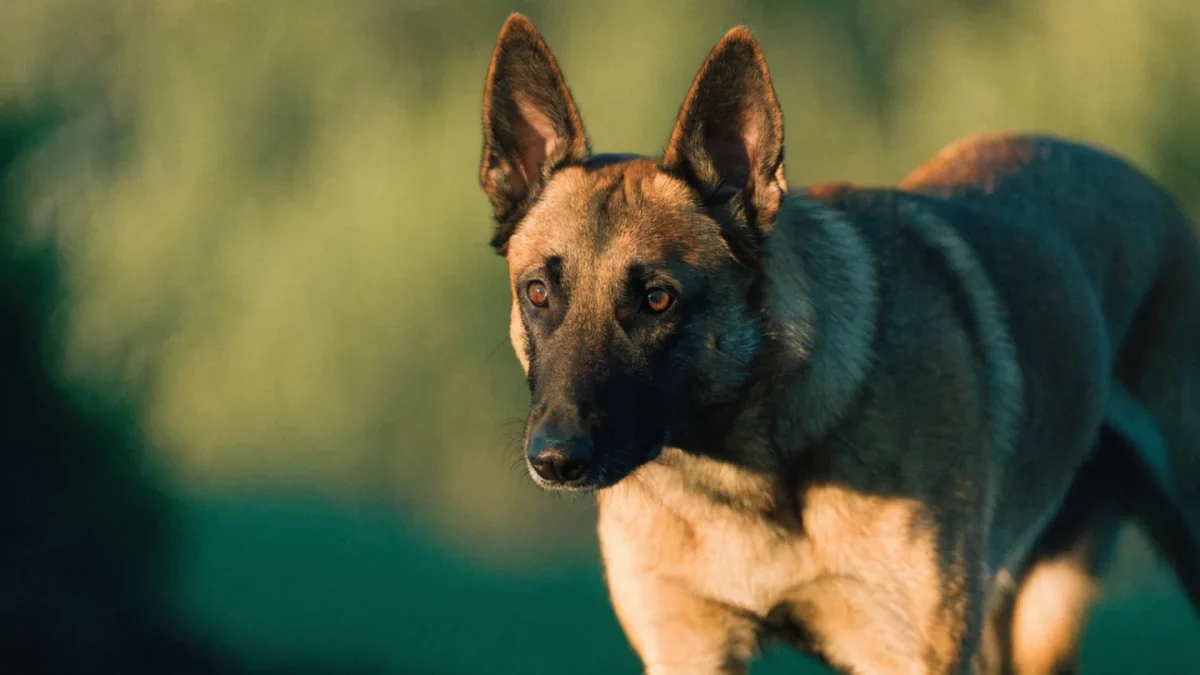
Is the Belgian Malinois the most trainable dog breed? Yes. Is it also one of the most dangerous breeds in the wrong hands? Also yes. Those two sentences are not in tension — they're the same sentence, because the traits that make the Malinois exceptional at protection sport, military work, and detection tasks are the exact same traits that make it genuinely risky when placed with an owner who isn't prepared for it. "Highly trainable" and "dangerous in the wrong hands" don't contradict each other. They describe the same animal from different angles.
The Belgian Malinois temperament is not a moderate version of other working breed personalities. It occupies its own category — an intensity level that experienced trainers describe as "drive" rather than mere energy. Understanding the difference between those two words is the single most important thing anyone considering this breed can do.
Energy vs. Drive: The Distinction That Matters
A high-energy dog wants to move. A high-drive dog wants to work. The difference plays out in every aspect of daily life.
A Labrador Retriever has high energy — give it a swim and a game of fetch, and it'll nap on the couch contentedly. A Belgian Malinois has high drive — give it a swim and a game of fetch, and it'll stare at you afterward, waiting for the actual work to begin. The physical activity was the warm-up. The dog is ready for the purpose part now.
This drive expresses across three channels that trainers typically categorize separately but that operate simultaneously in the Malinois:
Prey drive is the impulse to chase, grab, and possess moving objects. In the Malinois, it's explosive and fast-triggering. A squirrel crossing a yard, a ball rolling across a floor, a child running in a park — all activate the same neural circuit, and the response comes at a speed that leaves handlers with very little reaction time.
Defense drive is the instinct to protect territory, handler, and self. The Malinois has a natural suspicion of unfamiliar people and environments that, when properly managed through socialization, produces a watchful but controlled dog. Without that socialization, defense drive turns into reactivity — barking, lunging, snapping at things the dog perceives as threats, which in an under-socialized Malinois can be nearly everything.
Pack drive is the desire to work cooperatively with a handler. This is the Malinois's saving grace and the reason the breed is trainable despite its intensity. A Malinois with strong pack drive will endure frustration, suppress impulses, and perform complex behaviors for the reward of handler engagement alone. The bond between a Malinois and its primary handler is one of the tightest in the domestic dog world.
The Handler Bond
Most breeds like their owners. The Malinois locks onto one person with a focus that borders on obsession. This handler bond is the foundation of everything the breed can accomplish in working roles — and the source of significant challenges in household life.
A bonded Malinois tracks its handler's movements, mood, and body language with uncanny precision. Experienced handlers describe the feeling of being "read" by their dog — the Malinois notices shifts in breathing, posture, and vocal tone that other breeds simply don't register. This sensitivity makes the breed extraordinarily responsive to skilled handling. It also means that an anxious, frustrated, or inconsistent handler produces an anxious, frustrated, and inconsistent dog. The Malinois mirrors what it receives.
The flip side of intense bonding is separation difficulty. Many Malinois struggle when separated from their primary handler, not in the whimpering way of a Cavalier King Charles Spaniel, but in a frantic, destructive, high-arousal way that can include barrier destruction, escape attempts, and self-injury. Building independence and crate comfort early is not optional with this breed — it's structural.
Comparing Temperaments: Malinois and Its Closest Relative
The comparison people make most often is to the German Shepherd, and it's worth addressing directly because the two breeds share working roles while differing substantially in temperament.
The German Shepherd's steadier temperament makes it what trainers often call a "middle-of-the-road" working dog — enough drive to perform demanding tasks, enough settledness to function in a household without constant management. The German Shepherd's off switch, while not automatic, is accessible.
The Malinois sits further along the intensity spectrum. Higher arousal baseline. Faster trigger. Less natural inclination to settle without explicit training to do so. Where the German Shepherd may tolerate a boring afternoon with mild restlessness, the Malinois is already problem-solving its way through a crate, a fence, or a door.
Neither temperament is superior. They serve different applications. But the difference explains why military and law enforcement agencies that previously used exclusively German Shepherds have increasingly shifted to Malinois for specific roles requiring speed, endurance, and sustained intensity over long operational periods.
Reactivity and Arousal
One of the most misunderstood aspects of Malinois temperament is the breed's arousal cycle. The Malinois goes from calm to full activation faster than almost any other breed, and — critically — it comes back down from that arousal state much more slowly.
A doorbell rings. The Malinois is at the door in under a second, fully alert, barking, and physically ready to confront whatever is on the other side. The visitor enters, is identified as friendly, and the situation resolves. Most breeds settle back to baseline within a few minutes. The Malinois may remain in an elevated state for 20 to 30 minutes, pacing, panting, and looking for the next thing to react to. That slow decompression is physiological, not behavioral — the dog's nervous system takes time to downregulate after activation.
Understanding this cycle is essential for managing the breed. Stacking arousal events — a visitor followed by a car ride followed by a training session — can push a Malinois into a state of chronic overstimulation where rational behavior breaks down. Experienced handlers deliberately build decompression time into the dog's schedule.
Socialization: Non-Negotiable
Every breed benefits from socialization. For the Malinois, it's the difference between a manageable dog and an unmanageable one.
The critical socialization window — roughly 3 to 16 weeks of age — determines how the dog processes novel stimuli for the rest of its life. A Malinois puppy exposed to a wide range of people, environments, sounds, surfaces, and situations during this period develops a framework for evaluating new experiences as normal rather than threatening.
A Malinois that misses this window doesn't just become shy. The breed's combination of high defense drive and physical capability means an under-socialized adult Malinois can be genuinely dangerous — reactive to strangers, aggressive toward other dogs, and triggered by everyday environmental changes. This isn't fear aggression in the trembling sense. It's a confident dog making rapid defensive decisions based on an inadequate frame of reference.
Socialization doesn't stop at 16 weeks. Ongoing exposure to varied environments and people throughout adolescence and into adulthood maintains the social flexibility that early work establishes.
What Living With This Temperament Actually Looks Like
Daily life with a well-managed Malinois involves structure that most people would find exhausting. Morning training or work session. Midday engagement — puzzle work, scent games, structured interaction. Afternoon physical exercise with a purpose-driven component. Evening settle training.
The in-between moments aren't restful in the way they are with calmer breeds. Even a well-exercised Malinois maintains a baseline alertness that means it's always processing its environment. You'll notice the ears tracking sounds. The head turning toward movement outside windows. The body posture that says "resting" to an observer but "ready" to anyone who knows the breed.
This isn't a breed that coexists with your life. It restructures your life around its needs. For the right owner — someone who wants an active partnership with an animal that operates at a level of intensity most dogs never approach — that restructuring is the appeal, not the cost.
For more on the full breed picture, including health, history, and practical living advice, see the complete Belgian Malinois breed guide.