

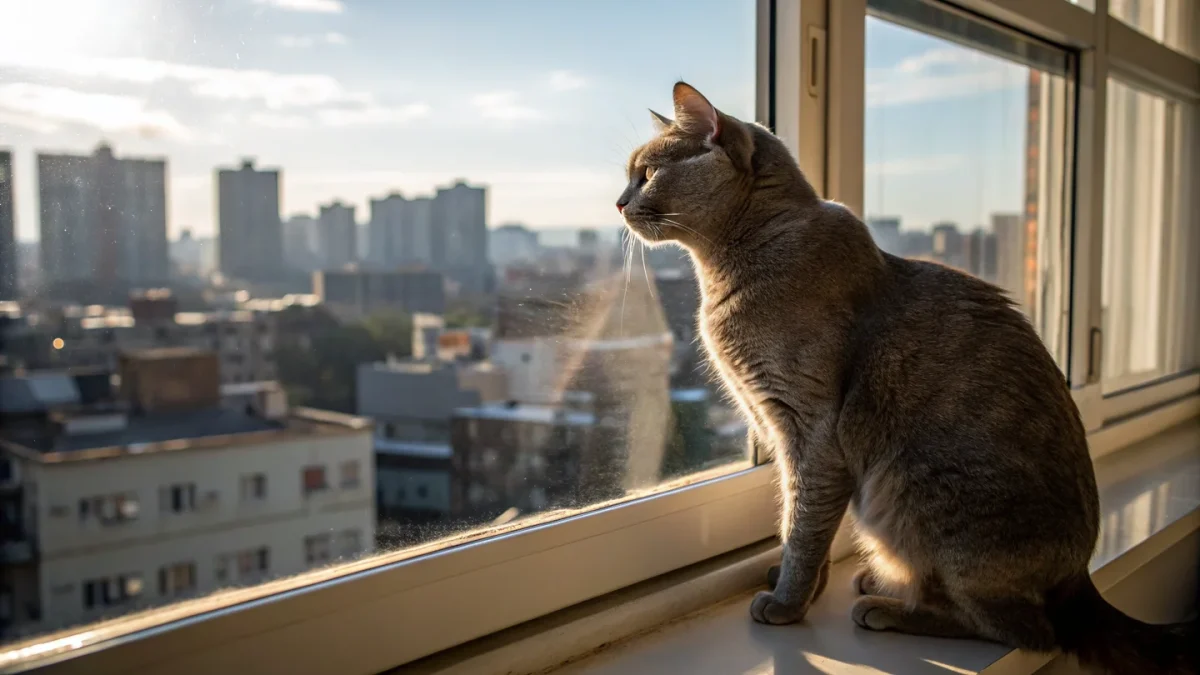
Apartments introduce specific constraints: limited floor area, often limited vertical space, thin walls that transmit sound, no garden access, and the social dynamics of shared buildings where a vocal cat can create neighbor tension. The right cat for an apartment isn't just "a small cat" — it's a cat with the temperament to be content in a stimulating-limited indoor environment.
For the complete decision framework, choosing the right cat breed covers all variables. This list focuses specifically on the apartment context.
What Makes a Breed Apartment-Suitable?
- Low-to-moderate energy: High-energy breeds in small spaces become destructive or stressed
- Quiet voice or minimal vocalization: For neighbor consideration and your own sanity
- Content without outdoor access: Not all cats adapt equally well to permanent indoor life
- Independent enough to manage when you're out: Most apartment owners work outside the home
1. British Shorthair
Probably the most consistently apartment-suitable breed. Calm, quiet, self-sufficient, and not prone to pacing or restlessness in limited space. They're content to settle, don't need extensive territory to feel secure, and handle moderate solitude well. Their laid-back personality is genuine, not just slow-moving — they're comfortable rather than bored. The British Shorthair breed profile covers the breed's origins, the dense plush coat, and what the independent temperament looks like in practice.
2. Russian Blue
The Russian Blue is quiet, reserved, and bonds strongly with its home environment. Once settled, they're calm and self-contained. The shyness with strangers means apartment visitors are ignored rather than engaged with, which suits many apartment-dwellers. The Russian Blue breed profile covers the allergen claims, double coat, and what the reserved temperament looks like in practice. Good for: quieter households, people who work from home part-time.
3. Ragdoll
Ragdolls are large but low-energy and quiet-voiced. They're content indoors, don't need outdoor stimulation to be happy, and bring warm, gentle companionship to small spaces. The semi-long coat needs brushing but doesn't create the volume of shed fur that some long-haired breeds do. Caveat: they need consistent human company, so works best for people who are home frequently.
4. Persian
Persians are quiet, low-energy, and content in small spaces. They don't pace, don't vocalize demanding opinions, and don't need extensive territory. The significant caveat is the daily grooming commitment. For people who can manage this, the Persian is genuinely excellent for apartments — calm and decorative in a small space.
5. Scottish Fold
Calm, quiet, and adapt well to apartment living. The caveat here is the genetic health concern (osteochondrodysplasia) that applies to all Scottish Folds — this doesn't prevent apartment suitability, but it's important to acknowledge. See the breed's health considerations before choosing.
6. Exotic Shorthair
The Persian personality in a low-maintenance coat. The Exotic Shorthair is calm, quiet, and content indoors. The flat face carries the same health considerations as the Persian, but the coat is significantly more manageable. Good apartment cat for those who love the Persian look.
What to Avoid in Apartments
Bengal: High energy, active prey drive, often fascinated with running water (tap obsession), and needs more space than most apartments provide.
Siamese: Vocal in a way that thin-walled apartments amplify unpleasantly. Neighbors will hear opinions about your morning routine.
Maine Coon: Not a bad apartment cat per se, but they need significant vertical space and interactive enrichment that small apartments may struggle to provide.
Abyssinian: Their activity level and need for stimulation fits a house with space to run better than a studio apartment.
Apartment Enrichment Matters Regardless of Breed
The best apartment breed still needs enrichment: a tall cat tree near a window, toys rotated regularly, interactive play sessions, and ideally some form of visual stimulation (bird feeders outside the window work remarkably well). Any cat in a permanent indoor environment is more content with an environment that's been thought about than one that hasn't.