

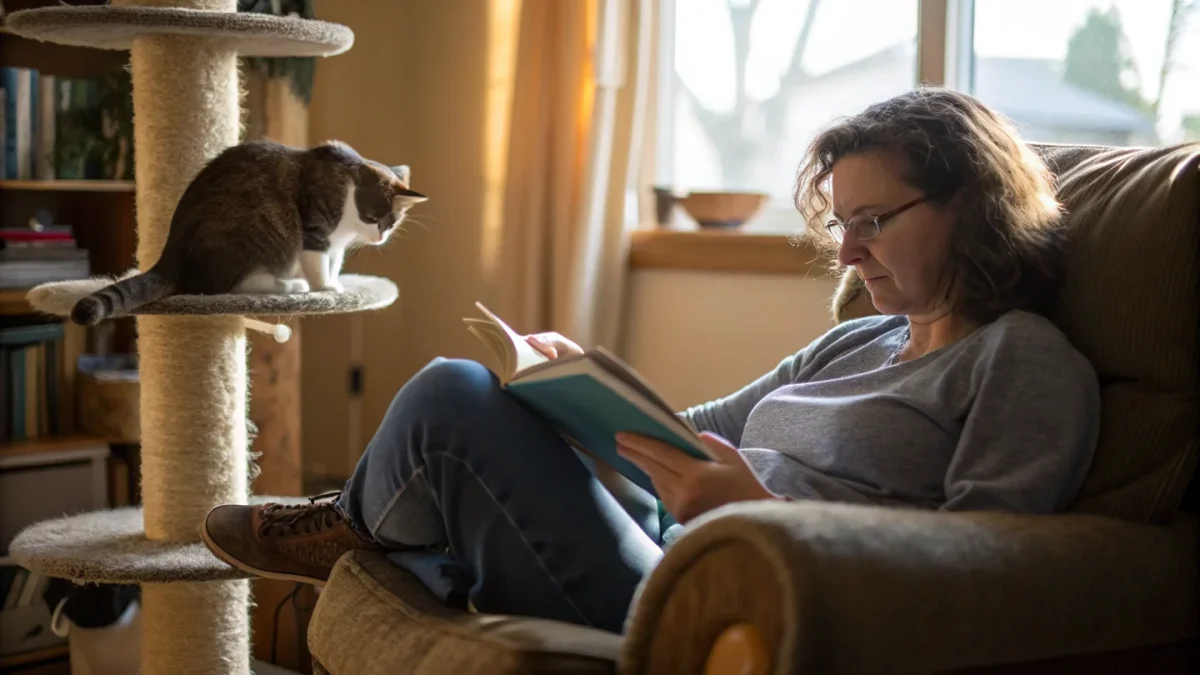
The most common mistake in cat selection is choosing based on appearance. Someone falls for the Bengal's extraordinary spotted coat. Someone else sees a Ragdoll photo and decides that's their cat. Or they read that Maine Coons are "great with families" and don't dig any further.
The result, in the worst cases, is a Bengal in a quiet apartment with an owner who works twelve-hour days. The cat is stressed and destructive; the owner is exhausted and guilty. Nobody's happy. The Bengal is a magnificent animal in the right situation. This wasn't that situation.
Breed selection is a matching exercise. The coat is largely irrelevant. The personality, the energy, the independence, the noise — these are the variables that determine whether you and a particular cat thrive together for the next twelve to eighteen years. Understanding how cat breeds are categorized — by coat type, body type, and origin — is useful background before you start narrowing options.
Step 1: Be Honest About Your Schedule
The single most important variable in cat breed selection is how much time the cat will spend alone. Not how much time you want to spend with the cat — how many hours it will realistically be by itself on an average weekday.
-
8+ hours alone regularly: Avoid high-social breeds like Siamese, Burmese, Cornish Rex, Sphynx, and Ragdoll. These breeds handle solitude poorly and develop stress behaviors in low-presence households. If this is your situation and you want a cat, consider either adopting two cats simultaneously, or choosing independent breeds like Norwegian Forest Cat, British Shorthair, or Russian Blue.
-
4-6 hours alone: A reasonable middle ground. Most breeds can manage this with appropriate enrichment. High-social breeds are still better with a companion, but can cope.
-
Work from home or rarely away: You have the most flexibility. This is when high-social, high-engagement breeds like Siamese, Burmese, or Bengal become viable options.
Step 2: Assess Your Activity Level Honestly
This isn't about how much you'd like to play with a cat — it's about how much you'll actually do after a long day, every day, for years.
High activity: You enjoy daily interactive play, don't mind a cat that has opinions about your schedule, and find an engaged, dynamic companion energizing. Consider: Bengal, Abyssinian, Siamese, Cornish Rex, Devon Rex, Burmese.
Moderate activity: Happy to play once daily, want downtime respected, enjoy a companion that's warm but not demanding. Consider: Maine Coon, Ragdoll, Birman, Tonkinese, Ragamuffin.
Low activity preference: You want a calm presence that doesn't need active management. You'll pet the cat when you feel like it and have a cat that is content with that arrangement. Consider: British Shorthair, Persian (if grooming is acceptable), Norwegian Forest Cat, Russian Blue.
Step 3: Calculate the Real Grooming Commitment
Look at every cat breed's grooming needs and add 50% to whatever time estimate you find. People consistently underestimate grooming in theory and find it burdensome in practice.
Low grooming (minimal brushing, no mats): American Shorthair, British Shorthair, Burmese, Russian Blue, Bengal, Siamese, Abyssinian.
Moderate grooming (weekly brushing required): Maine Coon, Ragdoll, Birman, Norwegian Forest Cat, Siberian.
High grooming (daily brushing essential or coat becomes a welfare issue): Persian, Himalayan. Not "recommended daily" — literally necessary to prevent painful matting.
If you've never owned a high-maintenance coat breed before, starting with a moderate-grooming breed is sensible. You can always add a longer-haired cat later when you know the commitment in practice.
Step 4: Consider the Noise Tolerance
Living with a Siamese or an Oriental Shorthair is genuinely different from living with a British Shorthair in terms of daily sound. Cat vocalization varies enormously between breeds, and this is a variable that apartment dwellers, light sleepers, and people who work from home should take seriously.
Vocal breeds: Siamese, Oriental Shorthair, Bengal (in its own way — chirps and yowling), Burmese (moderate), Devon Rex.
Quiet breeds: British Shorthair, Russian Blue, Norwegian Forest Cat, Ragdoll, Scottish Fold.
Middle ground: Maine Coon (pleasant trills), Ragamuffin, Birman, Himalayan.
Step 5: Think About the Whole Household
Young children: Breeds with high patience for handling: Ragdoll, Maine Coon, Birman. Breeds to avoid with toddlers: Persian (sensitive to rough handling), Scottish Fold (joint concerns make vigorous play potentially painful).
Dogs: Adaptable breeds that approach dogs confidently: Abyssinian, Maine Coon, Ragdoll, Birman. Shy or territory-sensitive breeds that may struggle: Russian Blue (initially), some Persians.
Small pets: Avoid high prey-drive breeds (Bengal, Savannah) if birds, rodents, or reptiles are in the household.
Other cats: Most social breeds integrate well. Solitary-preference breeds (Russian Blue, some Persians) sometimes prefer being the only cat. When you have a shortlist and are ready to compare specific breeds directly, the cat breed comparison guide provides a systematic framework for evaluating them side by side.
The Right Question to Ask Yourself
Not "which breed is most beautiful" — that produces the Bengal in the wrong apartment situation.
Not "which breed is most popular" — popularity reflects marketing more than suitability for your specific life.
The right question: "Which breed would be most comfortable in the life I actually live, not the life I plan to live?"
Be honest about the schedule, the activity level, the grooming commitment, and the household dynamics. The cat you choose on those criteria will be the right cat, regardless of what it looks like.
FAQ
Is it better to adopt a mixed-breed cat than a purebred?
Neither is inherently better. Mixed-breed cats (moggies) often have good genetic diversity and can be wonderful companions. Purebreds offer more personality and trait predictability. The framework in this guide applies equally to evaluating individual mixed-breed cats you meet at shelters — observe the individual animal's energy, social comfort, and behavior.
At what age should I adopt a cat?
Kittens offer more socialization flexibility but more short-term work. Adult cats have established personalities, making it easier to match them to your lifestyle, but they may have less flexibility in adapting to new situations. For a first cat, many experienced owners recommend an adult adoption — what you see is largely what you get.
I want a low-maintenance cat. Which breed?
British Shorthair, Russian Blue, Norwegian Forest Cat, or American Shorthair. All are calm, independent, relatively self-sufficient, and don't require intensive grooming or constant social engagement.
Is any breed truly good for people with allergies?
No breed is reliably hypoallergenic. The primary cat allergen (Fel d 1 protein) is in saliva and skin secretions, not fur. Some breeds (Siberian, Balinese) may produce lower levels, but individual variation is high. If allergies are a concern, spend time with the specific cat before committing.
How long do I need to commit to? Can I return a cat if it doesn't work out?
Most domestic cats live 12-18 years. This is a serious multi-year commitment. Shelters and rescue organizations handle rehoming when genuinely necessary, but "didn't match my expectations" is worth preventing through careful breed research — which is why this guide exists.