

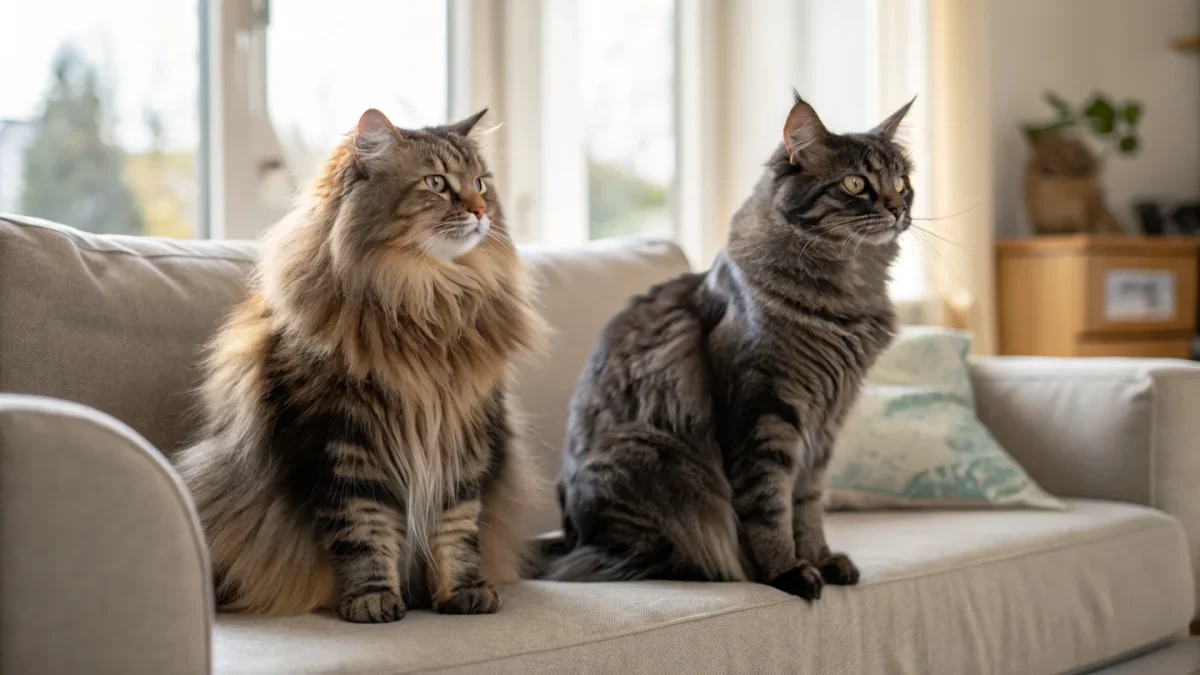
Two people can look at the same description — "gentle, calm, affectionate, good with families" — and each come home with a completely different cat. One gets a Ragdoll who drapes across them like a warm blanket. The other gets a Persian who needs forty-five minutes of daily grooming and a careful introduction to anyone new. Both descriptions were accurate. The comparison failed.
Most breed comparison mistakes happen not because people choose the wrong general category of cat, but because they don't dig into the specific variables that matter for their actual life. This guide gives you the framework to compare breeds meaningfully before committing to a decade-plus relationship.
The Four Dimensions That Actually Matter
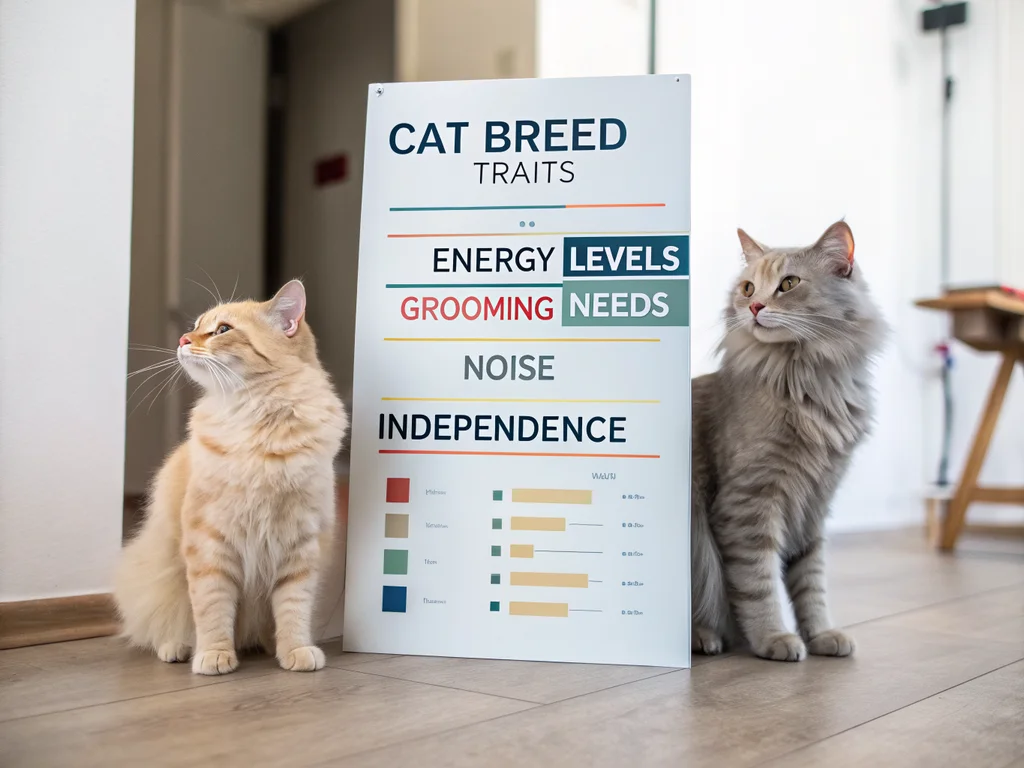
Almost every meaningful difference between cat breeds can be captured in four variables. Before looking at any specific comparison, establish where you honestly fall on each. If you're still deciding which breed category to explore first, cat breed categories explains how coat type, body type, and origin organize the full range of options.
1. Energy and Activity Level
Cat energy varies more than most people expect. A Bengal left without sufficient stimulation is a genuinely stressed animal. A Persian left largely to its own devices is essentially content. Neither is wrong — they're different tools built for different environments.
Rate your tolerance and lifestyle on this spectrum:
- High activity household: Daily interactive play, enrichment toys, vertical space, another playmate welcome
- Moderate: Happy to play once daily, want some independent time
- Low activity preference: Prefer a cat that entertains itself and asks for little active participation
A mismatch here is the leading source of "this cat is too much" or "this cat is too boring" complaints.
2. Independence vs. Social Dependence
Some breeds need you. Burmese, Sphynx, Siamese, and Cornish Rex all form strong attachments and handle solitude poorly. British Shorthairs, Russian Blues, and Norwegian Forest Cats tend toward independence — companionable but not clingy.
Ask yourself honestly: how many hours is the cat alone on an average weekday? A breed that handles solitude poorly in a home where it's alone nine hours daily will not be a happy animal, regardless of how devoted its owner is during the evenings.
3. Grooming Commitment
"I'm fine with some grooming" means very different things applied to different breeds. Consider the realistic weekly time commitment:
- Minimal: Domestic shorthair, American Shorthair, Burmese (10-15 minutes weekly)
- Moderate: Abyssinian, Bengal, British Shorthair (20-30 minutes weekly)
- Significant: Ragdoll, Birman, Siberian (30-45 minutes weekly, more during shedding)
- High: Persian, Himalayan (daily brushing essentially mandatory)
People consistently underestimate grooming needs in the abstract and find them burdensome in practice. Be realistic.
4. Vocal Behavior and Noise Tolerance
Siamese and Oriental Shorthairs are famously vocal — they carry on extended, opinionated conversations. Bengals vocalize in distinctive chirps and trills. Maine Coons trill pleasantly but aren't demanding. Persians are largely quiet. Russian Blues are subtle and infrequent communicators.
If you live in a thin-walled apartment, work from home on calls, or simply prefer a quiet home, vocal breed selection matters enormously.
Using the Framework for Specific Comparisons
Once you have your honest scores on the four dimensions, you can use them as filters in any specific breed comparison.
Example: Maine Coon vs Ragdoll
Both are large, gentle, good with families. Where they differ: Maine Coons are more active and playful well into adulthood, while Ragdolls tend toward more consistent placidity. Maine Coons are more independent; Ragdolls are often more openly affectionate. Grooming is similar. Noise: Maine Coons trill, Ragdolls are quieter. If your priority is a calm lap cat, the Ragdoll edges ahead. If you want an engaging playmate who's also sweet-natured, the Maine Coon wins.
Example: Siamese vs Bengal
Both are high energy and highly interactive. The Siamese is more vocal and more people-focused; the Bengal is more physically athletic and has stronger prey drive. The Siamese wants to be with you; the Bengal wants to be doing something, preferably near you. Grooming: both minimal. If you want a conversational companion, the Siamese. If you want an athlete to engage with, the Bengal.
Example: Persian vs British Shorthair
Both are calm, low-energy, suited to quieter homes. The Persian requires significant daily grooming; the British Shorthair does not. The Persian is more delicate and decorative; the British Shorthair is sturdier and more adaptable. Both are independent enough to handle solitude. If grooming commitment is a concern, the British Shorthair wins decisively.
What Comparison Articles Can (and Can't) Tell You
The breed comparisons on this site provide detailed head-to-head analyses for specific pairings — with tables, clear verdicts, and honest assessments of tradeoffs. For anyone still working through the preliminary matching exercise, how to choose the right cat breed walks through schedule, activity level, grooming tolerance, and household factors before any specific breed is named. What comparison articles can't do is account for individual variation.
Cat personality varies within breeds, sometimes significantly. A particularly shy Maine Coon and a particularly bold Norwegian Forest Cat might behave more similarly than their breed descriptions suggest. Cattery environment, early socialization, and individual genetics all play real roles.
Use breed comparisons as a starting framework, not a final verdict. Meet cats if possible. Ask breeders honest questions about the specific kittens and their lines. And know that some of the best cat ownership experiences come from the edge cases — the Siamese who is unusually quiet, the Persian who loves active play — that don't match the textbook description at all.
FAQ
How much does early socialization affect breed temperament?
Significantly. A well-socialized kitten from a less people-focused breed can be remarkably friendly and confident. A poorly socialized kitten from a breed known for being outgoing may be shy and reactive. Breed predispositions are tendencies, not guarantees — the cattery environment matters.
Should I choose a breed based on a friend's recommendation?
Their experience is useful data, but limited. Their lifestyle, household, and experience with cats all influence how a breed seems to them. A breed that was perfect for a person who works from home and has another cat may be exhausting for someone who works long hours and lives alone.
Is it better to compare breeds or just adopt a mixed-breed cat?
Neither is inherently better. Mixed-breed cats often have broader genetic diversity and can make wonderful companions. But if specific traits matter strongly to you — predictable coat type, energy level, grooming needs — a purebred offers more predictability. The comparison framework in this article applies to mixed-breed assessment too: observe the individual cat's actual energy, social needs, and behavior rather than guessing by appearance.
What's the most common mismatch I should avoid?
Choosing a high-energy, social breed for a quiet home where someone is rarely present. Breeds like the Siamese, Bengal, Burmese, and Cornish Rex need company and stimulation. Putting them in a low-activity, low-presence home creates a stressed, unhappy animal regardless of how much that animal is loved during the limited hours together.