

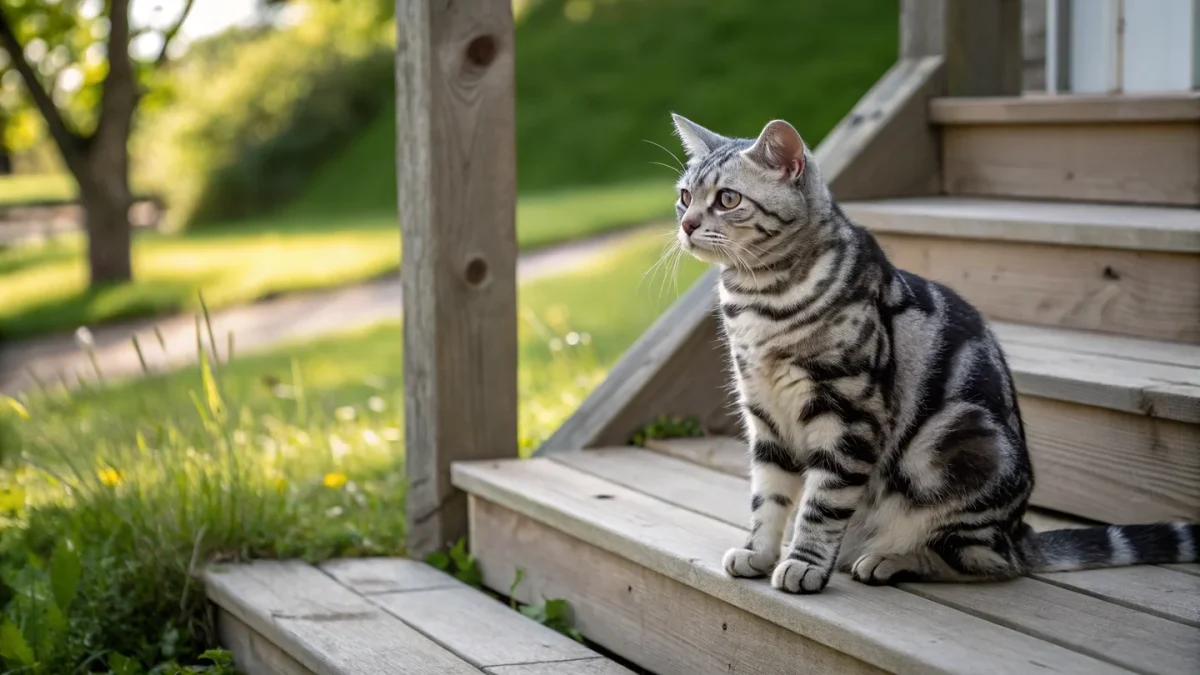
The cats that crossed the Atlantic with the Mayflower in 1620 were not pets. They were working crew, employed to protect the ship's grain stores from rats during the sixty-six-day voyage. When the passengers settled in the New World, the cats continued their careers as mousers, barn cats, and kitchen defenders for the next three centuries. The American Shorthair, formally recognized as a breed in 1906, is the direct descendant of those working cats — a pedigreed breed that carries genuine utility in its genetics.
The American Shorthair cat breed is sometimes overshadowed by flashier, more exotic-looking breeds, which is a persistent injustice. These are exceptional cats by any practical measure: naturally healthy, adaptable to nearly every living situation, affectionate without demanding constant attention, and robust enough to have evolved without the selective pressures that create breed-specific health problems. When cat behavior researchers discuss the breed that best balances independence with sociability, the American Shorthair is invariably in the conversation.
Origins: Working Cat to Show Cat
The cats that arrived with early European colonists in North America were working animals, not luxury companions. They were valued for pest control, kept around granaries and ships, and selected informally over generations for competence rather than appearance. By the 19th century, these cats had interbred freely across the continent, producing a genetically diverse, naturally robust population with the characteristic short, dense coat suited to a variable climate.
The formal history of the American Shorthair as a recognized breed begins around the turn of the 20th century, when American cat fanciers began selecting the best of these working cats for exhibition. The breed was initially called the Domestic Shorthair — a name that caused persistent confusion with unregistered mixed-breed cats. In 1966, breeders successfully petitioned the Cat Fanciers' Association to rename the breed "American Shorthair" to distinguish the pedigreed breed from its unregistered counterparts with the same general appearance.
Early breed development in the United States involved some deliberate crosses with imported British Shorthairs to refine type — the broader, rounder head and the dense double coat that characterize the modern American Shorthair reflect some of this influence. The silver tabby pattern, which became the breed's most iconic look, was partly developed through selective breeding rather than being a purely natural occurrence.
The American Shorthair first won Best Cat at the CFA show in 1965 — a silver tabby male named Shawnee Trademark, sired by GC Shawnee Marksman — and the breed has maintained a strong show presence ever since.
Physical Characteristics
The American Shorthair is a working cat that looks the part — solid, substantial, and built for actual function rather than aesthetic extremes.
Body: Medium to large, powerfully built, with a broad chest and strong, well-developed musculature. Males are notably larger than females. Males typically weigh 11-15 pounds at maturity; females 8-12 pounds. The build is stocky without being cobby — these cats are athletic, not ornamental.
Head: Large and round with a full-cheeked face. Slightly longer than wide, with a medium muzzle. The ears are medium-sized and set wide. Eyes are large, round, and bright.
Coat: Short to medium length, thick, and dense with a hard texture. The density is genuine — it evolved to protect working cats from cold, moisture, and minor physical hazards. The coat lies close to the body. Shedding is moderate to heavy in spring, when the winter coat turns over.
Colors: The American Shorthair comes in more than 80 recognized color and pattern combinations. The silver tabby (dark silver stripes on pale silver background) is the most iconic. Solid colors, calico, bicolor, tortoiseshell, shaded, and smoke patterns all appear. The classic tabby pattern — bold, swirling blotches rather than thin stripes — is common and gives many American Shorthairs a distinctive, robust appearance.
Temperament: Balanced and Genuinely Adaptable
The American Shorthair's temperament mirrors its working background: practical, even-keeled, and highly adaptable. These are cats that adjust to their household's rhythm rather than imposing their own.
They're affectionate without being clingy. The typical American Shorthair will seek human contact, enjoy lap time on its own terms, and be genuinely happy in a family environment — but they don't vocalize incessantly or follow their owners from room to room demanding acknowledgment. The classic description is "easygoing," which undersells them somewhat. They're also curious, attentive, and often quietly observant in a way that suggests more going on beneath the surface than the relaxed exterior implies.
Activity level is moderate. They play genuinely, particularly when young, and retain a functional prey drive throughout their lives — puzzle feeders and wand toys engage them reliably. But they transition easily between active play and comfortable rest, which makes them well-suited to households that include young children, senior residents, and everyone in between.
They're notably good with children. Patient, tolerant, and sturdy enough to handle the handling that children naturally attempt — the American Shorthair rarely escalates to scratching or biting when it could simply remove itself from the situation instead.
What Most People Get Wrong About the American Shorthair
The most significant misconception is conflating the American Shorthair with "domestic shorthair" — meaning any mixed-breed cat with a short coat. They look similar to casual observers, and the confusion is understandable given the breed's history of the name change in 1966.
A pedigreed American Shorthair has a defined breed standard, documented lineage, and predictable traits. A domestic shorthair is a mixed-breed cat of unknown genetic background. The distinction matters for anyone relying on temperament or physical consistency — though it emphatically does not mean that mixed-breed cats are inferior companions. The American Shorthair's documented origins and selective breeding simply make its characteristics more predictable.
Second misconception: people assume that a "common" looking, naturally occurring breed isn't worth the effort of pursuing as a pedigree animal. This is a cultural bias toward exotic appearance, and it does the American Shorthair a disservice. The natural development of this breed produced something remarkable: a genuinely healthy, adaptable, long-lived cat with very few of the hereditary health problems that selective breeding in other breeds has introduced. The ordinary appearance comes with extraordinary practical advantages.
Third: some people expect American Shorthairs to be almost dog-like in their attachment, in the way that Siamese-family breeds or Devon Rex cats often are. The American Shorthair's sociability is real, but quieter. They're present, interested, and affectionate — they just don't need to announce all of it.
Health: The Practical Advantage of Natural Development
The American Shorthair's biggest health advantage is what it lacks: the breed-specific structural problems that come from extreme selective breeding. No brachycephalic features. No extreme body proportions. No exaggerated coat that creates skin problems. The natural selection pressure of several centuries as a working cat produced an animal whose body functions well.
Hypertrophic cardiomyopathy (HCM): The American Shorthair has a genetic predisposition to HCM — research on feline HCM gene variants lists the breed among those with confirmed familial occurrence, making cardiac screening of breeding cats important. Reputable breeders perform echocardiogram testing.
Otherwise, the breed is notably free of the serious heritable conditions that affect many pedigreed cats. No polycystic kidney disease, no breed-specific muscular dystrophies, no structural breathing issues. Progressive retinal atrophy and other genetic conditions can appear but are not elevated compared to the general cat population.
Lifespans of 15-20 years are achievable and not unusual in this breed — a direct reflection of the genetic diversity and physical soundness that comes from centuries of natural selection rather than extreme type selection.
Weight management: The American Shorthair's solid build and moderate appetite means weight gain is easy and can sneak up on owners. These cats do well on scheduled meals rather than free-feeding, particularly once neutered.
Grooming: Simple and Effective
The dense double coat is the main grooming consideration. Weekly brushing is usually sufficient for most of the year, with twice-weekly sessions during spring shedding season, when the winter undercoat releases and can produce impressive quantities of loose fur.
A rubber grooming glove or a fine-toothed metal comb works well on the dense coat. The goal is to remove loose undercoat before it ends up on furniture rather than on the cat.
Ears monthly, nails every two to three weeks, teeth regularly. The American Shorthair doesn't have the elevated dental crowding risk of brachycephalic breeds, but dental hygiene remains worthwhile.
No bathing is required unless the cat gets into something it shouldn't. The dense, hard coat is reasonably self-maintaining.
Living With an American Shorthair
Adaptability: This breed's standout trait. American Shorthairs do well in apartments and in houses, with active families and with single retirees, with other cats and dogs and as solo companions. They calibrate their energy to their environment with a naturalness that most breeds can't match.
Children: Very good. Patience and sturdiness are both genuine. They're more likely to quietly remove themselves from overstimulation than to escalate — which makes them substantially safer with young children than many more reactive breeds.
Other cats: Generally easy. No extreme territorial behavior, no breed-specific aggression patterns. Proper introductions, as always.
Dogs: Usually compatible with dogs that don't have high prey drive toward cats. The American Shorthair's calm confidence means they're not easily intimidated.
Outdoor access: Historically, these cats are working outdoor animals. Today, given traffic, predators, and disease exposure, indoor or supervised outdoor life is generally recommended for pedigreed individuals. They adapt fully to indoor life without apparent frustration.
Activity level: Moderate. Daily play sessions of 10-15 minutes satisfy most American Shorthairs. They're not going to dismantle your kitchen out of understimulation the way an Oriental Shorthair might.
The Right Owner for an American Shorthair
The American Shorthair is genuinely one of the most accessible, forgiving, and rewarding cats for a wide range of owners and living situations. The honest answer to "is this the right breed for me" is "probably, unless you specifically want extreme activity, extreme vocal interaction, or an exotic physical appearance."
Families with children, single adults, multi-pet households, apartment dwellers, people who travel occasionally, first-time cat owners — the American Shorthair handles all of these without drama. The lack of extreme traits is the point: this cat was shaped by function, and function produces robustness.
The owner who gets the most from an American Shorthair is one who appreciates consistent, quiet companionship, provides regular play and enrichment, and isn't looking for a cat that dominates the household dynamic. These cats give generously and ask modestly. That's a rare combination.
Frequently Asked Questions
Is the American Shorthair the same as a domestic shorthair?
No. An American Shorthair is a pedigreed breed with a documented standard, lineage, and predictable traits. A domestic shorthair is a mixed-breed cat of unknown background. They can look similar, and the American Shorthair's appearance is unspectacular enough that the confusion is understandable — but they're different things.
How long do American Shorthairs live?
15-20 years is achievable for well-cared-for individuals. The breed's natural development and absence of extreme physical traits make excellent longevity one of its genuine advantages.
Do American Shorthairs shed a lot?
Moderate to heavy shedding in spring when the winter coat releases. The rest of the year, shedding is manageable with weekly brushing. The coat is dense enough that a good brushing session removes a significant amount of loose undercoat before it reaches your furniture.
Are American Shorthairs good with dogs?
Generally yes, particularly with dogs that don't have intense prey drive. The breed's calm, confident temperament means they're not easily rattled by dogs, and many American Shorthairs form easy companionships with compatible dogs.
How do American Shorthairs compare to British Shorthairs?
Both are naturally developed, working-cat-descended breeds with short, dense coats and calm temperaments. British Shorthairs tend to be larger, rounder (cobby body, extremely round head), and somewhat more reserved in their affection. American Shorthairs are more athletic in build, a little more active, and somewhat warmer in their sociability. Both are excellent choices for owners who want a calm, robust companion.