

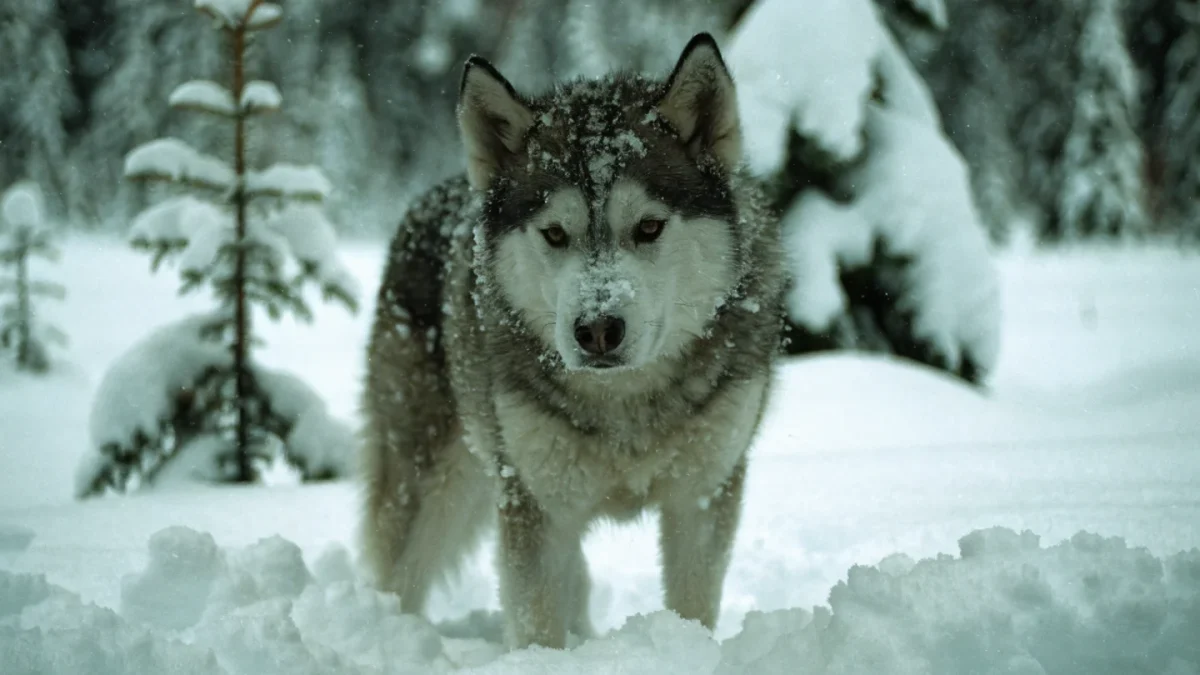
Dogs that thrive in cold climates share common physical traits: dense double coats with thick undercoats that trap body heat, compact ear structures that minimize heat loss, and in many cases, body mass that provides thermal insulation. These aren't cosmetic features. They're survival adaptations shaped by centuries of living and working in conditions where temperatures regularly drop well below freezing.
If you live in a region with long, harsh winters and want a dog that's genuinely comfortable — not just tolerating — cold weather, these six breeds were built for it. For the broader context of choosing a breed for your environment, climate should be one of your first filters.
1. Siberian Husky
The Chukchi people of northeastern Siberia developed the Siberian husky over at least 3,000 years as a sled dog capable of covering long distances in extreme cold. For the complete profile of this breed, see the Siberian Husky complete breed guide. Their double coat, with a dense undercoat and medium-length outer coat, provides insulation effective to temperatures far below -30 degrees Celsius. At 16 to 27 kg, they're lighter than many cold-weather breeds, reflecting their endurance-sled heritage.
Why they thrive in cold: Huskies have one of the most efficient thermoregulatory systems in the canine world. Their coat adjusts seasonally, growing thicker in winter and shedding dramatically in spring. They actively enjoy cold weather and snow — many huskies become noticeably more energetic and playful when temperatures drop.
The tradeoff: Huskies are escape artists, independent thinkers, and high-energy dogs that need 60 to 90 minutes of daily exercise minimum. They have strong prey drive and poor off-leash reliability. The shedding during seasonal coat blows is extraordinary — measured in garbage bags, not lint rollers. They struggle badly in hot climates.
2. Alaskan Malamute
The Malamute is the freight truck to the husky's racing car. Developed by the Mahlemut Inuit of northwestern Alaska for hauling heavy loads over snow, Malamutes are 34 to 45 kg of power, endurance, and cold-weather adaptation. Their coat is even thicker than the husky's — a dense, woolly undercoat up to 5 cm deep beneath a coarse outer coat.
Why they thrive in cold: Malamutes are built for sustained work in Arctic conditions. Their larger body mass provides better heat retention, and their coat is among the densest of any breed. They sleep comfortably outdoors in sub-zero temperatures, often preferring snow to any bed.
The tradeoff: Malamutes are strong-willed and dominant. They require experienced handling and consistent leadership. Their exercise needs are high, they shed massively, and their size makes them challenging to manage for smaller or less physically capable owners. They have a strong prey drive and can be dog-aggressive.
3. Bernese Mountain Dog
Developed in the Swiss Alps as a farm dog — drafting, herding, and guarding — the Bernese has a thick, moderately long double coat adapted to mountain cold. At 36 to 50 kg, their substantial build provides natural insulation. They're calmer than the northern sled breeds and better suited to families who live in cold climates but don't need an ultra-high-energy dog.
Why they thrive in cold: The Bernese coat handles cold, wet, and snow effectively. They're comfortable working outdoors in winter conditions and actively enjoy snow. Their moderate energy level means they'll join you for winter walks and outdoor activities without demanding hours of daily exercise.
The tradeoff: Lifespan is heartbreakingly short — 7 to 8 years average, with cancer (particularly histiocytic sarcoma) as the primary cause. They overheat quickly in warm weather. They shed heavily. Veterinary costs can be significant.
4. Newfoundland
Developed on the island of Newfoundland for water rescue and hauling fishing nets, the Newfoundland has a dense, water-resistant double coat that's equally effective against cold air and frigid water. At 45 to 70 kg, they're among the largest cold-weather breeds, and that mass provides substantial thermal insulation.
Why they thrive in cold: Newfoundlands' oily outer coat repels water and snow, while their thick undercoat traps warmth. They're powerful swimmers even in near-freezing water — a trait that made them invaluable to maritime communities. They handle extended cold exposure better than most breeds.
The tradeoff: Newfoundlands drool. Constantly. They also shed heavily, need regular grooming, and their massive size means higher food costs and more challenging veterinary logistics. They overheat in warm weather and need climate control during summer. Joint problems are common in a breed this large.
5. Samoyed
The Samoyed was developed by the Samoyede people of Siberia as a herding, hunting, and sled-pulling dog. Their brilliant white double coat — often described as "arctic quality" — is one of the most cold-resistant coats in any domestic breed. At 16 to 30 kg, they're a medium-sized breed with an unmistakable smiling expression.
Why they thrive in cold: The Samoyed coat is so dense and effective that it was historically used by Arctic peoples as insulation material. The breed sleeps comfortably in extreme cold and maintains high energy and activity levels in winter conditions where other breeds would seek shelter.
The tradeoff: Samoyeds shed — prodigiously, continuously, and dramatically during biannual coat blows. Grooming is a significant time commitment (daily brushing during shedding, three to four times weekly otherwise). They're vocal dogs that bark and "talk" frequently. They're social to the point of developing separation anxiety.
6. Norwegian Elkhound
One of Europe's oldest breeds, the Norwegian elkhound tracked moose (elk) across Scandinavian mountains in harsh winter conditions for thousands of years. At 20 to 24 kg, they're a compact, sturdy breed with a dense silver-grey double coat that's deceptively weather-resistant.
Why they thrive in cold: The elkhound's coat provides excellent cold insulation and water resistance. Their compact build minimizes heat loss. They're tireless in cold weather and actually prefer lower temperatures, becoming more active and alert as the mercury drops.
The tradeoff: Elkhounds are independent and can be stubborn — they were bred to work at a distance from their handlers, making decisions autonomously. They shed heavily and bark persistently. They need regular exercise (45 to 60 minutes daily) and don't do well in warm climates.
Cold Climate Dog Ownership Considerations
Even cold-adapted breeds need common-sense cold-weather management: check paw pads for ice buildup and salt irritation after walks; provide access to shelter from wind even if the dog enjoys cold temperatures; ensure fresh, unfrozen water is always available; and watch for signs of hypothermia in extreme conditions — no adaptation is unlimited. For the climate opposite, see breeds suited to hot climates.