

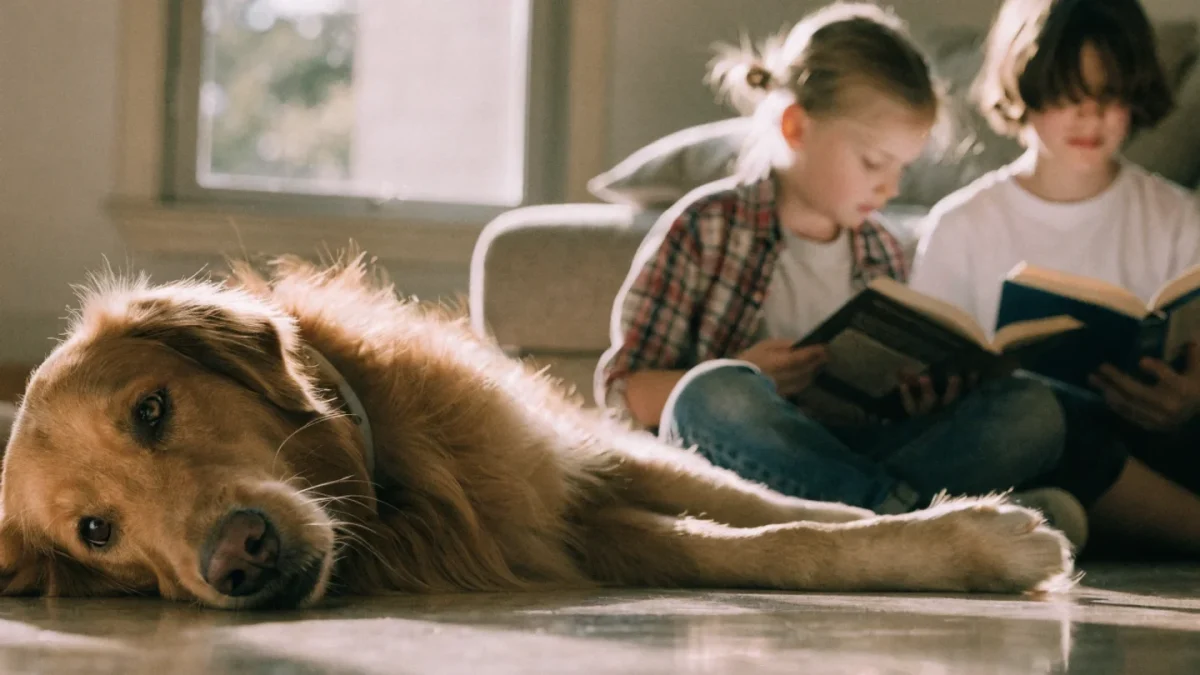
Here's a fact that surprises most parents: the breeds most frequently involved in bite incidents with children aren't typically the ones on "dangerous breed" lists. They're often family-friendly breeds that were placed in homes without adequate supervision, training, or respect for the dog's boundaries. Any dog, regardless of breed reputation, can bite a child who pulls its ears, disturbs it while eating, or traps it in a corner.
I mention this upfront because "good with kids" is the most misleading phrase in dog ownership. No breed is inherently safe with children. What certain breeds offer is a higher tolerance threshold, greater patience, and a temperament that's more forgiving of the unpredictable behavior children produce. That's a meaningful advantage — but it's not a substitute for supervision and education.
If you're still early in the process of how to choose the right breed for your household, consider what "good with kids" actually means for your specific family. A toddler household has very different needs than a family with teenagers.
1. Labrador Retriever
The Labrador has been the default family dog recommendation for decades, and the data supports it. Labs combine high frustration tolerance, moderate pain sensitivity, a natural inclination toward social interaction, and enough energy to keep up with active children. They were bred as working retrievers — cooperative, responsive to direction, and comfortable in chaotic environments.
Why they fit families: Labs have a soft mouth bred into them for retrieving game undamaged. That same trait translates to a dog that's generally gentle when interacting with small hands. Their energy level matches families with school-age children, and they're responsive to training, which means house rules can be established and maintained.
The tradeoff: Labs are high energy for the first three years and require significant daily exercise — 60 to 90 minutes minimum. Without it, they become destructive. They shed heavily, they eat anything not bolted down, and they jump with enthusiasm that can knock a small child flat. Training must start early and be consistent.
2. Golden Retriever
If the Lab is the energetic teammate, the Golden Retriever is the patient one who makes sure everyone's included. Goldens have an almost preternatural ability to calibrate their behavior to the person they're with — gentler with a toddler, more animated with a teenager.
Why they fit families: Goldens are exceptionally biddable and eager to please, which makes them responsive to household rules. Their pain tolerance is high, their bite inhibition is naturally strong, and they're social enough to handle the noise and unpredictability of a busy family without becoming anxious.
The tradeoff: Cancer rates in golden retrievers are among the highest of any breed — a 1998 survey found cancer accounted for 61.4% of deaths studied. They shed year-round with two major coat blows annually. They're mouthy as puppies and adolescents, which can frighten young children even when no harm is intended. Veterinary costs should be budgeted carefully.
3. Beagle
Beagles were bred to hunt in packs, which means they developed a temperament that prioritizes social harmony and tolerance of close contact. At 9 to 11 kg, they're small enough not to overwhelm toddlers but sturdy enough to handle rough play from older kids without injury.
Why they fit families: Beagles are hardy, curious, and almost impossible to offend. Their pack mentality means they integrate into family dynamics naturally — they see the household as their unit. They're playful well into middle age and their moderate exercise needs (30 to 60 minutes daily) are manageable for busy families.
The tradeoff: Beagles bay and howl. It's a breed trait, not a training failure — they're scenthounds, and vocalization is in their DNA. They also follow their nose with single-minded determination, making off-leash reliability nearly impossible without extensive training. Food stealing is a way of life, not an occasional lapse.
4. Cavalier King Charles Spaniel
For families wanting a gentler pace, Cavaliers offer the affection and adaptability of a companion breed without the fragility of most toy dogs. They're 5.4 to 8 kg but sturdy for their size, and their temperament is almost universally described as sweet and accommodating.
Why they fit families: Cavaliers adjust to their family's energy level. They'll play with active kids and sit quietly with a reading child. They're small enough for young children to interact with safely and gentle enough not to overwhelm anyone. They travel well, tolerate handling well, and bond with every family member rather than fixating on one person.
The tradeoff: Mitral valve disease is a major health concern in this breed. Syringomyelia — a condition where the skull is too small for the brain — is also prevalent. These are serious, potentially expensive, and sometimes heartbreaking conditions. Families choosing this breed need to prepare emotionally and financially for the possibility of early health decline.
5. Collie (Rough and Smooth)
There's a reason the most famous fictional family dog in history was a collie. The breed's herding background gives it a natural inclination to monitor and manage its "flock" — and in a family setting, that flock includes the children. Collies are attentive, responsive, and remarkably gentle considering their size (20 to 30 kg).
Why they fit families: Collies are naturally protective without being aggressive. They watch over children with a herding dog's vigilance and tend to position themselves between family members and perceived threats. They're sensitive to mood, responsive to voice commands, and one of the few herding breeds whose energy level is moderate enough for an average family's schedule.
The tradeoff: Rough collies require serious coat maintenance — brushing several times weekly, more during shedding seasons. Both coat varieties are vocal; collies bark at perceived irregularities, and their bark is sharp and persistent. Some collies develop herding behavior toward children — nipping at heels to redirect movement — which requires consistent redirection.
6. Bernese Mountain Dog
Bernese mountain dogs are gentle giants whose calm, affectionate temperament makes them natural family companions. At 36 to 50 kg, they're large enough to be unflappable around children's activity and patient enough to tolerate handling that would irritate more reactive breeds.
Why they fit families: Berners are deeply bonded to their families and prefer being in the center of household activity. Their energy level is moderate — they enjoy walks and play but don't demand hours of intense exercise. They're social with visitors, gentle with small children, and generally non-reactive.
The tradeoff: Lifespan is the hard conversation. Bernese mountain dogs live an average of 7 to 8 years, significantly shorter than most breeds. Cancer — particularly histiocytic sarcoma — is disproportionately common. Families need to be prepared for the emotional reality that their children may experience the loss of a beloved pet sooner than expected. They also drool, shed heavily, and do poorly in hot climates.
7. Standard Poodle
The poodle's reputation as a fussy show dog obscures the reality: standard poodles are athletic, intelligent, and remarkably good with children. They were originally bred as water retrievers and maintain the energy, trainability, and cooperative temperament of a working sporting dog.
Why they fit families: Standard poodles shed minimally (they have hair, not fur, which grows continuously rather than cycling), making them one of the better options for families managing mild pet dander sensitivities — though no breed is truly hypoallergenic. They're highly trainable, eager to participate in family activities, and robust enough at 20 to 30 kg to handle active children.
The tradeoff: That coat requires professional grooming every 4 to 6 weeks — it mats quickly if not maintained. Standard poodles are intelligent enough to be manipulative; inconsistent rules lead to a dog that exploits loopholes. They're also sensitive dogs that absorb household stress, so high-conflict homes are a poor environment.
What Actually Makes a Breed "Good With Kids"
Breed selection gets you part of the way. These five factors determine whether it actually works:
Supervision. Always. Every breed, every age, every situation. A dog and child should never be left unattended together until the child is old enough to reliably respect the dog's signals.
Teaching children. Kids need to learn that dogs aren't toys. No pulling ears, no riding, no disturbing a sleeping or eating dog, no cornering a dog that's trying to leave. These aren't suggestions — they're safety requirements.
Socialization timing. Dogs socialized with children during the critical period before 16 weeks of age are significantly more tolerant of child behavior throughout life.
Exercise. An under-exercised dog has a shorter fuse. The same breed that's patient and gentle after its morning walk may be snappy and reactive after three days stuck inside during bad weather.
Safe spaces. The dog needs a place where it can retreat from children and know it won't be followed. A crate, a bed in a quiet room, a gated area — somewhere the dog can decompress.
For more options, consider large breeds that work well with families if you have the space, or smaller family-friendly breeds if a more compact companion fits better.
Frequently Asked Questions
At what age should I introduce a dog into a family with kids?
There's no single right answer, but families with children under 5 should consider an adult dog (2 to 5 years) rather than a puppy. Adult dogs have established temperaments, are usually house-trained, and won't nip with sharp puppy teeth. If you choose a puppy, expect the first 6 to 12 months to feel like managing two toddlers. The child should be old enough to follow basic rules about interacting with the dog before the dog arrives.
Are mixed-breed dogs as good with kids as purebreds?
Breed tendencies are averages, not guarantees — and mixed-breed dogs can absolutely be excellent family dogs. The advantage of selecting a specific breed is predictability: you have a reasonable expectation of adult size, energy, and temperament. With a mixed breed, especially a puppy, those traits are less predictable. Adult mixed breeds from rescue, where temperament has been assessed, can be outstanding family dogs because you're choosing based on the individual dog rather than a breed generalization.
My child is afraid of dogs. Should I still get one?
Not until the fear has been addressed through gradual, positive exposure — ideally with calm, well-socialized dogs belonging to friends or family. Bringing a dog into a home where a child is actively fearful creates stress for both the child and the dog. Most dogs sense fear and find it confusing, which can increase anxiety-driven behaviors. Work with the child's comfort level first. A dog added to a household should feel like a welcome addition, not an imposed therapy tool.