

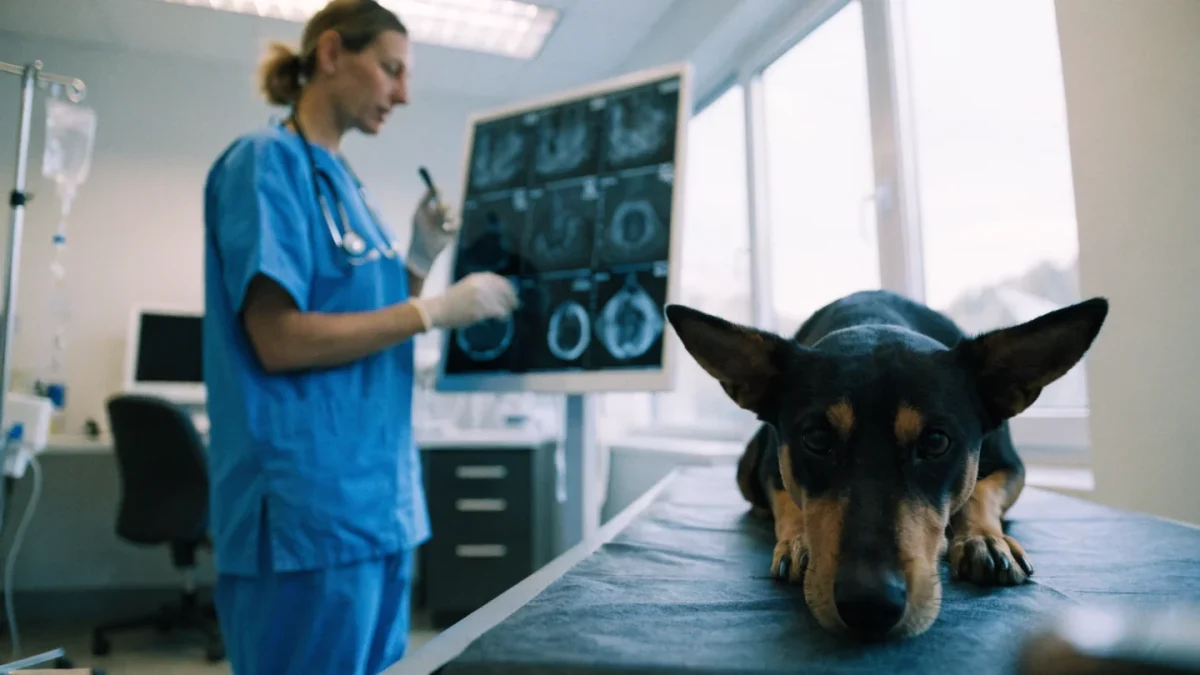
The diagnosis lands, and within minutes a pet owner's mind jumps to the same question: "What can we do? For more about common cancer types in, see our detailed guide." It's the right question, and the honest answer is that veterinary oncology has more options than most people expect — but also more nuance than any simple list can capture.
Cancer treatment for pets follows the same broad categories as human oncology: surgery, chemotherapy, radiation therapy, and increasingly, immunotherapy and targeted therapies. What differs is how they're combined, what goals are realistic, and how the animal's quality of life factors into every decision.
For the broader context of what a cancer diagnosis means, see understanding cancer in dogs and cats.
How Veterinary Oncologists Think About Treatment
Before selecting a treatment, an oncologist considers several things simultaneously:
Cancer type and behavior — Is this cancer locally invasive but unlikely to spread? Or does it metastasize early? The treatment approach for a mast cell tumor on the skin differs substantially from hemangiosarcoma in the spleen.
Stage — Staging tells us how far the cancer has spread. Early-stage disease in a single location offers different options than cancer that has reached lymph nodes or distant organs.
The patient's overall health — A nine-year-old Labrador with well-controlled kidney disease is a different surgical candidate than a nine-year-old Labrador with healthy organs. Chemotherapy is metabolized by the liver and kidneys; any pre-existing organ disease changes what's safe.
Owner goals — This matters more than many owners realize. Treatment that extends comfortable life by a year may be exactly what one family wants. Another family may prioritize avoiding hospital visits. Both are legitimate. I've never judged an owner's choice about how aggressively to pursue treatment.
Surgery: The Foundation of Most Solid Tumor Treatment
For most solid tumors — masses you can feel or see — surgery is the cornerstone of treatment. The goal is complete excision with clean margins: removing not just the visible tumor but a cuff of healthy tissue around it so no cancer cells are left behind.
Margins matter enormously. A soft tissue sarcoma removed with narrow margins has a high local recurrence rate. The same tumor removed with wide margins may be curative. This is why pre-surgical planning — including imaging to understand the tumor's extent — is so important for anything other than small, clearly benign-appearing growths.
Some cancers are surgical candidates even when the intent isn't cure. Removing a splenic hemangiosarcoma that has ruptured is an emergency procedure that can stabilize the dog and extend life, even though metastasis may already have occurred. Debulking — reducing tumor burden — can sometimes improve quality of life or make other treatments more effective.
Minimally invasive approaches (laparoscopy, thoracoscopy) are available at specialty centers for certain tumors, reducing recovery time.
Chemotherapy: What It Actually Looks Like in Pets
Many owners hesitate at chemotherapy because they picture what it does to people. In veterinary medicine, the goal is different. We're not pushing chemo to the maximum dose a patient can tolerate. We're using protocols designed to maintain quality of life while controlling the cancer.
The result is that most dogs and cats tolerate chemotherapy far better than humans do. Significant hair loss is uncommon (though whiskers may thin in some cats). The majority of patients experience mild to moderate GI side effects — decreased appetite, nausea, occasional vomiting — which are managed with supportive medications.
Chemotherapy is the primary treatment for cancers that are systemic by nature or that have spread widely — lymphoma being the most obvious example. It's also used as an adjunct after surgery for cancers with high metastatic risk.
Treatment is typically given at a specialty clinic in outpatient visits, sometimes every few weeks depending on the protocol. For what chemotherapy for pets actually involves, including what a typical visit looks like, that article goes into the day-to-day details.
Radiation Therapy: Precision for Local Control
Radiation therapy delivers concentrated energy directly to a tumor site, damaging cancer cell DNA while minimizing effects on surrounding tissue. It's particularly valuable when surgical removal isn't possible — either because of tumor location (nasal cavity, brain, spinal cord) or because achieving clean margins would require removing too much normal tissue.
Definitive radiation (curative-intent) involves multiple sessions, typically over several weeks, using fractionated doses. This is used for tumors where local control could translate to long-term remission.
Palliative radiation uses fewer, larger doses to reduce pain and improve function without aiming for cure. A dog with painful osteosarcoma who isn't a surgical candidate may benefit considerably from palliative radiation — not to eliminate the tumor, but to restore comfortable mobility for months.
Radiation requires anesthesia for each session, which is a consideration for older or medically compromised pets. It's available at veterinary schools and referral centers, not general practices.
Immunotherapy and Targeted Therapies
These are less universally available but represent a growing area. An oral melanoma vaccine has been available in dogs for a number of years and is used adjunctively after surgery to stimulate immune response against melanoma cells. Its benefit is most clearly established for oral melanoma specifically.
Toceranib phosphate is an oral targeted therapy — a tyrosine kinase inhibitor — approved for use in mast cell tumors in dogs. It works by interfering with molecular signals that drive tumor growth. It's not chemotherapy in the traditional sense; side effects and monitoring requirements differ.
Research into cancer immunology in dogs has also had an interesting reciprocal relationship with human cancer research. Dogs develop spontaneous cancers with many similarities to human tumors, making them valuable naturally occurring models.
Palliative and Supportive Care
Not every owner chooses or can access aggressive treatment, and not every cancer is a good candidate for it. Palliative care — managing pain, maintaining nutrition, preserving comfort — is a complete and humane treatment path, not a failure.
Pain management for cancer patients has advanced substantially. Medications, supplements, acupuncture, and other modalities are part of a modern palliative plan. See the quality-of-life article for more on navigating this decision space.
Choosing an Oncologist vs. General Practitioner
For a newly diagnosed cancer, a consultation with a board-certified veterinary oncologist is worth requesting — even if your general vet is excellent. Oncologists see these cases daily. They know the current protocols, the clinical trials that may be open, and the nuances of prognosis that aren't in the textbooks yet.
A consultation doesn't commit you to anything. It gives you information to make a good decision. Most oncologists are also very good at having direct, compassionate conversations about realistic expectations.
FAQ
Is cancer in pets curable?
Some cancers in pets are curable, particularly those caught early, confined to one location, and amenable to complete surgical removal. Others are manageable — meaning they can be put into remission or controlled for extended periods. And some carry poor prognoses despite treatment. The range is wide, which is why a specific prognosis from a vet who knows your pet's case matters more than general statistics.
How much does cancer treatment cost for pets?
Costs vary enormously by treatment type, the number of sessions required, and the facility. A single surgery might cost less than a full chemotherapy protocol over several months. Palliative care is generally less expensive than aggressive curative-intent treatment. Many specialty centers offer estimates before committing to a treatment plan, and some veterinary schools offer oncology services at reduced cost.
Do pets know they have cancer? Do they suffer?
Pets don't have the cognitive experience of "knowing" they have cancer in the way humans do. What they experience is physical discomfort if the cancer causes pain or affects organ function. The goal of treatment — whether curative or palliative — is to ensure that discomfort is minimized. Many pets with well-managed cancer maintain excellent quality of life for significant periods.
Should I get a second opinion on a cancer diagnosis?
Yes, particularly if the diagnosis carries significant treatment implications or if you're uncertain about the recommended approach. A second opinion from a veterinary oncologist is not disloyal to your regular vet — it's responsible medicine. Most general practitioners actively encourage specialist consultations for oncology cases.