

The first time I ran canicross-style with a high-drive dog, I wasn't wearing the right equipment. She hit the end of a regular leash at full speed on a downhill and we both ended up on the ground.
The right gear makes canicross safe and genuinely fun. The wrong gear makes it dangerous and frustrating. Start here before you do anything else.
What Makes Canicross Different from Running With a Dog
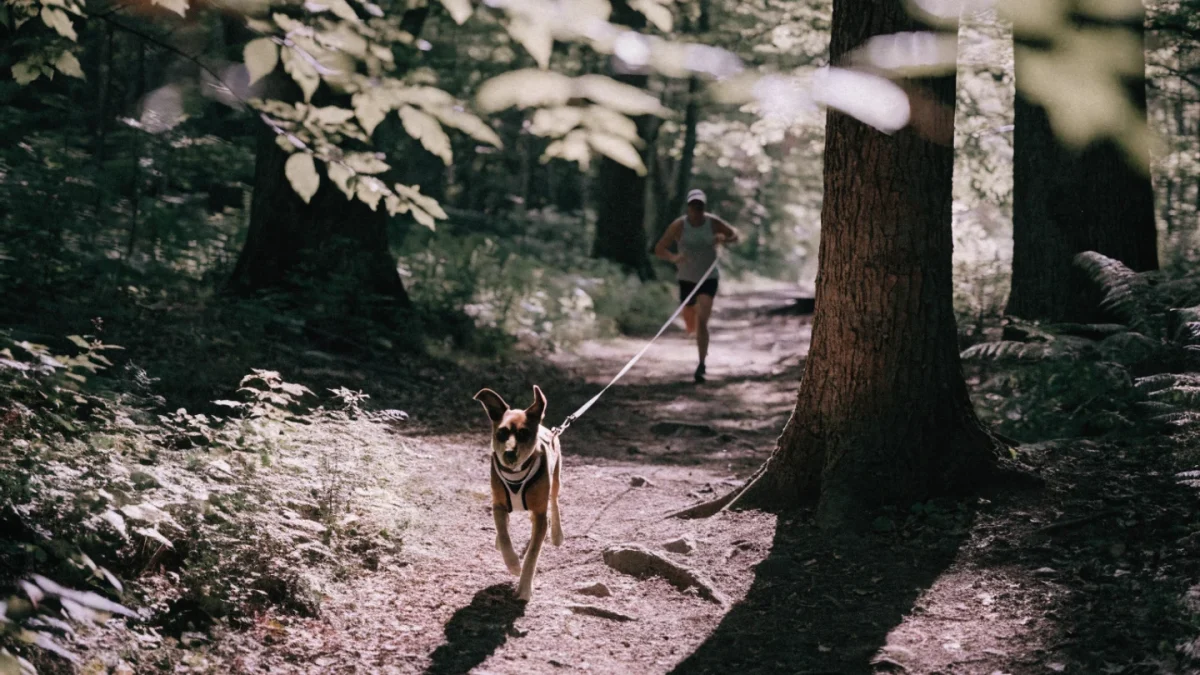
In regular running with your dog, the dog is beside or behind you on a standard leash. You're managing them. In canicross, the dog is in front, pulling in a dedicated harness, attached to you via a hands-free bungee line at your waist.
The dog becomes a propulsion assist. For runners, a well-trained canicross dog can meaningfully improve pace and endurance on trails and hills. For the dog, pulling forward is satisfying — many breeds have pulling drive that doesn't otherwise get an outlet.
Essential Gear
For the dog:
A purpose-made pulling harness that distributes force across the chest and shoulders without restricting movement or breathing. This is not a regular walking harness. The harness should allow full shoulder movement — check that when the dog is in full stride, the harness isn't pulling the straps against the upper legs.
For the human:
A padded waist belt designed for canicross — not a hip pack. The line attaches at the back of the belt, so force comes from your hips, not your hands.
The line:
A bungee canicross line, typically 1.5-2.5 meters, that absorbs shock. A rigid leash transfers every lunge or stumble directly to your waist. The bungee makes the connection manageable.
A leash training foundation matters here — before running fast together, the dog needs basic directional cues.
Minimum Age for the Dog
Don't start sustained canicross with a dog whose growth plates haven't closed. Repetitive impact running on developing skeletal structures causes lasting damage. As a rough guideline:
- Small breeds: 12 months
- Medium breeds: 14-16 months
- Large breeds: 18 months
- Giant breeds: 24 months
Consult a vet before starting any repetitive impact sport with a young dog.
Directional Cues Before Speed
Train basic direction cues before you're moving fast. The standard terminology:
- "Gee" or "right" — turn right
- "Haw" or "left" — turn left
- "On by" — pass a distraction without stopping
- "Easy" — slow down
- "Whoa" — stop
Teach these on leash walks first, at slow speed, with treats. The dog needs to understand them reliably before you're running downhill together and need a left turn at full pace.
Building Up Distance
Start short. Your first canicross sessions should be 10-15 minutes maximum. Both dog and handler are learning movement patterns, coordination, and how to read each other.
Week 1-2: 10-15 minutes, mostly walking with some jogging intervals
Week 3-4: 20-25 minutes, more sustained jogging
Month 2 onward: build distance and time progressively
Watch for signs of fatigue in the dog: lagging behind the line, hard panting, less eagerness to pull. These mean you've gone far enough. Dogs will often push past their safe limit when they're excited — you need to read them and stop before they're depleted.
Who's Built for Canicross
Best suited breeds: Siberian Huskies, Malamutes, and Nordic breeds (bred for pulling), Weimaraners, Vizslas, Border Collies and herding dogs with stamina, high-drive sporting breeds.
Short-muzzled breeds: Limited endurance due to airway physiology. Can walk-run at lower intensities in cool weather. (See also: exercise requirements by breed.)
Giant breeds: Joint concerns with sustained impact running. Check with a vet first.
Most medium to large athletic dogs can enjoy casual canicross at moderate distances once properly conditioned.
The Competitive Track
Canicross has a growing competitive circuit in many countries, ranging from local trail runs to international events. Competitive canicross is timed cross-country running with the dog attached. Dog sports and enrichment at the competitive level includes organized canicross events worth researching in your region.
Even without competing, canicross turns a solitary run into a shared experience. Your dog gets endurance exercise, forward-pull outlet, and one-on-one time. You get a training partner that never cancels.