
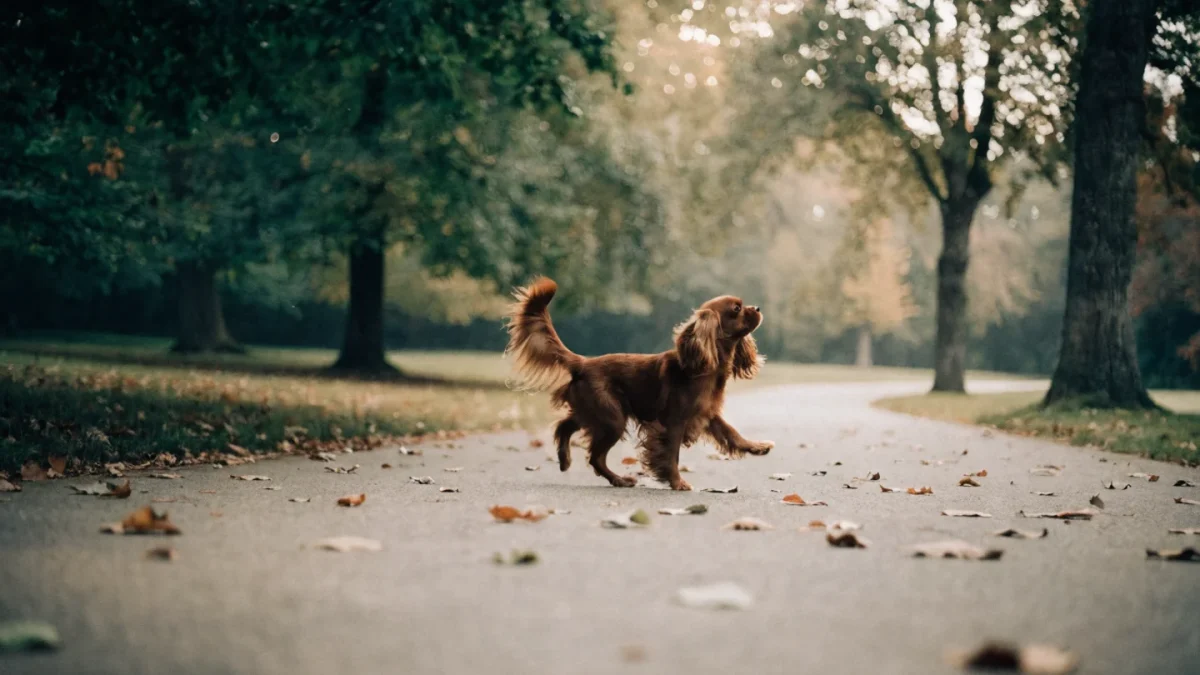
The Cavalier King Charles Spaniel descends from dogs that spent their days in royal palaces — but those palaces had grounds. Extensive ones. The toy spaniels of the Stuart courts weren't confined to laps and cushions. Contemporary paintings show them outdoors, in gardens, accompanying their owners on walks through estate grounds. The Cavalier is a companion dog with spaniel heritage, and that heritage shows up the moment you take one outside.
A Cavalier needs 30 to 60 minutes of exercise daily. That's more than breeds like the Shih Tzu or the Pekingese, less than a Cocker Spaniel or a Springer. The Cavalier sits in a distinctive middle ground — active enough to enjoy genuine outdoor time, content enough to spend the rest of the day at your side.
What Effective Exercise Looks Like
Walking
Two moderate walks per day — 15 to 20 minutes each — form the foundation. Cavaliers are willing walkers who maintain a steady pace and show genuine interest in their environment. They'll investigate scent trails, watch birds, and display the spaniel curiosity that their ancestry preserved.
Longer walks are fine for healthy adults. Many Cavaliers happily manage 3 to 5 km without difficulty, and some owners report their dogs keeping pace on extended country walks. The breed's size is misleading — these are not fragile dogs. Their compact, proportionate build gives them more endurance than their toy-group classification might suggest.
Play Sessions
Interactive play in a garden or secure space lets Cavaliers express their spaniel instincts. A ball tossed across a lawn triggers genuine retrieving behavior in many Cavaliers — they'll chase, pick up, and sometimes even return. It's not the polished retrieve of a Labrador, but the instinct is unmistakably there.
Tug games, puzzle toys, and hide-and-seek (where the owner hides and calls) combine physical movement with mental engagement. The mental component matters for Cavaliers. They're intelligent dogs that benefit from activities requiring them to think, not just move.
Off-Leash Exploration
In secure areas, off-leash time allows Cavaliers to follow their noses. The spaniel prey drive — moderate but present — means they may chase birds, squirrels, or butterflies with surprising determination. Recall training is important before trusting off-leash freedom, because a Cavalier locked onto a scent trail can develop temporary deafness to commands.
This is where the breed surprises people. A dog that was on your lap five minutes ago will bolt across a field after a pigeon with athletic conviction. The Cavalier's companion-driven temperament doesn't negate its spaniel instincts. Both exist in the same dog.
Age-Specific Guidelines
Puppies (Under 12 Months)
Cavalier puppies are playful and energetic in short bursts. The five-minutes-per-month-of-age guideline applies: a four-month-old gets two 20-minute sessions of gentle play and exploration per day. Avoid forced repetitive exercise, jumping from heights, and sustained walking on hard surfaces while growth plates are developing.
Free play on grass or carpet is ideal. Puppies will self-regulate — sprinting for three minutes, then flopping down for a nap. Let them set the pace. The skeletal development of a small breed is less vulnerable than a large breed's, but caution costs nothing.
Adults (1 to 8 Years)
Peak activity period. Thirty to sixty minutes daily, split across two sessions if preferred. Adjust upward for high-energy individuals — some Cavaliers, particularly those from more active breeding lines, will want and benefit from closer to an hour. Adjust downward on very hot days or if the dog shows signs of fatigue.
A consistent routine helps. Cavaliers thrive on predictability, and a dog that knows its morning and evening walks are coming will settle more readily between them.
Seniors (8+ Years)
Activity levels decline gradually. Shorter, gentler walks replace longer outings. Watch for stiffness, reluctance to walk, or changes in gait that may indicate arthritis or cardiac progression. A senior Cavalier still benefits from daily movement — it just takes a different form. Gentle 10-to-15-minute strolls, brief garden explorations, and continued mental enrichment keep the body and mind engaged without overtaxing either.
Heat and Brachycephaly
This deserves its own section because it catches owners off guard.
Cavaliers have a moderately shortened muzzle. They're not brachycephalic in the extreme way that Bulldogs or Pugs are — the 1926 breed revival specifically moved away from the flat face. But the muzzle is still shorter than a typical spaniel's, and that anatomical compromise reduces the breed's ability to cool itself through panting.
On warm days — particularly above 25 degrees Celsius with any humidity — exercise should be modified. Walk in the early morning or evening. Keep sessions shorter. Carry water. Watch for heavy panting, excessive drooling, or glazed eyes, all of which signal heat distress. Never exercise a Cavalier intensely in midday summer heat. The risk of overheating is real and can escalate quickly.
What Happens Without Enough Exercise
An under-exercised Cavalier doesn't typically destroy your house the way a frustrated sporting dog might. The signs are subtler: weight gain, restlessness, attention-seeking behaviors, and a generalized lack of the breed's characteristic contentment. Some Cavaliers become clingy beyond their already high baseline when exercise needs aren't met — the anxiety that comes from pent-up energy compounds the breed's existing tendency toward separation distress.
The Cavalier King Charles Spaniel breed guide covers how exercise fits into the broader picture of ownership requirements. The commitment is moderate and achievable — but it's not zero, and treating it as optional produces a less healthy, less settled dog. Consistency matters more than intensity. Show up every day with a leash and a willingness to walk, and the Cavalier handles the rest.