

King Charles II of England loved his spaniels so completely that diarist Samuel Pepys recorded in 1667 that the king played with his dogs at the council table while the Dutch navy burned English ships in the Medway. The fleet was on fire. The king was on the floor with his spaniels. That level of devotion — from a monarch to a toy spaniel — tells you something fundamental about this breed's hold on the people who keep them.
The Cavalier King Charles Spaniel is a small companion spaniel weighing between 5.4 and 8 kg, developed in Britain over four centuries of royal patronage and selective breeding. If you want a Cavalier King Charles Spaniel breed guide that covers what genuinely matters — the complicated history, the health realities that no responsible source should minimize, the temperament that makes this dog unlike any other small breed, and the honest ownership requirements — this is it.
This breed has a reputation as the perfect lap dog, and that reputation isn't entirely wrong. But it's dangerously incomplete. The Cavalier is also a breed in crisis, carrying genetic health burdens that every potential owner needs to confront with open eyes. I'll cover both sides.
Origins and History
The Tudor and Stuart Toy Spaniels
Small spaniels appear in European court paintings as early as the 1500s. Titian, Van Dyck, and Gainsborough all depicted toy spaniels alongside nobility, and these dogs were fixtures of the English court from the reign of Henry VIII onward. By the time of Charles I, and especially Charles II, the toy spaniel had become inseparable from the Stuart monarchy.
Charles II's attachment was legendary. He issued a royal decree — possibly apocryphal, but widely cited — that King Charles Spaniels must be admitted to all public places, including the Houses of Parliament. Whether or not the decree was real, the association stuck. The breed became "King Charles Spaniels," and they remained fashionable across British and European courts for the next two centuries.
The Victorian Transformation
In the 1800s, breeders began crossing the original toy spaniels with flat-faced breeds — likely Pugs and Japanese Chin. The goal was a shorter muzzle, a domed skull, and larger, more prominent eyes. By the late Victorian era, the King Charles Spaniel (known as the English Toy Spaniel in some countries) had a dramatically different skull shape from its ancestors. The flat face that breeders selected for came with compromised airways and changed the dogs fundamentally.
Roswell Eldridge's Challenge
In 1926, an American named Roswell Eldridge offered a cash prize at the Crufts dog show for breeders who could produce "Blenheim Spaniels of the Old Type" — dogs resembling the longer-nosed spaniels in Van Dyck's paintings of Charles II. The prize ran for five years. Eldridge died in 1928 before seeing the result, but his challenge motivated breeders to select away from the flat face and back toward the original type.
By 1928, a breed club had formed. The word "Cavalier" was added to distinguish the revived, longer-muzzled dogs from the flat-faced King Charles Spaniels that Victorian breeders had created. The breed gained formal recognition in Britain in 1945. Recognition in other countries came decades later — the breed wasn't fully recognized in the United States until 1995.
That late recognition matters. It meant the Cavalier's gene pool remained relatively small during a period of rapid popularity growth, concentrating genetic health problems that define the breed's biggest challenge today.
Physical Characteristics
Size and Build
Cavaliers are small but not fragile. Males and females both typically stand 30 to 33 cm at the shoulder and weigh between 5.4 and 8 kg. The body is slightly longer than tall, with a level topline and moderate bone. Unlike many toy breeds, the Cavalier's build suggests athleticism — these are spaniels, with the proportions to move across varied terrain.
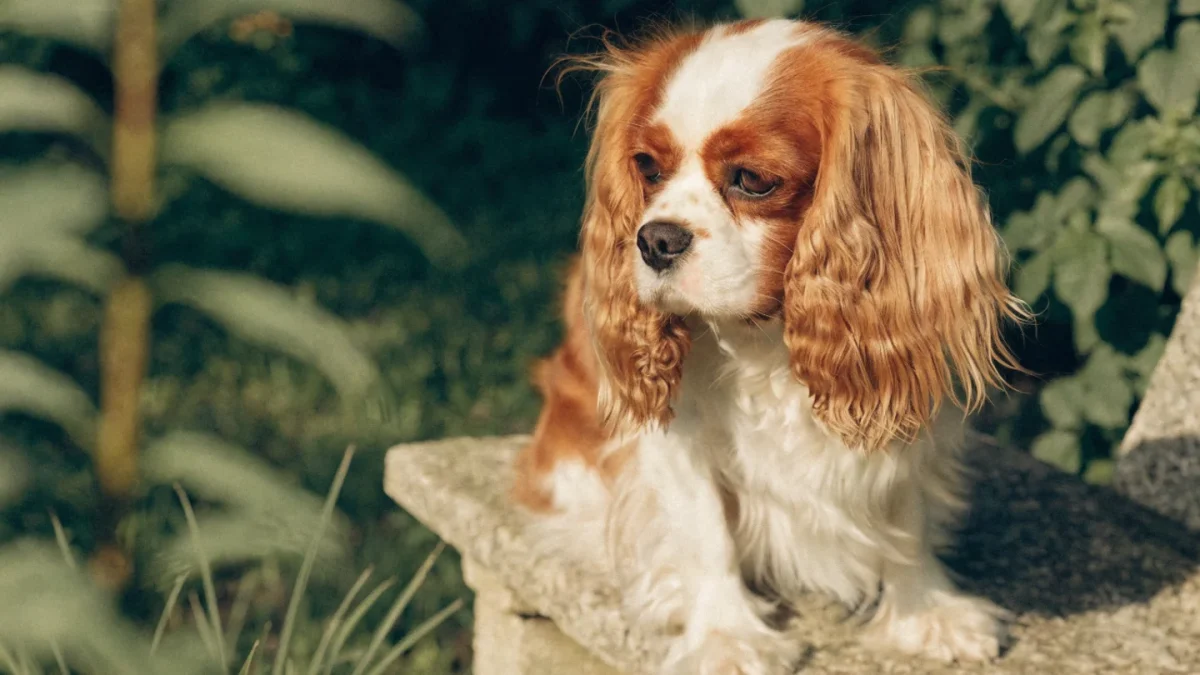
The head is the breed's signature. A nearly flat skull between the ears, a shallow stop, a tapered muzzle of moderate length, and large, round, dark eyes set wide apart create the expression that fanciers describe as "melting." The ears are long, set high, and heavily feathered. The overall impression should be gentle and slightly aristocratic — a dog that looks like a painting from a royal collection, which is essentially what it is.
The Four Color Patterns
Cavaliers come in four recognized color patterns, each with its own name:
- Blenheim: Rich chestnut markings on a white background. Named after Blenheim Palace, the Duke of Marlborough's estate where these spaniels were bred for centuries. The most commonly seen color.
- Tricolor: Black and white with tan markings over the eyes, on the cheeks, inside the ears, and beneath the tail.
- Black and Tan: Solid black with tan markings in the same distribution as the tricolor.
- Ruby: Solid rich reddish-brown. No white markings.
All four colors appear in the same litters. Color preference is purely aesthetic — it has no bearing on temperament or health.
Coat
The coat is silky, moderately long, and either straight or slightly wavy. Feathering appears on the ears, chest, legs, and tail. The coat is single-layered — Cavaliers lack the dense undercoat of sporting spaniels, which means less shedding than double-coated breeds but also less weather protection.
Temperament and Behavior
The Cavalier's temperament is the primary reason the breed exists. These dogs were bred for one purpose: to be companions. Not hunters, not herders, not guards — companions. That breeding purpose produced a dog whose emotional attunement to humans is remarkable even among breeds selected for closeness.
The Companion Instinct
Cavaliers don't just tolerate human presence. They calibrate to it. A Cavalier in a quiet household is calm. A Cavalier in a busy, active household adapts to the energy around it. They mirror their owner's pace to a degree that experienced breeders and veterinary behaviorists consistently note as unusual among toy breeds.
This adaptability is genuine. Cavaliers do well with elderly owners who want a quiet lap companion, and they also do well with active families who include the dog in outdoor activities. The breed's moderate energy level — higher than most toy breeds, lower than working spaniels — gives them a versatile range.
For a deeper look at what drives the Cavalier's companion behavior and how it affects daily life, the article on Cavalier temperament and companion instincts covers it in detail.
What Most People Get Wrong About This Breed
The misconception I encounter most: "Cavaliers are just lap dogs — they don't need much."
They need plenty. The "lap dog" label obscures the fact that Cavaliers are spaniels with real spaniel instincts. They'll chase birds, follow scent trails, and show surprising athleticism when given the opportunity. They need daily walks, mental stimulation, and — above all — sustained human interaction. A Cavalier left alone for long hours isn't just bored. It's distressed.
Separation anxiety is one of the most common behavioral issues in the breed. These dogs were designed, across centuries of selection, to be near their person. When that need isn't met, the anxiety that develops can be severe — destructive behavior, excessive barking, house-soiling, and refusal to eat are all documented responses. This is not a breed that tolerates isolation.
Social Temperament
Cavaliers are typically excellent with other dogs, cats, and children. Aggression is rare in the breed and considered a serious temperament fault. Their pain tolerance and willingness to engage gently with small children has contributed to their reputation as family dogs.
With strangers, most Cavaliers are friendly and approachable. They won't guard your house. They'll greet the visitor and then return to wherever you're sitting, because being near you is always the higher priority.
Health Profile
This section is critical, and I won't soften it. The Cavalier King Charles Spaniel carries two breed-defining health conditions at prevalence rates that are, frankly, alarming. Understanding them is not optional for anyone considering this breed.
Mitral Valve Disease (MVD)
Mitral valve disease is the leading cause of death in Cavalier King Charles Spaniels. The mitral valve — one of four valves in the heart — degenerates over time, allowing blood to leak backward with each heartbeat. The heart compensates by enlarging, which eventually leads to congestive heart failure.
What makes MVD devastating in Cavaliers is not just its prevalence but its early onset. In most small breeds, mitral valve degeneration is a disease of old age — appearing at ten, twelve, or fourteen years. In Cavaliers, the number of dogs with murmurs characteristic of MVD increases at roughly 10% per year — by age 5, approximately 50% have a detectable murmur, and by age 10, nearly all do. The prevalence of MVD in Cavaliers is approximately 20 times that of other breeds of similar size, and once diagnosed, the disease progresses more rapidly than in other breeds (cavalierhealth.org; UFAW breed-specific information). By the time many Cavaliers reach middle age, the disease is already progressing.
There is no cure. Medication can manage symptoms and slow progression, but MVD in Cavaliers is a when-not-if condition for a significant portion of the breed. Breeding protocols that require cardiac clearance of parent dogs at specific ages are the primary tool for reducing incidence, but the genetic basis of early-onset MVD in Cavaliers has not been fully mapped.
Syringomyelia (SM) and Chiari-like Malformation (CM)
Syringomyelia occurs when fluid-filled cavities (syrinxes) develop within the spinal cord. In Cavaliers, it is almost always caused by Chiari-like malformation — a condition where the skull is too small for the brain, forcing the cerebellum through the foramen magnum (the opening at the base of the skull) and obstructing the normal flow of cerebrospinal fluid.
The condition ranges from asymptomatic to severely painful. Affected dogs may scratch at their ears and neck without making contact ("phantom scratching"), yelp during normal activities, become head-shy, or show progressive neurological deterioration. MRI scanning is the only reliable diagnostic tool — clinical signs alone cannot determine the severity of the underlying malformation.
MRI studies estimate that up to 95% of Cavalier King Charles Spaniels show some degree of Chiari-like malformation by age 6, and among those with CM, 50 to 70% develop syringomyelia — though not all become symptomatic. A study of 339 symptom-free German Cavaliers found that 48.1% had syringomyelia visible on MRI despite showing no clinical signs (Thretfall et al.; cavalierhealth.org compilation of MRI prevalence studies). Breeding away from the condition requires MRI screening of parent dogs, which adds significant cost and is not universally practiced.
Other Health Concerns
- Patellar luxation: The kneecap slips out of its normal groove. Common in small breeds, including Cavaliers. Graded from mild (grade 1) to severe (grade 4). Surgical correction may be needed for higher grades.
- Eye conditions: Cataracts, retinal dysplasia, and dry eye (keratoconjunctivitis sicca) are documented in the breed. Annual eye examinations are recommended for breeding stock.
- Ear infections: Those long, heavily feathered ears create a warm, enclosed environment. Without regular cleaning, infections are recurrent.
- Episodic falling syndrome: A breed-specific neurological condition where the dog experiences episodes of muscle stiffness and collapse, triggered by exercise or excitement. A DNA test exists.
- Curly coat/dry eye syndrome: A congenital condition combining rough, curly coat texture with severely dry eyes. Also DNA-testable.
Lifespan
The average Cavalier lifespan is approximately 9 to 14 years, with significant variation depending on the age of MVD onset and the presence of syringomyelia. Dogs from health-tested lines where MVD onset is documented as later in life tend toward the upper end of this range. Dogs that develop early-onset heart disease may not reach ten.
Grooming Requirements
Coat Care
The silky coat requires brushing two to three times per week to prevent matting, particularly in the feathering behind the ears, on the chest, between the legs, and along the tail. A pin brush and a metal comb handle most of the work. Tangles form fastest behind the ears — check this area daily if possible.
Cavaliers shed moderately. The single coat means no dramatic seasonal blowouts like double-coated breeds, but loose hair is a constant presence. A slicker brush during shedding periods keeps it manageable.
Bathing every three to four weeks maintains coat condition. The silky texture means dirt doesn't cling as heavily as it does in coarser-coated breeds, so less frequent bathing is often sufficient depending on the dog's lifestyle.
Ear Maintenance
Those beautiful long ears are a health liability. The heavy ear leather traps moisture and reduces air circulation inside the ear canal. Clean the ears weekly using a veterinarian-recommended solution. Check for redness, odor, or discharge — early signs of infection that are easily treated but recurrent if ignored.
Nails, Teeth, and Eyes
Trim nails every two to three weeks. Cavaliers are small enough that overgrown nails alter their gait quickly. Brush teeth several times per week — small breeds are especially susceptible to periodontal disease. Check the eyes daily for discharge or irritation, particularly in dogs with prominent eyes.
Exercise and Activity
Cavaliers need 30 to 60 minutes of daily exercise. This is less than most sporting breeds but considerably more than many toy breeds. Short walks, garden play sessions, and interactive games satisfy the physical requirement. Many Cavaliers enjoy longer walks and will happily cover several kilometers if given the opportunity.
The breed's spaniel heritage means they'll engage with scent trails, chase butterflies, and show genuine enthusiasm for outdoor exploration. Off-leash exercise in secure areas lets them express those instincts.
Puppy Exercise
Like all breeds, Cavalier puppies need age-appropriate exercise. Short, frequent play sessions rather than sustained walking protect developing joints. The five-minutes-per-month-of-age guideline is a reasonable framework.
Heat Sensitivity
Cavaliers have moderate brachycephaly — less extreme than Bulldogs or Pugs, but the shortened muzzle still reduces heat-dissipation efficiency compared to longer-nosed breeds. Avoid strenuous exercise in hot or humid conditions, provide shade and water, and monitor for signs of overheating.
Nutrition
Feed measured meals — two per day for adults, three for puppies under six months. Cavaliers are food-motivated enough that weight management requires attention, and obesity worsens both cardiac and joint health in a breed already predisposed to problems in both areas.
Caloric needs for an average adult Cavalier at a healthy weight fall somewhere around 400 to 600 calories per day, though individual variation is significant. Work with a veterinary professional to determine appropriate intake rather than relying on bag-feeding guidelines.
A Cavalier at a healthy weight has palpable ribs, a visible waist when viewed from above, and an abdominal tuck in profile. Many Cavaliers carry excess weight because their owners find a slightly plump spaniel cute. It is not cute for the dog's heart.
Living Situation Compatibility
Cavaliers are among the most adaptable breeds for varied living situations. They do well in apartments, houses, and urban environments. They're quiet dogs — not prone to excessive barking — and their moderate size makes them suitable for smaller spaces.
The critical variable is not space but companionship. A Cavalier in a mansion where no one is home all day will be miserable. A Cavalier in a studio apartment with an owner who works from home will thrive. Presence matters more than square footage.
They travel well. Their size, temperament, and adaptability make them practical travel companions — a trait that traces directly back to their history as dogs that went everywhere with their owners.
Multi-Pet Households
Cavaliers generally coexist well with other dogs and cats. Their low aggression threshold and social nature make them good candidates for multi-pet households. Some Cavaliers will chase small birds or rodents — the spaniel prey drive hasn't been entirely bred out — but serious predatory behavior is uncommon.
Choosing a Cavalier King Charles Spaniel
Health Screening
Given the breed's health profile, health clearances for parent dogs are not a luxury — they're a bare minimum. At minimum, confirm:
- Cardiac evaluation by a veterinary cardiologist (not a general practitioner). Both parents should be clear of murmurs at a minimum age of 2.5 years, with older clearances being more meaningful given MVD's progressive nature.
- MRI for syringomyelia/CM, though this is not universally available or practiced. Breeders who MRI screen are making a significant investment in breed health.
- Patellar evaluation.
- Eye examination within the past twelve months.
- DNA testing for episodic falling syndrome and curly coat/dry eye syndrome.
Adoption
Breed-specific rescue organizations place Cavaliers regularly. Adult Cavaliers in rescue come with the significant advantage of known health status — you can assess cardiac condition before committing, rather than waiting years to discover MVD onset. For prospective owners concerned about the health gamble, an adult rescue with a recent cardiac evaluation is worth serious consideration.
Red Flags
- No cardiac clearances for parent dogs, or clearances obtained at very young ages (under 2.5 years)
- Puppies available constantly with no waitlist
- No questions about your living situation or experience
- Premium prices for "rare" colors (all four colors are standard and equally valid)
- Breeders who minimize or dismiss MVD and SM as concerns
The Right Owner for This Breed
A Cavalier King Charles Spaniel is the right dog for you if:
- You're home most of the day or can take the dog with you — this breed does not tolerate being left alone for long periods
- You understand and accept the cardiac and neurological health realities and are financially prepared for them
- You want a dog that's genuinely affectionate without being hyperactive
- You can commit to regular grooming, ear maintenance, and veterinary monitoring
- You value temperament and companionship above athletic ability or independence
- You're comfortable with a dog that will follow you from room to room, sit on your lap during every available moment, and sleep as close to you as physics allows
A Cavalier is the wrong choice if:
- You're away from home for long hours without a care plan
- You want a dog that's independent and self-entertaining
- You're not prepared for the financial and emotional reality of managing serious breed-specific health conditions
- You want a dog for outdoor athletic activities that exceed what a small, moderately brachycephalic spaniel can safely handle
For a detailed breakdown of lifestyle fit, the article on whether a Cavalier is right for your lifestyle lays it out directly.
The Cavalier King Charles Spaniel is one of the most emotionally rewarding breeds I've encountered in over a decade of breed research. The bond they form is genuine and deep. But that bond comes packaged with health realities that demand honesty, not romanticism. The breed deserves owners who love it enough to face those realities squarely.
Frequently Asked Questions
How serious is mitral valve disease in Cavalier King Charles Spaniels?
Very serious. MVD is the leading cause of death in the breed and tends to develop earlier in Cavaliers than in other small breeds. While medication can manage symptoms and extend quality of life, there is no cure. The single most important thing a prospective owner can do is acquire a dog from lines where cardiac clearances are documented and MVD onset is known to occur later in life. Even then, the risk is never zero.
Are Cavalier King Charles Spaniels good apartment dogs?
Excellent apartment dogs. Their moderate size (5.4 to 8 kg), relatively quiet nature, and adaptable energy level make them well-suited to apartment living. The requirement is companionship, not space — a Cavalier needs its person present, not a large yard. Daily walks and play sessions of 30 to 60 minutes satisfy the breed's exercise needs within any living situation.
Do Cavalier King Charles Spaniels shed a lot?
Moderately. The single coat sheds year-round at a steady but manageable rate — you won't experience the dramatic seasonal blowouts of double-coated breeds. Brushing two to three times per week controls loose hair. Expect some fur on furniture and clothing, but considerably less than breeds like golden retrievers or huskies.
What is the difference between a Cavalier King Charles Spaniel and a King Charles Spaniel?
They share ancestry but are distinct breeds. The King Charles Spaniel (English Toy Spaniel in some countries) has the flat face, domed skull, and shorter muzzle created by Victorian-era breeding with Pugs and Japanese Chin. The Cavalier was developed in the 1920s and 1930s specifically to restore the longer muzzle and flatter skull seen in pre-Victorian paintings. The Cavalier is slightly larger, has a longer muzzle, and a flatter skull than the King Charles Spaniel.
Can Cavalier King Charles Spaniels be left alone during the workday?
Not comfortably. This breed is exceptionally prone to separation anxiety due to centuries of selection for constant human companionship. Most Cavaliers struggle with being alone for more than four to five hours. If you work full time outside the home, you need a plan — a partner who's home, a dog walker, daycare, or the ability to bring the dog to work. Leaving a Cavalier alone for eight or more hours daily is a recipe for a stressed, anxious dog with escalating behavioral problems.