

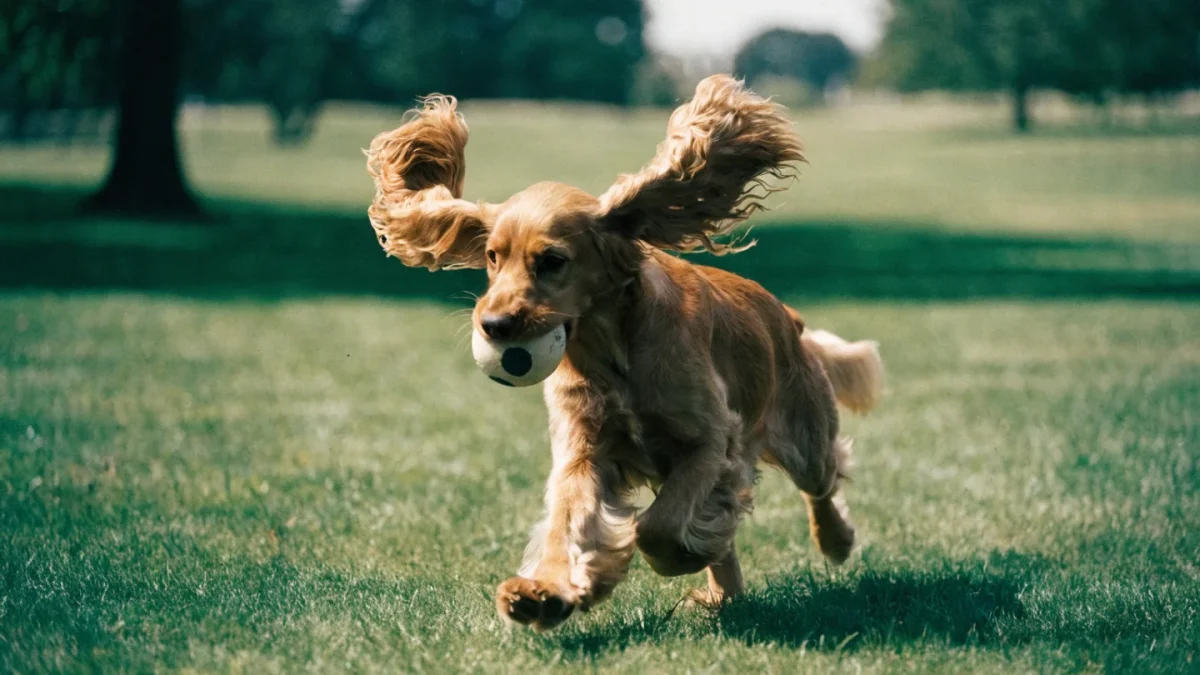
The cocker spaniel was bred to work dense cover for four to six hours at a stretch, pushing through bramble and undergrowth to flush woodcock for waiting hunters. Nobody expects a pet cocker to replicate that workload. But understanding that the breed's chassis was designed for sustained field activity — not couch napping — explains why a cocker that gets a ten-minute lap around the block starts expressing its frustration through chewed furniture and persistent barking.
Cocker spaniel exercise needs sit in the moderate range for sporting dogs. They don't demand the relentless output of a springer spaniel or a working retriever. But they need more than many first-time owners expect from a dog this size, and the consequences of underexercising a cocker accumulate faster than most people realize.
The Numbers
An adult cocker in good health needs 45 to 60 minutes of daily exercise. Split that across at least two sessions — a morning walk of 20 to 30 minutes and an afternoon session of similar length works well for most schedules. A single long outing is less effective than two shorter ones because cockers, like most dogs, benefit from the mental reset of going out, coming back, and going out again.
These numbers assume a healthy adult at a reasonable weight. An overweight cocker may need to start with shorter, gentler sessions and build up gradually. A field-bred cocker with stronger working drives may need closer to 75 minutes. An older cocker with arthritis or other mobility limitations may do better with 30 to 40 minutes at a slower pace. Adjust to the dog in front of you, not to a breed average.
The exercise doesn't all need to be walking. Play sessions, training games, and structured sniffing time count toward the daily total and often tire the cocker's brain more effectively than covering distance at a leash pace.
What Works Best
Cockers respond well to variety. The same route at the same time every day becomes routine rather than stimulation, and a bored cocker is a cocker that stops engaging with the walk.
Walking with sniffing time. Allow the cocker to investigate scent trails rather than marching at a fixed heel. Spaniels process the world through their nose, and a walk that includes dedicated sniffing time is more mentally satisfying than a brisk march that covers twice the distance.
Retrieving games. Many cockers retain a natural fetching instinct. A ball or soft toy thrown across a yard or park satisfies the breed's working drive and adds bursts of higher-intensity activity within a moderate framework. Keep sessions moderate — 10 to 15 minutes of fetching before transitioning to something else prevents repetitive strain.
Nose work and scent games. Hiding treats in the yard or using a snuffle mat engages the same cognitive pathways that field work activates. A 15-minute scent session can produce the same level of calm satisfaction as a 30-minute walk in some dogs.
Swimming. Some cockers enjoy water and swim capably. Swimming provides excellent low-impact exercise that's easier on joints than running on hard surfaces. The major caveat: the cocker's heavy coat becomes waterlogged, so thorough drying afterward is mandatory to prevent skin problems and ear infections. Not every cocker is a confident swimmer — introduce water gradually and never force it.
Interactive play. Tug, hide-and-seek with toys, and structured play with family members satisfy the cocker's social drive while providing physical activity. The breed's people-oriented temperament means that play with their person is inherently more satisfying than solo exercise.
The Weight Connection
Cocker spaniels gain weight with alarming ease. They're food-motivated, efficient metabolizers, and — when underexercised — prone to rapid fat accumulation that compounds joint stress, increases strain on the cardiovascular system, and shortens lifespan.
Exercise is half of the weight equation. An overweight cocker needs both increased activity and reduced caloric intake. But increasing exercise without addressing diet produces slow or negligible results, and increasing exercise abruptly in an overweight dog risks joint injury. Start slowly, build incrementally, and work with a veterinary professional to create a realistic weight-loss timeline.
A healthy cocker has a visible waist when viewed from above and ribs that you can feel without pressing through a thick layer of tissue. If the dog looks cylindrical from above or you need firm pressure to find ribs, exercise duration alone isn't the solution — it's the start of a broader management conversation.
For a full overview of how exercise fits into the breed's overall requirements, the complete breed guide covers nutrition, grooming, and health alongside activity needs.
Puppy Exercise
Young cockers are energetic, mouthy, and seemingly inexhaustible — but their growing bodies are more fragile than their behavior suggests. Growth plates in the long bones don't close fully until approximately 12 to 14 months of age, and repetitive impact exercise on hard surfaces during this window risks permanent joint damage.
The commonly cited guideline is five minutes of structured exercise per month of age, twice daily. A four-month-old puppy gets about 20 minutes per session. This doesn't include free play, which puppies should be allowed to do at their own pace on soft surfaces — grass, carpet, or sand rather than concrete or asphalt.
Avoid forced running, extended leash walks on pavement, and repetitive jumping (including repeated stair climbing) until the puppy is physically mature. Let the puppy set the pace during play and call it quits when the puppy shows signs of tiring — lying down, slowing, or losing interest.
Senior Cockers
Older cockers slow down gradually. Most maintain interest in walks and play well into their senior years, but the intensity and duration decrease. Arthritis, reduced stamina, and vision or hearing changes all affect how much exercise is appropriate and comfortable.
Thirty to forty minutes of gentle walking, split across two outings, is a reasonable baseline for most senior cockers. Shorter, more frequent sessions may be better tolerated than longer single walks. Soft surfaces are easier on aging joints than pavement. Nose work and puzzle games remain excellent options because they tire the brain without stressing the body.
The worst outcome for a senior cocker is no exercise at all. Reduced activity accelerates muscle loss, joint stiffness, and cognitive decline. The goal is maintaining mobility and mental engagement within the dog's comfort limits, not pushing through pain.
Signs of Underexercise
A cocker that isn't getting enough activity will tell you — just not in words.
Persistent barking, especially during periods when the household is quiet. Destructive chewing, particularly targeting shoes, cushions, and anything carrying the owner's scent. Weight gain despite seemingly moderate feeding. Restlessness and pacing in the evening. Hyperexcitable greetings that don't calm down after the initial reunion.
These aren't personality flaws. They're signals from a sporting dog whose body and brain need more engagement than they're getting. The fix is usually straightforward: more structured daily activity, more variety in exercise types, and more time engaging the cocker's nose and brain alongside its legs. If you're still in the decision stage, the guide on whether a cocker fits your lifestyle covers exercise commitment alongside every other dimension of ownership.