

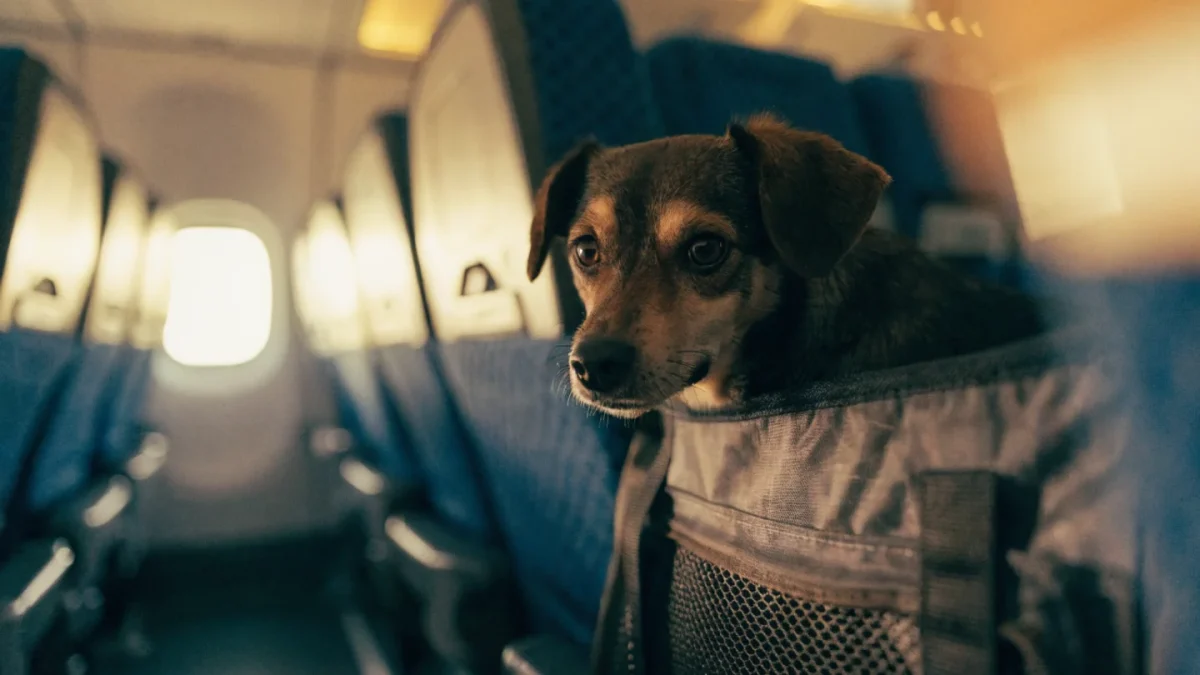
The first time I flew with Fig, I was convinced one of us wasn't going to survive it. Probably me. He'd barely left the apartment at that point — still the kind of cat who treated the hallway like a hostile foreign country — and I had to get him across time zones for a family thing I couldn't get out of.
He was, infuriatingly, completely fine. I was a sweaty mess at the gate.
Flying with pets is one of those things that sounds much more complicated than it is once you've done it. But the prep work matters, and doing it wrong has real consequences — for your pet's comfort and safety, and sometimes for your trip. So here's everything I've figured out.
Start With the Airline, Not the Carrier
Most people buy the carrier first and figure out airline rules later. Do it the other way around.
Every airline has its own pet policy — size restrictions, which aircraft allow in-cabin pets, documentation requirements, fees, and booking procedures. Some don't allow pets in-cabin at all on certain routes or aircraft types. Others cap the number of pets per flight (usually two to four in-cabin), which means if you book late, you might be out of luck even if you have the right carrier.
Call the airline or check their pet policy page before you do anything else. The key things to confirm:
- Can your pet travel in-cabin or do they need to go in cargo?
- What are the carrier dimensions allowed in-cabin (every airline is different)?
- How do you add a pet to the reservation and what's the fee?
- Are there breed restrictions (snub-nosed breeds often aren't allowed in cargo due to breathing risks at altitude)?
- What documentation will you need at check-in?
Get this information in writing if you can. Pet policies change, and having documentation of what you were told can matter if something goes wrong at the airport.
In-Cabin vs. Cargo — The Basics
This is the question I get asked most often, so I'll give you the short version here (I've written a full cabin vs cargo decision piece if you want to dig deeper).
Most cats and small dogs can travel in-cabin if they fit in a carrier that fits under the seat in front of you. That's typically about 45 x 28 x 25 cm, though dimensions vary. If your pet plus carrier exceeds the airline's weight limit — often 8-10 kg combined — they'll need to go in the cargo hold.
Cargo isn't automatically dangerous, but it's more stressful for most animals and involves more risk factors: temperature variations, noise, handling. If in-cabin is an option for your pet, take it.
The Carrier Question
Airline-approved carriers come in soft-sided and hard-sided versions. For in-cabin travel, soft-sided is almost always better — they compress slightly to fit under the seat, which rigid carriers can't do.
What to look for:
- Meets your airline's specific dimensions (measure carefully — the dimensions listed are for the carrier, not just the pet)
- Proper ventilation on at least two sides
- Secure zipper or latch that won't pop open if the bag gets bumped
- A base that's solid enough to support your pet — avoid fully collapsed floors
- Washable interior lining (you'll thank yourself for this one)
Your pet should be able to stand up, turn around, and lie down comfortably. "Comfortably" is doing some work in that sentence — they shouldn't be stuffed in, but a carrier that's too large shifts around more, which is its own stressor.
Getting Your Pet Used to the Carrier Before Travel
This is the step most people skip and then regret loudly.
Start weeks before your trip. Leave the carrier out with the door open. Put a familiar blanket or piece of clothing inside. Feed treats in or near it. Let your pet investigate it on their own schedule. By travel day, it should be familiar territory — not a trap.
For cats especially, this matters. I started leaving Fig's carrier out as just furniture about a month before that first flight. By the time we left for the airport, he walked in himself. That never would have happened if I'd pulled it out of the closet the morning we flew.
Documents Your Pet Needs to Fly
I'd strongly recommend reading the full article on documents your pet needs to fly because this section varies a lot by airline, destination, and whether you're traveling domestically or internationally.
The basics for most domestic flights:
- Health certificate from a licensed vet, usually issued within 10 days of travel
- Proof of current rabies vaccination (required by most airlines)
- Your airline may have its own forms in addition to a standard health certificate
International travel is a whole different situation — microchipping requirements, country-specific import documentation, sometimes quarantine periods. Start that research months in advance, not weeks.
On Travel Day
A few things I've learned the hard way:
Feed your pet lightly, or not at all, 3-4 hours before departure. Motion sensitivity exists in animals, and a full stomach doesn't help. Water is fine — a collapsible bowl for the airport is a good idea.
Arrive early. Going through security with a pet takes longer. You have to remove the pet from the carrier and carry them through the scanner while the carrier goes through the X-ray machine. With a nervous cat, this is a two-handed operation with limited margin for error.
Don't open the carrier mid-flight. Tempting if your pet seems distressed. Don't. A panicked animal loose in an airplane cabin is a bad situation for everyone.
Cover the carrier. A light blanket or scarf over the top and sides blocks visual stimulation and helps most pets settle. Fig went from audible complaints to silence within about ten minutes of me doing this.
Talk to them quietly. Your voice is the most consistent, calming thing in that environment. You'll feel silly. It helps anyway.
Pets Who Shouldn't Fly
Some animals are genuinely poor candidates for air travel, and it's worth being honest about this.
Snub-nosed (brachycephalic) breeds — Persian cats, English bulldogs, French bulldogs, pugs — have documented breathing difficulties at altitude and in high-stress situations. Many airlines restrict these breeds in cargo specifically because of this risk. If you have a brachycephalic pet, consult a vet before making any flight plans.
Very old animals, pets with heart conditions, and highly anxious animals who don't settle in enclosed spaces should also prompt a conversation with your vet. Sometimes driving is the better option. Sometimes leaving them with a trusted sitter is the better option. Not every pet needs to travel with you.
What About Sedation?
Most vets don't recommend sedating pets for air travel, and many airlines explicitly prohibit it for cargo animals. Sedation can impair the reflexes and respiratory function animals rely on to stay stable during the physical stresses of a flight.
That said, there are anti-anxiety medications that aren't sedatives — some pets do genuinely need pharmaceutical support to fly without distress. This is a conversation to have with your vet several weeks before travel, not the day before. Any medication should be tested at home first to see how your individual pet responds.
If Your Pet Has to Go in Cargo
If cargo is the only option, there are things you can do to reduce stress:
- Book a direct flight. Every transfer is another handling event, another unfamiliar environment.
- Choose flights that avoid extreme temperatures — early morning or evening flights in summer, midday in winter, where possible.
- Use a hard-sided carrier for cargo, with proper ventilation on multiple sides.
- Mark the carrier clearly with your pet's name, your contact information, and "LIVE ANIMAL."
- Include a familiar-scented item inside.
- Don't lock the carrier — emergency personnel may need access, and most airlines require a claw latch style that can be opened from outside.
Connecting With Other Travelers Who've Done This
Road trips are often the more pet-friendly option for shorter distances — if that's a possibility for you, the road trips with your pet piece is worth reading before you commit to air travel. The prep is less intense and many pets genuinely prefer it.
But when flying is the only option, it's manageable. Really. Fig went from hallway-as-hostile-territory to seasoned air traveler. He still sits on my lap immediately after I let him out of the carrier at our destination — but I think that's just him reestablishing that the pecking order hasn't changed.
Frequently Asked Questions
How early should I book a pet on a flight?
As soon as you book your own ticket. Pets are typically added to the reservation at booking or shortly after, and in-cabin pet spots are limited — most flights only allow a few. Don't wait. Also check whether your airline needs you to call to add a pet versus doing it online; policies differ.
Can my pet fly in-cabin if they're over the weight limit?
No — if your pet plus carrier exceeds the airline's in-cabin weight limit (often 8-10 kg), your only option is cargo or choosing not to fly. There's no exception process for this. Some people fly airlines with more generous weight limits, or consider whether a different travel method makes more sense.
Should I exercise my dog before a flight to tire them out?
Yes, if timing works. A good walk or play session before heading to the airport can help dogs settle more easily during the flight. For cats, this isn't really an option — but avoiding feeding a few hours before departure and ensuring they've had access to a litter box right before you leave is the equivalent prep.
What if my pet cries or barks during the flight?
It happens. Most passengers and flight crews have seen it before and are more understanding than you might fear. Cover the carrier to reduce stimulation, speak calmly, and try not to reinforce distress sounds by opening the bag repeatedly — it signals that making noise gets a response. Most pets settle within 30-45 minutes once the novelty wears off.
Can I take my pet out of the carrier during the flight?
Technically the carrier should stay closed for the duration of the flight. Some people do briefly open it to comfort a visibly distressed animal, but a loose pet in a cabin is a risk to the pet and other passengers. If your pet is so distressed they need to be held, this is a signal they may not be a good candidate for air travel without more preparation or a vet consultation.
Do airlines require specific health certificate forms?
Most require a USDA-accredited vet health certificate for domestic US travel, typically issued within 7-10 days of the flight. For international travel, requirements are much more specific — often country-specific forms, microchip verification, and sometimes blood titer tests that need to be done weeks or months in advance. Always verify directly with both your airline and the destination country's agricultural or pet import authority.