

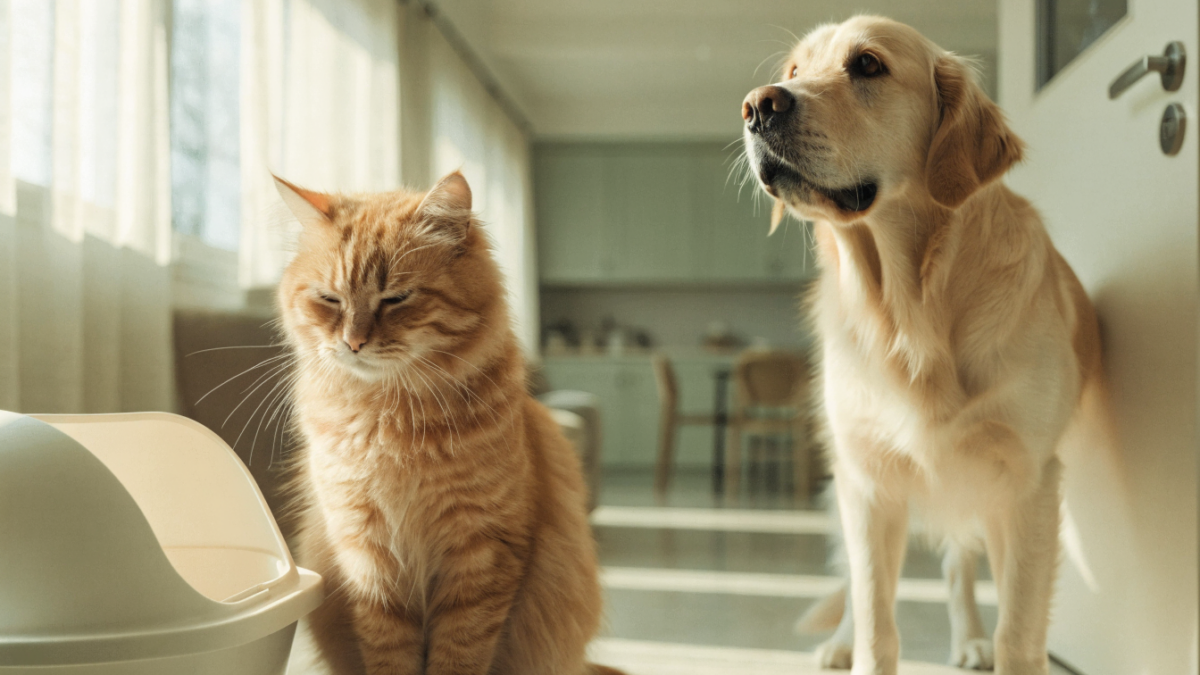
When Karen, a long-time client, rushed her pets into the clinic last month, she was frantic. She has an eight-year-old Golden Retriever named Buster and a slightly chunky indoor tuxedo cat named Socks. She was convinced both of them were blocked up because Buster was pacing in the yard without producing anything, and Socks had been in and out of his litter box three times in an hour. “They’re both constipated, Doc!” she insisted. After examining them, I had to laugh—she was completely right about Socks, but wrong about Buster. It’s a very common mix-up in multi-pet households. Dogs and cats might share our living rooms, but their digestive tracts operate by very different rules. Let’s talk about the scoop on poop—specifically, how to tell if your cat is backed up versus your dog, and what you can safely do about it.
The Tale of the Tape: What “Normal” Looks Like
Before we can talk about what happens when the plumbing gets clogged, we need to talk about what a healthy bowel movement looks like. Embrace the gross factor—looking at your pet’s poop is one of the absolute best ways to monitor their health.
For dogs, you’re looking for a stool that is tubular, dark brown, and fairly firm. It should ideally have the consistency of Play-Doh—easy to pick up with a poop bag without leaving a messy residue on the grass.
Cats, on the other hand, have a very specific gold standard. A healthy cat stool should closely resemble a “Tootsie Roll” in shape and consistency. It’s typically segmented, compact, and surprisingly odor-free if their diet agrees with them.
When constipation hits, that perfect shape goes out the window. The feces of a constipated pet becomes hard and dry, which significantly increases straining during defecation. You’ll likely see your pet assuming the posture to go, but nothing comes out, or what does come out looks like small, hard pebbles.
Why Cats Are the Usual Suspects
If you have both dogs and cats, you need to keep a much closer eye on the litter box than the backyard. While constipation is a highly common issue in small animals, it is particularly frequent in cats. Multi-pet owners should monitor their feline litter boxes much more rigorously.
Why are our feline friends so vulnerable? It comes down to hydration and ancestry. Domestic cats descended from desert-dwelling felines who got almost all their moisture from their prey. Modern house cats retain that biological trait—they simply don’t have a strong thirst drive. When a cat eats primarily dry kibble, they become notoriously under-hydrated. Their bodies try to conserve water by absorbing every last drop from the stool in the colon. The result? Dry, hard, difficult-to-pass feces.
Take Leo, an eight-year-old Maine Coon seen last winter. His owner noticed he was crying in the litter box and leaving tiny, hard drops of stool around the house. On examination, a hard mass was easily palpable in his colon. He was transitioned to a wet-food diet, with a running water fountain added to encourage drinking. The change in his stool consistency was remarkable within just a few days.
When a Backed-Up Bowel Becomes an Emergency
There is a fierce debate among pet owners about when to treat constipation at home versus when to seek veterinary help. I’ve changed my mind on this over the years. Early in my career, I used to tell people to wait a few days and try home remedies first. But research and clinical experience have taught me that waiting too long is a dangerous game.
Here is the physics of digestion: muscle movement directly contributes to peristalsis—the involuntary constriction and relaxation of the muscles in the digestive tract that pushes food and waste through the body. When stool sits in the colon, the body continues to draw water from it, making it increasingly hard. This causes painful or absent defecation and an impacted colon.
If left untreated, this backed-up stool causes the large intestine’s smooth muscles to become over-stretched. This leads to severe conditions like obstipation (a complete and dangerous obstruction) and eventually megacolon. According to the,[1] megacolon is a devastating progression where the colon loses its ability to contract entirely. At that point, we’re looking at manual evacuation or enemas under anesthesia—far more invasive than treating a simple backup.
If you try home remedies and your pet hasn’t produced a normal stool within 24 to 36 hours, or if they are visibly in pain, crying, or vomiting, stop the home treatments and get to a clinic immediately. What an owner might think is simple constipation could actually be an obstruction requiring medical intervention.
Safe, Species-Specific Home Remedies
It’s completely natural to want to try home remedies first. I understand the impulse, and when used correctly for mild cases, they can be highly effective. Here is how to approach it depending on which pet is struggling.
For the Dogs
For dogs, adding moisture and fiber to the diet is usually the first step. Pureed pumpkin (make sure it is 100% pure pumpkin puree, not pumpkin pie filling, which contains harmful spices and sugars) is a fantastic, safe source of fiber.
- Hydration: Add warm water or a splash of low-sodium bone broth to their dry kibble to soften the food and increase fluid intake.
- Fiber: A small spoonful of pureed pumpkin can help bulk up the stool, which actually stimulates the colon to contract.
For the Cats
Because cats are so prone to dehydration, their home remedies heavily focus on moisture. Recent developments in feline medicine continually highlight that felines are notoriously under-hydrated.
- Dietary Shift: Transitioning cats to a wet-food diet is one of the most effective preventative measures against chronic constipation.
- Running Water: Using running water fountains can significantly increase systemic hydration, keeping the stool softer and easier to pass.
Note: Always consult your veterinarian before giving any dosage of fiber supplements or stool softeners, as giving too much can cause severe diarrhea or electrolyte imbalances.
Getting Things Moving: Prevention Through Play and Pain Management
Since muscle movement aids digestion, physical activity is essential for healthy bowel movements in both species. A sedentary pet is almost always a backed-up pet. As pets age and slow down, their peristalsis slows down with them.
In geriatric veterinary care, there is an increasing focus on maintaining mobility in older dogs. Managing arthritis and joint pain in senior dogs is now recognized as a crucial preventative measure against chronic constipation. If it hurts to walk, they won’t get the exercise they need to keep their bowels moving.
This brings me back to Karen’s Golden Retriever, Buster. She thought he was constipated, but when I watched him walk into the exam room, his hind legs were trembling. Buster wasn’t backed up; he was struggling with severe arthritis. His squatting posture was incredibly painful for him, making it look like he was straining to poop when he was really just straining to stand. Once we got his joint pain under control, his “constipation” vanished.
Respecting Their Wild Biology
Domestic dogs (Canis lupus familiaris) and domestic cats (Felis catus) might not face conservation threats in the wild, but understanding their ancestral biology is the ultimate key to protecting their welfare at home. Cats are still desert creatures at heart, relying on prey-like moisture to thrive, while our dogs are active foragers that rely on physical mobility to keep their systems regular. By respecting these species-specific needs—keeping our feline friends aggressively hydrated and our canine companions comfortably active—we ensure their internal plumbing runs smoothly, keeping them happy, healthy, and pain-free for years to come.
Sources
- Merck Veterinary Manual — merckvetmanual.com