

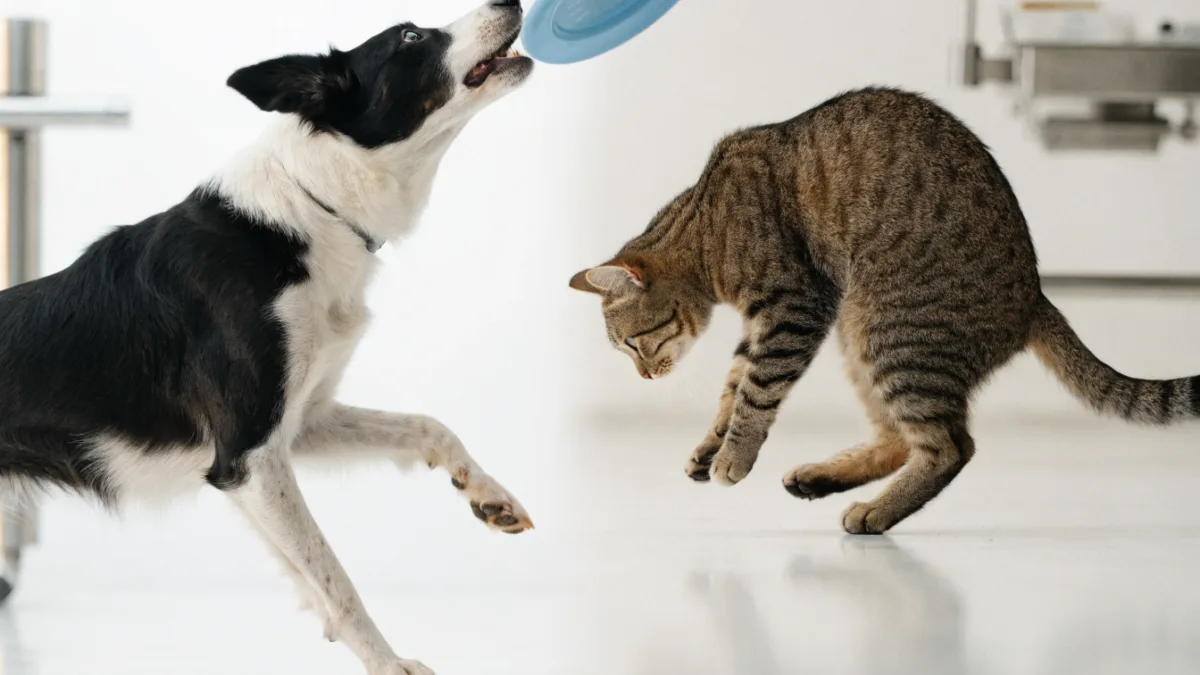
Last Tuesday, a lovely couple brought in their five-year-old Labrador named Biscuit. The story was one I’ve heard a thousand times: they were playing fetch at the park, Biscuit made a sharp turn to chase the ball, yelped, and came back holding his right hind leg up off the ground. “He just blew his knee,” the husband said, shaking his head. He was right. Biscuit had torn his cranial cruciate ligament — the dog equivalent of an ACL tear. What struck me, though, was the wife’s follow-up question: “Why does this happen to every dog we know, but our cat can fall off the refrigerator and walk away fine?”
It’s a genuinely great question, and the answer tells us something fascinating about how evolution shaped two very different animals.
First, Let’s Clear Up the Terminology
Most pet owners say “ACL,” and that’s perfectly fine — it’s the term that makes sense to people because it’s the same injury human athletes suffer. But anatomically speaking, dogs and cats have a cranial cruciate ligament (CCL) rather than an anterior cruciate ligament. The difference comes down to the angle at which the leg is positioned. Humans stand upright, so our ligament is “anterior” (toward the front). Dogs and cats stand on their toes with their knees bent at an angle, so the same ligament is called “cranial” (toward the head). I’ll use both terms throughout this article because, honestly, even in the exam room, I switch between them depending on what the owner understands best.
The cruciate ligament’s job is simple but critical: it prevents the shin bone (tibia) from sliding forward relative to the thigh bone (femur). Think of it as a seatbelt for the knee joint. When it ruptures, that seatbelt snaps, and the knee becomes unstable and painful.[1]
Why Dogs Tear Their Knees (And Keep Tearing Them)
ACL tears are among the most common orthopedic injuries I see in practice, and they represent,[2] particularly in medium and large breeds. But here’s something I’ve come to appreciate over years of practice: most dog ACL tears aren’t really “acute” injuries in the way people think.
Yes, there’s a moment — that sharp pivot, the yelp, the lameness. But the ligament was likely degenerating for months or even years before it finally gave way. We now understand that many dogs have underlying conformational issues, particularly a steep tibial plateau angle (the natural slope of the top of the shin bone), that puts chronic stress on the ligament. It’s like a rope fraying slowly under tension until one day it snaps.
The Usual Suspects
- Genetics and breed: Labrador Retrievers, Rottweilers, German Shepherds, Newfoundlands, and Mastiffs are overrepresented. I see it in small dogs too — especially Cocker Spaniels and Shih Tzus — but large breeds dominate my surgical schedule.
- Weight: This is the factor I talk about most with clients. Every extra pound multiplies the force on the knee joint significantly.
- The “weekend warrior” syndrome: A dog who lies around all week and then goes hard at the dog park on Saturday is at much higher risk than a consistently conditioned athlete.
- Age and activity level: Middle-aged dogs (roughly 5–7 years old) in their prime exuberance but with slightly less tissue resilience than puppies seem to be the sweet spot for injury.
The “Other Knee” Problem
Here’s the part that genuinely frustrates me as a clinician: once a dog tears one CCL, there is roughly a 40–60% chance they’ll tear the other one within 12 to 24 months. The reasons are mechanical and understandable — the dog shifts weight to the good leg, which was already shaped by the same genetics and is now carrying extra load — but explaining this to an owner who just spent thousands on one surgery is tough. I always tell them to think of the second knee as “on borrowed time” and to use that window to optimize weight, conditioning, and joint support.
So Why Don’t Cats Tear Their ACLs?
This is where the conversation gets really interesting. Cats do have cruciate ligaments, and yes, they can tear them — but it’s genuinely rare. I might see one feline CCL tear for every fifty canine ones. The reasons come down to anatomy, biomechanics, and lifestyle.
Built Like Springs
Cats are ambush predators evolved from desert-dwelling hunters. Their entire hind-limb architecture is designed for explosive jumping and shock absorption. Their hind limbs are highly flexible, with elongated metatarsals (the bones equivalent to the back of your foot) that act like coiled springs. When a cat lands from a high jump, the force dissipates through multiple joints — ankle, knee, hip — rather than concentrating in the stifle.
Dogs, by contrast, are cursorial (running) predators. Their hind limbs are built for sustained locomotion, which means the knee is held in a more extended, weight-bearing position. More weight goes through a relatively stiff joint with every step. Evolutionarily, that’s efficient for chasing prey across distances — but it’s a biomechanical trade-off that leaves the ligament more vulnerable.
Weight Matters Too
An average domestic cat weighs 9–11 pounds. An average Labrador weighs 65–80 pounds. Even accounting for the difference in bone size, the force per unit area on a cat’s stifle joint is dramatically lower than on a large dog’s. Cats simply don’t load their knees the same way. And while feline obesity is a real and growing problem (something I discuss with cat owners constantly), an overweight cat is still carrying far less absolute weight than an overweight Lab.
What a Tear Looks Like
Recognizing the injury quickly matters, because early intervention improves outcomes. Here’s what I tell owners to watch for:
- A sudden yelp during activity — often during a sharp turn, a jump, or a sudden stop
- Holding the affected leg up or barely toe-touching the ground
- Sitting with one hind leg stuck out to the side (this is sometimes called the “sign” and it’s remarkably consistent)
- Swelling at the knee joint within 24 hours as inflammation and joint effusion (fluid buildup) develop
- Reluctance to bear weight, even after rest
In dogs, I can usually diagnose a CCL tear with a physical exam — specifically, checking for what we call cranial drawer sign (the tibia slides forward abnormally when I manipulate the knee) and tibial thrust. X-rays help confirm joint swelling and rule out other issues like fractures or bone tumors, but the physical exam is the gold standard.[3]
Treatment: Why Dogs Need Surgery and Cats Usually Don’t
The Canine Approach
For medium and large dogs, surgical stabilization is the standard of care, and for good reason. A dog’s knee is biomechanically dependent on that ligament — without it, every step causes the joint to shift and grind, rapidly destroying cartilage and leading to severe osteoarthritis within weeks.
The two most common procedures I discuss with clients are:
TPLO (Tibial Plateau Leveling Osteotomy): This is the gold standard for larger, active dogs. Rather than trying to “fix” the broken ligament, the surgeon actually cuts and rotates the top of the shin bone to change the knee’s biomechanics so it no longer needs the ligament at all. It sounds dramatic — and it is — but it has excellent long-term outcomes and.[1]
Lateral Suture / Extracapsular Repair: More common in smaller dogs (under 40–50 pounds), this involves placing a strong suture material outside the joint capsule to mimic the ligament’s function. It’s less invasive and less expensive, but may not hold up as well in larger, highly active dogs over time.
I won’t quote specific costs because they vary enormously by region, clinic, and procedure complexity, but owners should understand that this is one of the more significant veterinary expenses they may face. Pet insurance or a dedicated savings fund is genuinely worth considering before you need it.
The Feline Approach
For cats, the calculus is completely different. Most feline CCL tears — when they do happen — can be managed with strict cage rest for 6–8 weeks, pain management, and environmental modification. The cat’s low body weight and natural joint flexibility mean the joint can often stabilize adequately without surgery. I might recommend surgery for a very heavy, active cat or a complete rupture with significant instability, but those cases are uncommon.
The Debates I Have With Owners (And Sometimes With Myself)
Conservative Management vs. Surgery
I’ve changed my mind on this one over the years. Early in my career, I was firmly in the “surgery for everyone” camp. But I’ve since seen small dogs — particularly those under 25–30 pounds — do quite well with strict rest, physical therapy, weight management, and joint support, especially when the tear is partial. For these dogs, I now present conservative management as a legitimate option rather than a compromise.
That said, for medium and large dogs, I still strongly recommend surgery. The arthritis that develops without surgical stabilization is significant and lifelong, and I’ve seen too many “managed conservatively” large dogs come back a year later barely able to walk.
Knee Braces: Helpful or Hype?
Custom knee braces for dogs have become increasingly popular, and I understand the appeal — they’re less invasive and less expensive than surgery. However, the evidence on whether they truly stabilize the joint long-term is mixed. Many veterinary surgeons I respect argue that braces may provide some symptomatic relief and support during healing but don’t prevent the progressive arthritis that follows an unstable knee. I consider them a useful adjunct in specific cases (post-surgical support, dogs who genuinely cannot undergo anesthesia, conservative management of small dogs) rather than a replacement for surgery in most patients.
Regenerative Medicine: The New Frontier
I’m genuinely excited about stem cell therapy and platelet-rich plasma (PRP) injections. We’re still building the evidence base, but early results for partial tears and post-surgical healing are promising. These therapies use the body’s own cells to reduce inflammation and potentially promote tissue repair. They’re not a standalone treatment for a complete rupture, but they may become valuable tools in our orthopedic toolkit within the next few years.
Prevention: What Actually Works
While we can’t change a dog’s genetics or tibial plateau angle, there’s a lot owners can do to reduce risk:
- Keep your dog lean. This is the single most impactful thing you can do. You should be able to feel ribs easily without pressing hard, and your dog should have a visible waist when viewed from above.
- Maintain consistent, moderate exercise. Daily walks are better than weekend blowouts. Swimming is excellent low-impact conditioning.
- Warm up before intense activity. A five-minute walk before the dog park isn’t excessive — it’s sensible.
- Consider joint support supplements. Look for products containing glucosamine, chondroitin, and omega-3 fatty acids (specifically EPA and DHA). The evidence varies by product quality, but high-quality formulations can support joint health. Always consult your veterinarian before starting any supplement regimen.
- Be thoughtful about breeding. If you’re a breeder, know that CCL tears have a heritable component. Breeding dogs with a history of bilateral tears or known steep tibial plateau angles perpetuates the problem.
The Bottom Line
The difference between dogs and cats when it comes to knee injuries isn’t luck — it’s evolutionary engineering. Cats are built like shock absorbers; dogs are built like running machines. Both designs work beautifully for what each species evolved to do, but the canine knee is simply more vulnerable to the demands we place on it in modern life, especially when combined with excess weight and intermittent intense exercise.
If there’s one takeaway to leave with, it’s this: weight management and consistent conditioning are the closest things we have to an ACL injury prevention plan. Biscuit is now six weeks post-TPLO and doing beautifully — his owners have him on a strict weight plan and a graduated walking program. That other knee is being watched carefully. And their cat, Wellington, continues to throw himself off furniture with complete impunity.
Sometimes evolution really did get it right — at least for the cats.
Sources
- every time the animal bears weight — bluewatersah.com
- one of the most common causes of sudden hind-limb lameness in dogs — bloomplazaanimalhospital.com
- for identifying the instability — bondvet.com