

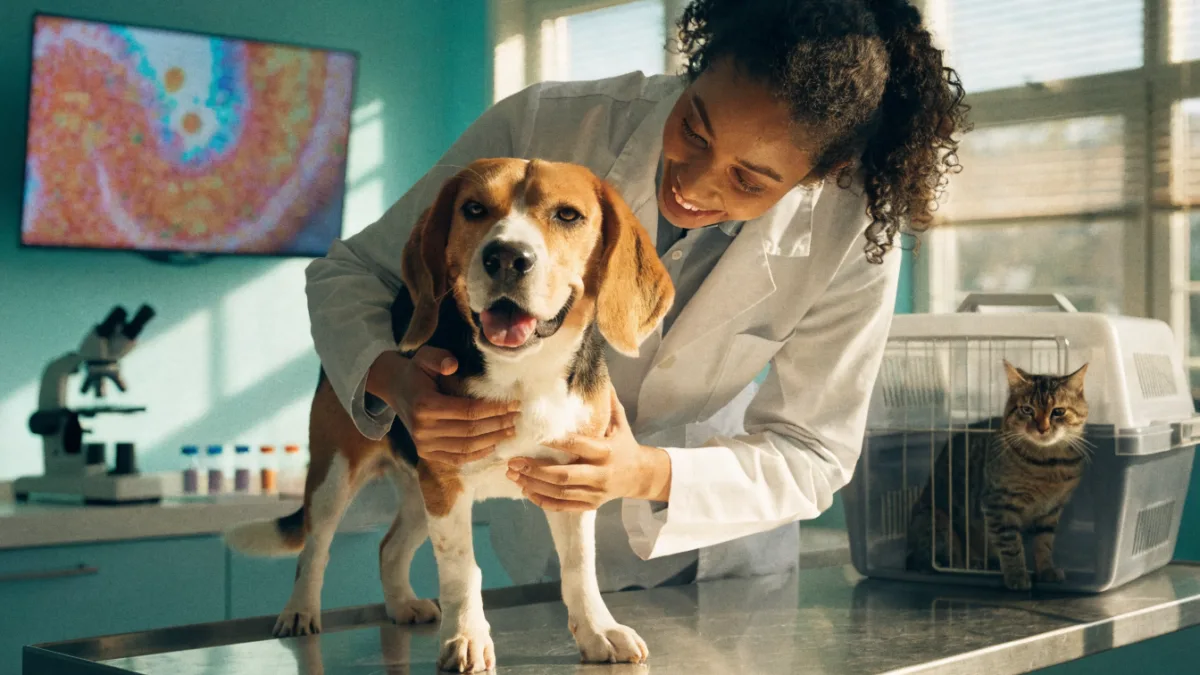
When Mrs. Henderson first brought her nine-year-old Border Collie, Moss, into my clinic, she was at her wit’s end. Moss had been battling chronic diarrhea for nearly four months. We had tried elimination diets, probiotics, metronidazole, tylosin — you name it. Every time we tapered off the medications, the diarrhea came roaring back. Moss had lost weight, his coat was dull, and the spark in his eyes was fading. “I just want my dog back,” Mrs. Henderson told me, voice cracking. That was the moment I brought up something that sounds completely bizarre but is genuinely changing how we treat gastrointestinal disease in veterinary medicine: a fecal microbiota transplant, or FMT. In simple terms, I wanted to take poop from a healthy dog and put it into Moss.
What Exactly Is a Fecal Microbiota Transplant?
I’ll admit, the first time a colleague mentioned FMT to me at a conference several years ago, I thought she was joking. The concept sounds like something out of medieval medicine. But once you understand the science, it makes extraordinary sense.
Every dog and cat carries inside their intestines a vast, bustling community of microorganisms — bacteria, fungi, viruses, and other tiny organisms collectively known as the microbiome. We are talking about trillions of individual organisms. When that community is diverse and balanced, your pet digests food properly, absorbs nutrients, maintains a healthy immune system, and even produces vitamins and neurotransmitters that affect mood and behavior.
Problems arise when that community gets disrupted — a state we call dysbiosis. Think of a healthy gut microbiome like a thriving forest ecosystem. When something wipes out key species — say, a course of antibiotics that acts like a clear-cut — opportunistic weeds take over. In the gut, this means harmful bacteria like Clostridium perfringens or E. coli multiply unchecked while beneficial species struggle to recover. The result is chronic diarrhea, vomiting, weight loss, and inflammation that can spiral into conditions like inflammatory bowel disease, or IBD.
FMT is essentially a bacterial reset. We take fecal material from a thoroughly screened, healthy donor animal and introduce it into the sick pet’s intestinal tract. The beneficial bacteria from the donor then colonize the recipient’s gut, crowding out the harmful organisms and reestablishing a functional, balanced microbiome. It is not so different from replanting a devastated forest with healthy seedlings from a thriving one.
The Procedure: Less Dramatic Than It Sounds
I have found that once pet owners understand the concept, their next question is always some variation of, “How exactly does the poop get into my dog?” Fair question. And the answer is that it is far more clinical and controlled than most people imagine.
FMT is not a matter of literally transferring raw waste from one animal to another. The donor feces are processed in a laboratory, where the beneficial bacteria are isolated, concentrated, and prepared in several possible ways:
- Oral capsules: The processed bacteria are freeze-dried and placed into enteric-coated capsules that survive stomach acid and dissolve in the intestines. This is the least invasive method and is becoming increasingly common.
- Endoscopic delivery: During a procedure similar to a colonoscopy, the veterinarian delivers the prepared microbial solution directly into the intestinal tract using an endoscope. This allows for targeted placement.
- Enema (rectal delivery): The microbial preparation is delivered into the lower intestine via enema. This method is sometimes used in hospital settings for acute cases.
For Moss, we used oral capsules. Mrs. Henderson gave them to him at home twice daily for a course of several weeks, hidden in a bit of plain, unsweetened yogurt — his favorite treat delivery system. No surgery, no hospital stay, no drama.
Does It Actually Work?
This is where I will be honest about my own skepticism. When I first started exploring FMT, I assumed the evidence was thin. But the clinical data is genuinely impressive, and my own experience with patients has matched what the studies show.
Research compiled in a comprehensive 2022 review by Tuniyazi and colleagues — which has already been cited dozens of times, reflecting strong scientific interest — highlights that FMT is producing remarkable outcomes in companion animals. Clinical studies show that gastrointestinal symptoms improved in 80% of dogs and an even more striking 83% of cats following FMT treatment. Beyond just stopping diarrhea, about 50% of treated dogs and 25% of cats showed a noticeable increase in appetite after the transplant. That appetite recovery matters enormously because many pets with chronic GI disease have essentially stopped eating normally, and the cycle of poor nutrition and inflammation feeds on itself.
In Moss’s case, the change was gradual but unmistakable. Within ten days of starting the capsules, his stool began to firm up for the first time in months. By week three, he was racing to his food bowl again. Mrs. Henderson called me on a Tuesday morning, and I remember her exact words: “He chased a squirrel yesterday. He hasn’t done that in a year.”
“He chased a squirrel yesterday. He hasn’t done that in a year.”
Now, I want to be clear about something important. When I say FMT “works,” I am talking about symptom improvement and quality of life, not necessarily a permanent cure. This is an area where the veterinary community is still debating, and I will get to that shortly.
The Donor Screening Question
The single most common concern I hear from pet owners is not actually about the “yuck” factor — it is about safety. And that concern is entirely valid. The effectiveness and safety of FMT depends almost entirely on the quality of the donor material.
Donor animals — whether they are other dogs, cats, or in some research contexts, even healthy animals of compatible species — undergo rigorous screening. A proper donor screening protocol includes:
- Fecal tests for parasites, including Giardia, whipworms, hookworms, and roundworms
- Cultures or PCR testing for pathogenic bacteria like Salmonella, Campylobacter, and toxigenic Clostridium species
- Viral screening where applicable
- Health history review to ensure the donor has no history of chronic GI disease, autoimmune conditions, or recent antibiotic use
- Assessment of the donor’s own microbiome diversity through sequencing — a healthy donor should have a rich, varied bacterial profile
I always tell clients: the donor screening process is more thorough than most human blood donation protocols. If your veterinarian is recommending FMT, ask them about their donor sourcing. Reputable sources — whether through a university veterinary program, a specialized commercial provider, or a carefully managed in-clinic donor program — should be able to describe their screening protocols in detail. If they cannot, that is a red flag.
What We Still Do Not Know
I would be doing you a disservice if I presented FMT as a settled, perfected treatment. It is not. And I have genuinely changed my mind about this topic over the past five years as the research has evolved.
When I first heard about FMT, I dismissed it as alternative medicine nonsense. Then I started reading the studies. Then I started seeing colleagues use it successfully. Then I tried it on a patient of last resort — a twelve-year-old Siamese cat named Poppy with refractory IBD who had stopped responding to every conventional treatment — and she improved dramatically. My skepticism gave way to cautious enthusiasm.
But that enthusiasm comes with important caveats that every pet owner should understand:
No Standardized Protocols Yet
As the Tuniyazi review and other recent literature make clear, there are currently no evidence-based, standardized guidelines for FMT in veterinary medicine. This means that dosing, frequency, duration of treatment, and delivery method can vary significantly from one practitioner to another. Some veterinarians use a short course of oral capsules over two to three weeks. Others recommend maintenance doses for months. Still others prefer endoscopic delivery for severe cases. We simply do not yet have enough large-scale, randomized controlled trials to say definitively which protocol is optimal for which condition.
Long-Term Efficacy Questions
While short-term improvement rates are high, researchers are still studying how long the microbiome shift actually lasts. Some pets appear to experience long-lasting remission after a single FMT course. Others relapse after a few months and may need repeat treatments. Moss, for instance, maintained his improvement for over a year before Mrs. Henderson and I did a brief maintenance course of capsules when his stool softened slightly during a stressful move to a new house.
The honest answer is that FMT appears to be highly effective at breaking the cycle of dysbiosis, but whether it permanently resets the microbiome or simply buys time for the gut to stabilize depends on the individual animal, their underlying condition, diet, environment, and a host of factors we are still working to understand.
From Fringe to Mainstream
What excites me most about FMT is not just the success rates — it is the trajectory. Five years ago, if I mentioned fecal transplants at a veterinary conference, I would get polite smiles and raised eyebrows. Today, it is a legitimate topic in continuing education seminars, and a growing number of veterinary biotech companies are producing commercially available, freeze-dried, screened fecal capsules that make the treatment accessible to general practitioners, not just specialists at university hospitals.
The academic conversation has shifted, too. Researchers are no longer just asking whether FMT works in dogs — they are investigating the specific mechanisms: which bacterial strains are responsible for the therapeutic effects, how donor-recipient compatibility affects outcomes, and whether FMT might eventually have applications beyond gastrointestinal disease, including in metabolic and even behavioral conditions.
A Final Thought on Gut Health and the Bigger Picture
What FMT ultimately teaches us — whether we are talking about a nine-year-old Border Collie in my exam room or a cheetah in a conservation breeding program — is that health is not just about the individual organism. It is about the invisible ecosystems that live within and around every living creature. The microbiome is a community, and like any community, it can be disrupted, damaged, and — with the right intervention — restored.
This is a powerful reminder as we think about wildlife conservation and the health of our planet. When we destroy natural habitats, overuse antibiotics in agriculture, and degrade the environments where animals live, we are not just threatening individual species. We are disrupting entire microbial ecosystems that animals depend on for survival. The same principles of balance, diversity, and restoration that make FMT work in a dog’s intestines apply on a much larger scale to the ecosystems we are fighting to protect.
Moss is doing well. He is thirteen now, a little slower on the squirrel chases, but his eyes are bright and his stool is firm and Mrs. Henderson says she has her dog back. Sometimes the most revolutionary treatments are the ones that work with nature’s own systems rather than against them — in a clinic, in a forest, or across an entire planet.