

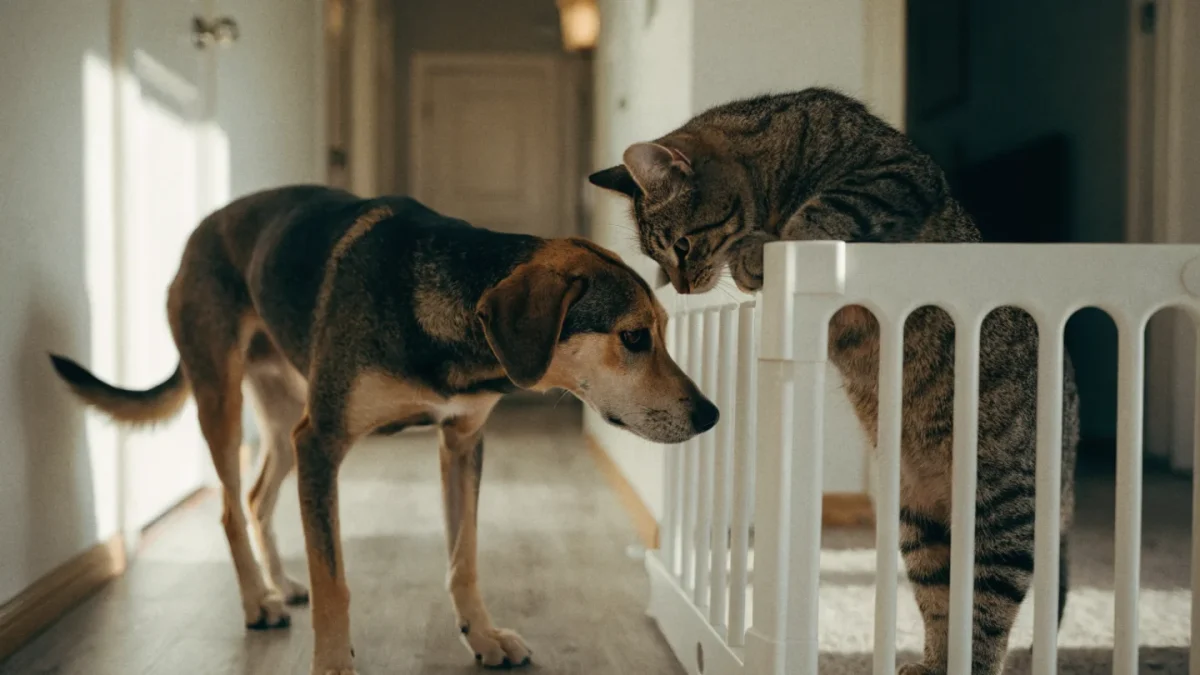
Everyone who's done this at least once knows the temptation. You bring the new pet home, your current pet seems curious rather than hostile, you think — maybe I can skip all these phases and just see what happens.
I have made this exact mistake. Twice.
The second time, I was introducing Fig to Miso. Fig had come from a shelter where he'd been in a quiet isolation room. Miso had been the only pet in the apartment for two years. I thought I'd done enough prep (I hadn't), and I let them be in the same room too soon. Miso turned herself into a flat angry disc in the corner. Fig sat in the middle of the room in a state of confused innocence. Nobody was okay.
It took two more weeks of properly restarted separation before things moved forward at all. The time I "saved" by skipping steps cost triple.
Here's the plan I should have followed.
Phase 1: Separate Spaces, Scent First (Days 1–7 minimum)
Your new pet gets their own dedicated room. Everything they need is in there: food, water, litter box (for cats), bedding, and something familiar from their previous home if possible.
Your existing pet has the rest of the house.
What you're doing during this phase:
Swapping scent. Take a blanket or worn sock from the new pet and put it in the existing pet's space. Take something from the existing pet and put it in the new pet's room. The goal is for the other animal's smell to become familiar and unremarkable before any visual encounter.
Feed both animals near the door that separates them — same time, both sides of the door. Positive association with the other pet's presence builds in both directions simultaneously.
Watch for calm sniffing versus stressed response (refusing to eat, hiding, aggressive pawing under the door). Progress the timeline based on what you observe, not what you hoped for.
Phase 2: Visual Contact Through a Barrier (Days 5–14)
When both animals are eating normally and the scent-swapping is going well, introduce visual contact through a barrier — a cracked door with a doorstop, a baby gate, a screen door.
Keep sessions short initially. Two to three minutes. Watch body language carefully.
Relaxed signals: soft, curious body posture; sniffing interest; turning away without stress; normal behavior resuming quickly after the barrier closes.
Concerning signals: sustained hissing or growling that doesn't diminish across sessions; lunging at the barrier; refusal to engage with food or normal activities after the session ends.
The barrier stage can last a few days to several weeks depending on the animals. Don't advance until both animals are showing at least neutral reactions to each other's presence.
Phase 3: First Direct Contact — Supervised and Brief
This is the meeting everyone is actually asking about. By this point, though, it's almost anticlimactic if you've done the previous phases well.
Choose a neutral space — ideally not the existing pet's most prized territory. Keep it short. Have the ability to easily separate them if things escalate. Don't loom over them or intervene in every interaction — some sniffing, some posturing, even a brief hiss is normal social communication.
Signs this is going well: curiosity, play solicitation, eventual mutual ignoring (which is success for cats). Signs to end the session: sustained aggression, panic behavior, either animal showing sustained high stress.
End on a calm note when possible. Multiple short positive sessions beat one long session that ends badly.
Phase 4: Supervised Shared Time
Gradually increase shared time with you present. Watch for resource competition around food, water, or sleep spots. Have multiple feeding stations and multiple resting areas available.
Don't leave them unsupervised until you've seen consistently relaxed behavior across many sessions over multiple weeks. This is the phase where many multi-pet households rush, and then end up back at the beginning because something escalated.
The Timeline Reality
For dogs: several days to a few weeks of this process is typical for a successful introduction.
For cats: several weeks to several months. Cats are territorial and don't rush for anyone. If things are still stressed and tense at eight weeks, that's not a failure — it's just cats. Keep going.
For dogs and cats together: variable, depends heavily on individual animals. A dog-reactive cat and a prey-driven dog are a different project than a calm dog and a confident cat.
For more specific guidance: introducing a cat to a dog household covers the cross-species specifics, and whether your pet is ready for a companion is worth reading if you're still earlier in the decision. The full complete guide to adding a new pet has the broader context.
Frequently Asked Questions
How do I introduce pets if I don't have a spare room?
Use a bathroom, a large closet, or even a well-set-up pen or crate system in a room you can close off. The specific space matters less than the principle: separate the animals physically, allow scent exchange first, and progress toward visual contact before direct contact. It's harder to manage without a dedicated room, but not impossible.
My pets met accidentally before I could do a proper introduction. Can I recover from that?
Yes. If the accidental meeting went badly, go back to full separation as if you're starting over. If it went neutrally or positively, you've accidentally done a version of Phase 3 — you can continue from there, but don't assume one neutral meeting means the process is complete.
Is it normal for my existing pet to stop eating during the introduction?
Brief appetite disruption is common during the first days of a new pet in the home. If it continues past two or three days, or if it's accompanied by other stress signs (hiding, aggression, accidents), slow down the introduction timeline and give your existing pet more reassurance and undisturbed time with you. If appetite loss continues beyond a few days, check in with your vet.
Should I let them "work it out" if they fight?
Brief spats and posturing are normal animal communication. A short hiss-and-retreat is different from sustained physical fighting. Actual fighting — where either animal is being injured or is unable to disengage — should be interrupted and the animals separated. Repeatedly letting them "work it out" through fighting doesn't build tolerance; it builds a history of traumatic interactions. Intervene before escalation.
My new pet loves my existing pet but the feeling is clearly not mutual. What do I do?
This is a very common dynamic, especially with puppies or kittens introduced to adult animals. The solution is managing the new pet's behavior — preventing them from constantly pestering the established pet — while giving the established pet escape routes, elevated spaces, and areas the new pet can't access. The enthusiasm will usually temper with age. The established pet needs to know they have sanctuary.