
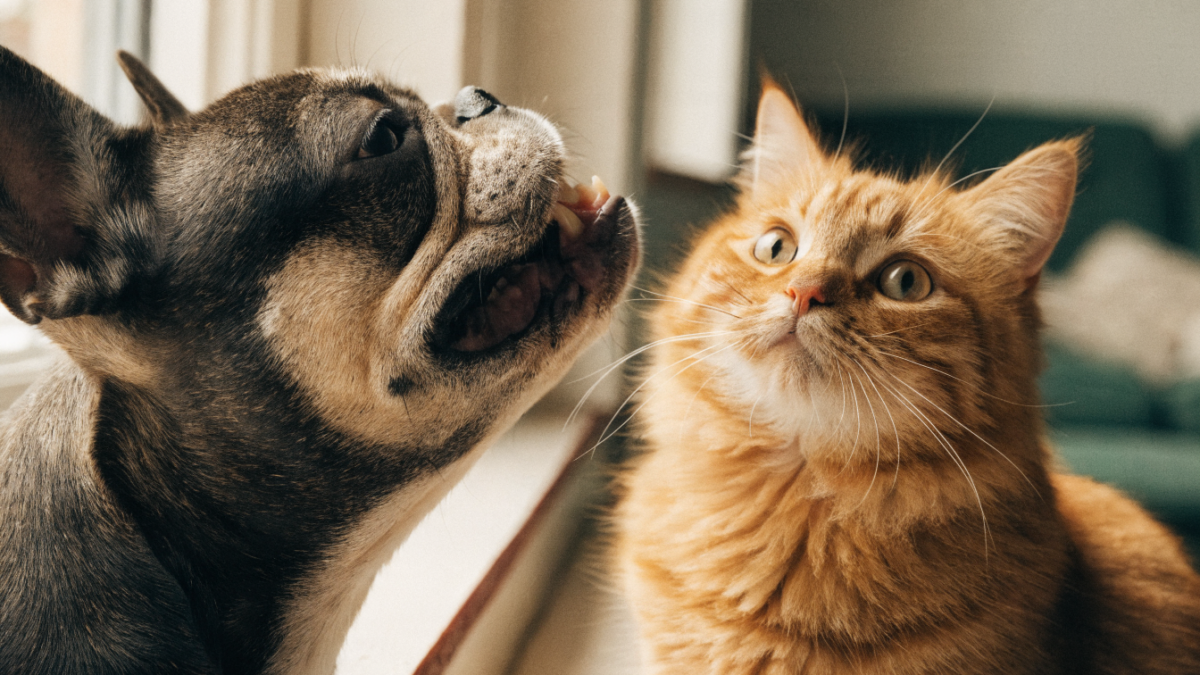
You’re hanging out in the living room when your dog trots over to your gym bag, gives it a deep sniff, and suddenly freezes. His upper lip curls back. His mouth cracks open. He stands there for a solid ten seconds, eyes glazed over, looking like he just caught a whiff of a dumpster fire.
Or maybe it’s your cat. She finds a specific spot on the rug, sniffs it intensely, and suddenly makes a face like she’s gasping for air. Her mouth is slightly open, her nose is wrinkled, and she looks completely bewildered.
If you’ve spent any time around animals, you’ve seen this happen. Pet owners usually laugh it off as the “stinky face” or “stank face.” But there’s a lot more going on here than your pet just reacting to a bad smell. Biologists and veterinarians actually have a name for this goofy expression. It’s called the Flehmen response, and it’s a highly advanced piece of biological technology.
It’s Not Disgust—It’s Data
I used to have a client with a rescued Doberman named Duke. Duke was a sweet, sensitive dog, but whenever they went for walks in a new neighborhood, he would freeze, curl his lip, and bare his teeth at a specific patch of grass. The owner was terrified. She thought Duke was suddenly becoming aggressive, getting ready to fight whatever invisible animal had been there before him.
I watched Duke do his thing, and it clicked immediately. He wasn’t squaring up for a fight. He was just reading the morning news.
This is the biggest misunderstanding pet owners have about the Flehmen response. Because the animal’s mouth is open and the lips are curled back, we naturally project human emotions onto them. We assume they are disgusted by a terrible odor, choking on a furball, or flashing a warning sign of sudden aggression.
In reality, they are doing the exact opposite of being disgusted. They are fascinated. When your pet makes that face, they aren’t reacting to the smell itself—they are actively processing complex chemical data. They are reading invisible messages left behind by other animals.
The Hardware: Meet the Jacobson’s Organ
To understand why your pet looks like they just smelled something awful, you have to understand how their nose actually works.
When your dog sniffs a piece of dropped bacon, that’s regular smelling. Air rushes into their nasal passages, and the scent receptors send a signal to the brain saying, “Hey, meat is nearby.” But when an animal initiates the Flehmen response, they bypass the standard olfactory system entirely. They are flipping the switch to a completely different sensory tool.
This specialized hardware is called the vomeronasal organ, though it’s more commonly known as the Jacobson’s organ. In both dogs and cats, this organ is located in the roof of the mouth, tucked just behind the front teeth. It consists of two tiny, fluid-filled sacs that connect directly to the nasal cavity and the brain.
The Jacobson’s organ is built specifically to detect pheromones and other heavy, non-volatile chemical compounds that regular sniffing just can’t pick up. These are chemical scents that are often completely odorless to you and me.
Tongue Flicks and Lip Curls
Because pheromones are heavy, they don’t just float up the nose on their own. Your pet has to physically move them into the Jacobson’s organ.
That’s exactly what the “stinky face” is for. By curling back the upper lip and opening the mouth, your dog or cat temporarily seals off their regular nasal passages. This creates a sort of vacuum effect. They trap the scent molecules against the moist roof of their mouth.
Cats have an especially dramatic way of doing this. You’ll often see a cat flick their tongue against the roof of their mouth or the air, literally scooping up invisible chemical molecules and pushing them up into the ducts of the Jacobson’s organ. Once the moisture hits the ducts, the organ decodes the chemical message and sends a direct report to the brain.
Cat Grimaces vs. Dog Sneers
While the biology is the same, the execution looks a little different depending on the species.
The Feline Shock
In cats, the Flehmen response is usually unmistakable because it looks so out of character. A cat will often stand completely still, stare off into the middle distance, and let their jaw drop. They look like they’ve just received terrible news, or like they are panting. As cat behaviorist,[1] this open-mouthed, stunned look catches a lot of new cat owners off guard because it looks like the cat is struggling to breathe. They aren’t. They are just taking in the pheromones of another cat that might have marked that rug yesterday.
The Canine Sneer
Dogs, on the other hand, usually look like they are giving you a subtle, excited sneer. It’s a curled lip, often accompanied by a slight chatter of the teeth or a heavy exhale. This is especially common in intact male dogs smelling the urine of a female in heat, but neutered males and females do it too.
And as,[2] this behavior isn’t just for our house pets. You can see the exact same curled lips and glazed eyes in horses, goats, elephants, and even pandas. If a mammal needs to read chemical messages, they probably have a Jacobson’s organ and a ridiculous face to go with it.
What Are They Actually Reading?
So, what kind of information is worth pulling such an awkward face?
Think of pheromones as an invisible internet where animals leave detailed status updates for each other. According to,[3] this organ is primarily used to read chemical messages left in urine, feces, and specific skin secretions.
When your dog gets that intense sneer near a fire hydrant, they are reading the biochemical profile of the dog that was there before. They can tell if that dog was male or female, what their general health status is, and how stressed or relaxed they were when they left the mark. They can also detect mating readiness.
For cats, who are highly territorial and often solitary by nature, this chemical data is their primary way of knowing who is in the neighborhood without ever having to physically bump into them. It prevents unnecessary fights. If your cat smells a familiar neighborhood stray and gets the data that the stray is just passing through, there’s no need to panic.
Putting the Stinky Face to Work for You
Understanding the Flehmen response isn’t just fun animal trivia. It actually has incredibly practical applications for helping our pets live happier, less stressful lives.
Because we know exactly how the vomeronasal organ processes chemical signals, modern science has figured out how to hack it. The pet care industry has developed synthetic pheromone products—like diffusers and collars for both cats and dogs.
These products mimic the natural “happy” or “safe” pheromones that mother dogs and cats release to their young, or the facial pheromones cats use to mark a space as secure. When you plug one of these diffusers into the wall in your vet’s office or your living room, your pet doesn’t smell it with their regular nose. You won’t smell it at all. But when they walk by and flick their tongue, drawing those synthetic molecules into their Jacobson’s organ, their brain receives a chemical text message saying, “You are safe here.”
I’ve recommended these synthetic pheromones to dozens of clients dealing with separation anxiety, thunderstorm phobias, and multi-cat household squabbles. They don’t work miracles on their own, and they certainly don’t replace behavior modification training, but they are a fantastic tool for taking the chemical edge off a stressful environment.
The next time your dog or cat freezes and pulls that ridiculous grimace, don’t rush them. Don’t worry that they are choking or getting aggressive. Just let them finish reading. They are tapping into a complex, invisible world of chemical communication that we are totally blind to. Our pets’ senses are incredibly advanced, and the Flehmen response is a great reminder of just how differently they experience the world. Respecting that means stepping back and letting them gather the data they need to feel safe.
Sources
- Jackson Galaxy points out — instagram.com
- many animal lovers on the internet have realized — reddit.com
- VCA Animal Hospitals — vcahospitals.com