

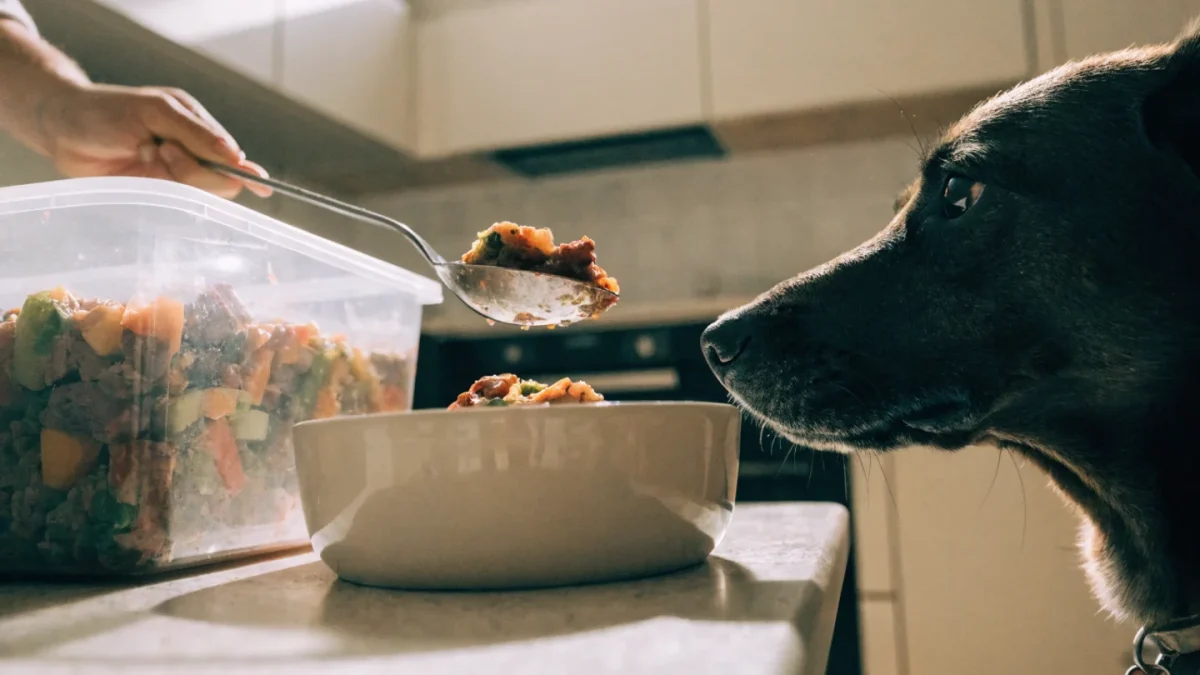
The refrigerated section at specialty pet stores has grown considerably in the last five years. Where there used to be a few raw options, there's now an entire category of fresh-cooked or "gently cooked" foods that occupy a middle ground between kibble and raw. And the home-delivery market has made these diets even more accessible.
I get asked about them constantly. "Is it really better? Should I be doing this for my dog?"
The honest answer is nuanced in a way that marketing rarely is.
What "Gently Cooked" Actually Means
Fresh refrigerated pet foods are typically cooked at lower temperatures and for shorter times than kibble extrusion. Kibble goes through the extrusion process at temperatures typically ranging from 130–200°C under pressure — a well-characterized thermomechanical process reviewed in published food science literature (Extrusion processing: effects on dry canine diets, Wageningen University; ScienceDirect, 2011). Fresh-cooked products are generally prepared at temperatures comparable to home cooking, preserving more heat-sensitive nutrients in the process.
The practical consequences: more heat-sensitive nutrients are preserved (particularly B vitamins and some antioxidants), the proteins aren't denatured to the same degree as in kibble, and the ingredients remain visually recognizable — you can see the chicken, the sweet potato, the kale.
Moisture content is typically 60-75%, significantly higher than kibble's 8-10% and somewhat lower than canned food's 75-85%. This puts fresh-cooked food in a useful middle range for pets who need more moisture than kibble provides.
The Ingredient Transparency Argument
This is the thing that genuinely impresses me about well-made fresh food diets: you can see what's in them. A cup of fresh-cooked food that visibly contains chicken thigh meat, cooked green beans, and oats is easier to evaluate qualitatively than a kibble where the same ingredients have been extruded into uniform brown pebbles.
That said — and this is important — ingredient transparency is not the same as nutritional completeness. Some fresh food options are formulated with the help of veterinary nutritionists and undergo rigorous testing to ensure AAFCO nutrient profiles. Others are not. A food that looks beautiful and contains excellent ingredients can still be nutritionally incomplete if the mineral ratios aren't right or if essential micronutrients are missing.
This matters enormously. Taurine deficiency in certain grain-free diets is the cautionary tale here — visually appealing, "whole ingredient" foods that turned out to have problems the ingredient list couldn't reveal. The FDA began formally investigating a potential link between grain-free legume-heavy diets and dilated cardiomyopathy in dogs in 2018; more than 90% of implicated diets were grain-free and 93% contained peas or lentils as primary ingredients. The mechanism isn't fully resolved, but the investigation reinforced that ingredient quality ≠ nutritional completeness. Always look for AAFCO compliance statements on fresh food, and preferably choose manufacturers who have conducted feeding trials rather than just formulation analysis.
Who Benefits Most
Fresh food is not equally valuable for every pet. It makes the most practical difference for:
Picky eaters. The palatability of fresh-cooked food is generally excellent, and for a dog or cat who's been refusing kibble or wet food, the texture and smell of fresh food often resolves the problem.
Pets with reduced appetite. Senior animals, ill pets, and those recovering from disease or surgery often eat fresh food more willingly. The soft texture is also easier for animals with dental disease or jaw issues.
Pets who benefit from increased moisture intake. The 60-75% moisture content is meaningful for cats prone to urinary issues and dogs with kidney disease who need more fluid in their diet.
Owners who want clearer ingredient transparency. If your priority is understanding exactly what your pet is eating, fresh food makes that easier.
For how fresh food fits in the pet food spectrum, it sits in the higher-quality, higher-cost range alongside freeze-dried and premium wet food.
The Downsides
Cost is the main one. Fresh refrigerated food is expensive — often three to five times more per calorie than a good-quality kibble. Home delivery adds convenience but also price.
Refrigeration and shelf life create logistical constraints. Opened portions typically need to be used within three to five days, which means frequent orders or careful planning. Thaw cycles and power outages are real concerns in a way they aren't with kibble.
Portion accuracy matters more because the calorie density is lower than kibble — you'll feed a larger volume for the same calorie intake, and some owners underestimate this and inadvertently underfeed.
And the variation in quality within this category is significant. Not all fresh foods are created equal. The marketing is sophisticated enough that a "premium" fresh food can look convincing while missing essential nutrients. Look for AAFCO statement, evidence of feeding trials, and manufacturers who are transparent about nutritional analysis.
As freeze-dried food as an alternative to fresh refrigerated options explains, there are other minimally processed formats worth comparing — particularly useful for owners who want reduced processing without the refrigeration requirements.
FAQ
Is fresh pet food the same as homemade food?
No, though they share some characteristics. Commercial fresh pet food is formulated to meet AAFCO nutritional standards, which homemade diets frequently don't without specific guidance from a veterinary nutritionist. The convenience of commercial fresh food is that the nutritional formulation work is done for you.
Does my dog need fresh food, or can they do fine on kibble?
Most healthy dogs do fine on high-quality kibble. Fresh food has real advantages for specific situations (palatability issues, moisture needs, owner preference for ingredient transparency), but "does fine on kibble" is genuinely true for most healthy pets. I don't think kibble is inferior by default — the quality of the specific product matters much more than the format.
How do I store fresh pet food properly?
Refrigerate immediately upon delivery or purchase. Keep sealed until use. Once opened, use within three to five days (check the manufacturer's specific guidance). If you receive a large quantity, portion and freeze what you won't use within that window — most fresh pet food freezes and thaws well. Never leave fresh food at room temperature for more than a couple of hours.