

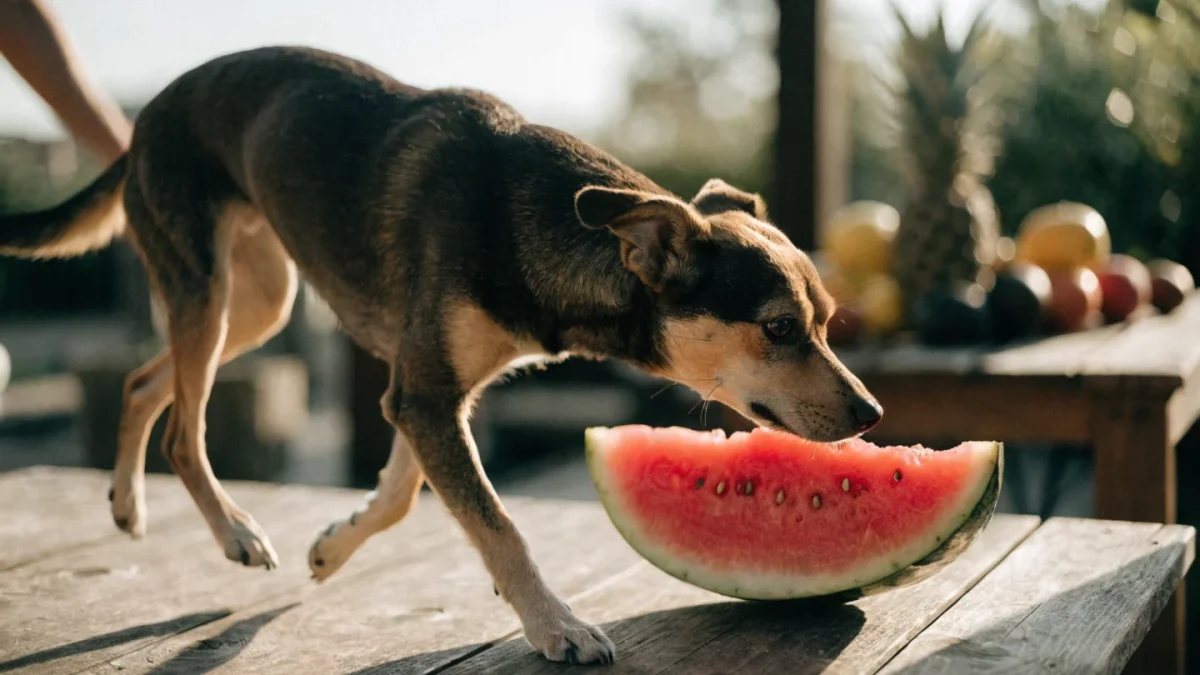
My clinic gets a reliable spike of "can my dog eat this?" calls during summer — watermelon season, berry season, the months when fruit is sitting out on counters and dogs are being dogs about helping themselves. Mostly the answers are reassuring.
A few things worth knowing before the list: fruit is not a necessary part of a dog's diet, and it's essentially optional for cats. The sugar content is real. A dog with diabetes or a weight problem needs very small amounts, if any. And "safe" doesn't mean "in unlimited quantities" — any food in excess creates problems.
But for the healthy dog who wants a bit of what you're eating? Fruit is one of the better choices you can make.
The Safe List: Dogs
1. Watermelon
One of the more practical summer treats — high water content (good for hydration on hot days), sweet enough to be appealing, and the flesh itself is low calorie. Remove the seeds and the rind before offering. The rind is difficult to digest and can cause GI upset; the seeds could theoretically cause intestinal blockage in smaller dogs if enough were swallowed. For a large dog, the occasional seed isn't a crisis, but removing them is the habit to build. Seedless varieties make this easy.
2. Blueberries
Genuinely nutritious for dogs — high in antioxidants, low in calories, small enough to use as training treats or meal toppers. Wild blueberries have higher antioxidant content than cultivated varieties, though both are fine. Fresh or frozen, both work. The frozen version is popular in summer. No prep needed beyond rinsing, though I'd suggest cutting them in half for very small dogs (toy breeds) to prevent any choking risk.
3. Strawberries
Safe and reasonably nutritious — vitamin C, fiber, some antioxidants. Remove the tops and cut into appropriately sized pieces. Moderately sweet, so some dogs go wild for them. One thing people don't always know: strawberries contain a small amount of xylitol naturally, the same sugar substitute that's genuinely dangerous to dogs in its concentrated, manufactured form (think sugar-free gum and baked goods). The amounts naturally present in fresh fruit are far too small to cause the toxicity we worry about with processed xylitol, and aren't considered dangerous in normal serving sizes, but it's worth flagging for awareness.
4. Apple (flesh only, no seeds or core)
Apple flesh is fine for dogs — fiber, some vitamin C and A, and most dogs find the crunch appealing. The seeds contain amygdalin, a compound that releases small amounts of cyanide during digestion. The amount in a few seeds is not immediately dangerous for most dogs, but it's genuinely not something worth offering, and the core is a choking hazard anyway. Just give apple slices with the seeds and core removed.
5. Banana
Nutritious but higher in sugar than most other fruits on this list — potassium, vitamin B6, vitamin C, some fiber. A few small slices as an occasional treat is appropriate. Not something to offer daily in large amounts, especially for overweight dogs or those with blood sugar issues. Most dogs love it. The peel isn't toxic but is difficult to digest and can cause GI upset — skip it.
6. Cantaloupe
High moisture, decent nutrient profile, most dogs find it very palatable. Remove the rind and seeds. The rind can cause GI upset; the seeds are small and unlikely to cause obstruction but add nothing nutritionally. Cantaloupe is calorie-moderate and hydrating — a reasonable warm-weather treat.
7. Pears (core and seeds removed)
Similar to apple — the flesh is fine, the seeds contain trace cyanogenic compounds. Slice and core before offering. High fiber, relatively low calorie for fruit.
8. Mango (flesh, no pit)
Safe for dogs and many find it irresistible. Remove the skin (can cause GI upset) and pit (contains trace cyanide compounds and is a choking/obstruction hazard). The flesh is quite sweet, so keep portions small.
9. Pineapple (fresh, small amounts)
Fresh pineapple in small amounts is safe and contains bromelain, an enzyme with mild anti-inflammatory properties. The acidity can cause stomach upset in some dogs in large amounts. Canned pineapple in syrup is not the same thing — the added sugar and juice concentration makes it unsuitable.
What to Skip or Be Very Cautious About
Grapes and raisins. I've said this elsewhere and I'll say it again: these are genuinely dangerous. No safe dose has been established. The toxic mechanism isn't fully understood, which means there's no threshold below which I'm comfortable saying it's fine. Don't offer them; don't let your dog steal them. The full list of toxic foods to avoid covers this and others in more detail.
Cherries. The flesh is technically fine, but the pits, stems, and leaves contain cyanogenic compounds. Given that cherries are small and dogs tend to eat them whole, the practical risk is high enough that I just recommend skipping them.
Citrus fruit. Not toxic in small amounts, but the acidity causes GI upset in many dogs and the peel contains oils that are irritating. Dogs generally don't seek it out. Skip it — there are better options.
Stone fruit pits. Peaches, plums, and apricots — the flesh is largely safe, but the pits are both a choking hazard and contain cyanogenic compounds. If you're offering these fruits, remove the pit completely.
Fruit for Cats: A Different Situation
Cats are obligate carnivores with a digestive system not particularly designed for plant material. Most cats aren't even interested in fruit — they lack sweet taste receptors, so the flavor appeal that draws dogs to fruit just isn't there.
Small amounts of cat-safe fruit (watermelon flesh, blueberries, a bit of cantaloupe) are not harmful if a cat tries them out of curiosity. But fruit is not a meaningful nutritional contribution for cats and not something I'd offer proactively.
The complete guide to safe and toxic human foods for pets covers the broader picture, including the many non-fruit options worth knowing about.
Frequently Asked Questions
How much fruit can I give my dog per day?
The standard guidance is that treats — including fruit — should stay at or below 10% of daily caloric intake. For a small dog (10–15 lbs), that's maybe 2 to 4 strawberries or 1 to 2 blueberries. For a medium dog (30–40 lbs), a small apple slice or a few blueberries. These feel like small amounts, but fruit has real sugar that adds up.
My dog ate grape-flavored candy. Is that the same as eating grapes?
Grape flavoring is typically synthetic and doesn't contain actual grape. Grape-flavored candy isn't ideal (sugar, artificial colors), but it's not the same toxicity concern as real grapes. The issue with real grapes and raisins is the specific compound in the actual fruit — not the flavor. That said, candy isn't appropriate for dogs anyway.
Can I freeze fruit to make dog treats?
Absolutely — frozen blueberries, watermelon chunks, and banana slices are popular summer treats. Just make sure the fruit is prepared the same way as for fresh feeding (seeds removed, etc.) before freezing. Some dogs prefer frozen fruit; others aren't interested. Frozen watermelon in particular tends to be a hit with dogs who like it fresh.
My cat ate a blueberry. Should I be concerned?
One blueberry is not a concern. It's not toxic. Your cat likely tried it and found it underwhelming — blueberries aren't sweet to cats. If a cat regularly ate large amounts of fruit, the sugar and carbohydrate intake would be inappropriate for their obligate carnivore physiology, but a stray blueberry is not a problem.