

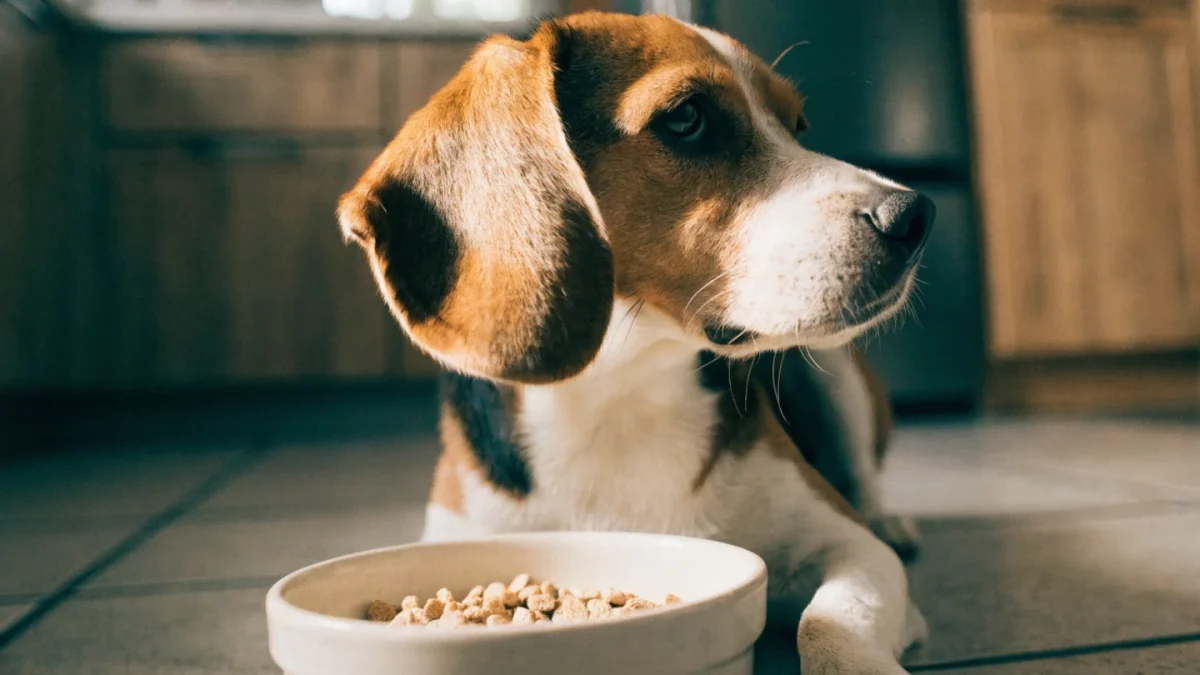
The beagle that changed how I think about chronic GI cases was a four-year-old named Henry. He'd had intermittent loose stools for most of his adult life — sometimes formed, sometimes soft, occasionally with mucus, never with blood. His previous vet had tried multiple food switches: fish and potato, sweet potato and venison, a limited ingredient lamb formula. Nothing seemed to fully work.
When I saw him, the first thing I noticed was that Henry was on his fifth "limited ingredient" food and had never had a proper elimination trial. Each switch had been to a different novel protein, but there'd been overlap — he'd been on the lamb food before and the sweet potato formula contained some legume proteins that appeared in earlier foods. He'd never been off all potentially problematic proteins at the same time, with strict no-treat compliance, for long enough to know what was actually triggering him.
Chronic GI issues in pets are common. They're also commonly mismanaged — not from negligence, but because dietary management of GI conditions is more methodical than it gets credit for.
Why GI Conditions Need Specific Dietary Approaches
The gastrointestinal tract isn't just a food processor. It's an immune organ, a microbial ecosystem, and a complex signaling system. Chronic GI inflammation disrupts all three. Diet can calm or provoke the immune response, support or damage the microbial balance, and affect the structural integrity of the intestinal lining.
Different conditions affect the GI tract differently:
- Food sensitivity / food allergy: immune-mediated reaction to specific dietary proteins
- IBD (inflammatory bowel disease): chronic immune dysregulation in the intestinal wall, often triggered or worsened by specific antigens in food
- Pancreatitis: inflammation of the pancreas, driven largely by fat intake
- Small intestinal bacterial overgrowth (SIBO): disruption of the normal bacterial balance, sometimes diet-related
- Motility disorders: the gut moves too fast or too slow; dietary fiber type matters
The reason dietary management varies between these is that each one has a different driver that food either amplifies or moderates.
Highly Digestible, Low-Residue Diets
For many GI conditions, the first line of dietary management is a highly digestible, low-residue food. "Highly digestible" means the ingredients are broken down and absorbed efficiently, leaving less material to ferment in the colon. "Low-residue" means minimal fiber — the opposite of a high-fiber diet, which leaves more bulk for the colon to manage.
These diets typically feature:
- A single, high-quality protein source (often chicken or egg)
- Easy-to-digest carbohydrates (white rice is the classic example)
- Low fat content
- Minimal fiber additions
This is essentially the prescription GI diet category. Many pets with acute GI issues also do well on home-cooked bland diets in the short term (boiled chicken and white rice, for example), but for chronic management, a nutritionally complete commercial option is usually more sustainable and ensures no nutrient deficiencies develop over time.
Novel Protein and Hydrolyzed Protein Diets
When food sensitivity or allergy is suspected, the dietary tool of choice is either a novel protein diet or a hydrolyzed protein diet.
A novel protein diet uses a protein source the pet has never eaten before — venison, duck, rabbit, kangaroo, or novel fish species. The theory is that if the immune system hasn't been previously exposed, it can't mount a reaction. This works well in practice if you can find a protein that's truly novel for your specific pet and exclude all other proteins strictly.
A hydrolyzed protein diet breaks proteins down into fragments small enough that they no longer trigger an immune response. These are useful when an animal has been exposed to so many protein sources that finding a genuinely novel one is impractical. They're also the go-to for severe allergic responses or when IBD and food allergy are both suspected.
Both require an 8-12 week strict trial period with absolutely no other protein sources. No treats with different proteins. No flavored medications. No table scraps. This is where most trials fail — not because the diet is wrong, but because compliance breaks down.
Fiber Type Matters More Than Most People Think
Not all fiber acts the same way in the GI tract. And depending on the condition, the wrong type of fiber can make things worse.
Soluble fiber (beet pulp, psyllium, pectin) ferments in the colon, feeds beneficial bacteria, and can normalize stool consistency in both diarrhea and constipation. Useful for most GI conditions in moderate amounts.
Insoluble fiber (cellulose, wheat bran) adds bulk and speeds transit time. Helpful for constipation; can worsen diarrhea or irritate an already inflamed gut.
For most chronically GI-sensitive dogs and cats, a moderate amount of soluble fiber is supportive. Very high fiber content or predominantly insoluble fiber should be approached cautiously until the specific condition is understood.
The Role of Fat
Low fat is a cornerstone for pancreatitis-related GI issues because fat is the primary stimulator of pancreatic enzyme secretion. But it also matters for other GI conditions, because high-fat diets slow gastric emptying and increase the complexity of digestion.
For pets with chronic GI issues of any type, starting with a lower-fat food (below 15% fat on a dry matter basis) and seeing how they respond is a reasonable first step. If pancreatitis is confirmed or suspected, fat restriction is more aggressive — typically below 10% dry matter.
Transition Strategy for GI-Sensitive Pets
Slow transitions matter more for GI-sensitive pets than for healthy ones. A standard 7-day transition (gradually increasing the proportion of new food) is often not slow enough.
For pets with significant GI sensitivity, I recommend:
- Start with 90% old food / 10% new food for four to five days
- Move to 75% / 25% for another four to five days
- Continue shifting by 25% every four to five days
- Watch for any uptick in symptoms at each step — if symptoms worsen, hold at the current ratio for a few more days before continuing
The whole process takes three to four weeks. That's appropriate. Rushing it defeats the purpose.
When Diet Alone Isn't Enough
Dietary management helps a lot of pets with chronic GI issues. It doesn't help everyone. If symptoms persist after a proper eight-to-twelve-week dietary trial with strict compliance, further investigation is warranted — typically bloodwork, fecal testing, imaging, and possibly endoscopy with biopsy for IBD diagnosis.
Some pets need medication alongside dietary management. Anti-inflammatory drugs, immunosuppressants, probiotics (the evidence here is modest but not zero), and motility drugs are all part of the toolkit depending on the diagnosis.
Don't interpret dietary failure as meaning there's nothing to be done. It may just mean the dietary trial revealed what the condition isn't, and now we know where else to look.
For feeding pets with chronic conditions broadly, the GI section fits within a larger pattern of disease-specific nutritional management. And seeing how evidence-based dietary management applies in kidney disease shows how consistent the principles are across different organ systems.
FAQ
How do I know if my dog's chronic diarrhea is food-related or something else?
The honest answer is that you can't know without investigation, and diet trials are part of that investigation. A proper elimination diet trial — eight to twelve weeks, strict compliance, no other protein sources — tells you whether removing specific dietary antigens resolves the problem. If it doesn't, the cause is likely not food sensitivity, and the next step is a more thorough diagnostic workup. Fecal parasitology, bloodwork, and in some cases imaging or biopsies are the path forward.
My cat has had soft stool for months but seems otherwise healthy. Is diet change enough?
Possibly, but rule out parasites first — a fecal exam is cheap and easy and occasionally finds the answer. If that's clear, a dietary trial on a novel or hydrolyzed protein diet for eight weeks is a reasonable next step. If soft stool persists despite both, further investigation is worthwhile even in a cat who seems otherwise healthy. Chronic GI inflammation in cats is associated with lymphoma risk over time, which is a reason to take persistent symptoms seriously.
Can probiotics help with chronic GI issues in pets?
The evidence is improving but still mixed. Some veterinary-specific probiotic formulations show benefit for certain conditions — particularly acute diarrhea and some cases of chronic IBD. They're generally safe. I don't recommend them as a substitute for dietary management or investigation, but as an adjunct, they're worth trying in consultation with your vet. Human probiotics aren't well-studied for pets and I'd stick to species-appropriate veterinary formulations.
My vet recommended a prescription GI diet but it's very expensive. Is there an over-the-counter alternative?
Sometimes, yes. For mild food sensitivity, a carefully selected limited-ingredient over-the-counter diet with a novel protein might achieve similar results to a prescription option. For genuine IBD, severe allergies, or pancreatitis, the prescription formulations are more precisely controlled and usually worth the cost. If expense is a barrier, have an honest conversation with your vet — there may be intermediate options, and understanding the goal of the diet can help you evaluate alternatives intelligently.