

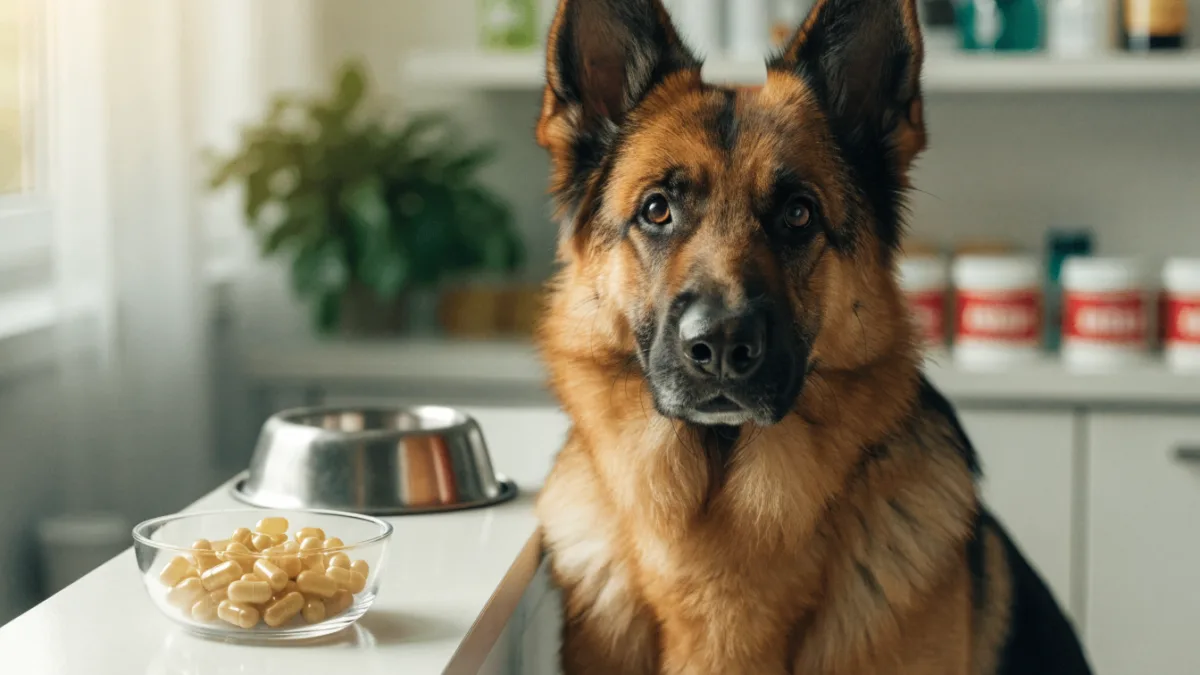
I’ll never forget the day a frustrated owner brought her three-year-old German Shepherd, Max, into my clinic. Max wasn’t suffering from anything you’d typically expect — no lameness, no infection, no obvious pain. Instead, he’d developed severe anxiety that seemed to come out of nowhere. He’d started pacing at night, trembling during thunderstorms he’d previously ignored, and refusing to eat. His owner, Michelle, was at her wits’ end. “I don’t know what happened to my confident dog,” she told me, close to tears. What surprised her most was that after I ran a full workup, I didn’t send her home with anti-anxiety medication. I sent her home with a probiotic.
Here’s what most pet owners don’t realize: your dog or cat’s gut and brain are having a constant conversation. When that conversation breaks down, the results show up everywhere — in the litter box, on the carpet, and sometimes in behavior that looks like anxiety or depression. The gut-brain connection isn’t just a wellness trend. It’s one of the most exciting frontiers in veterinary medicine, and it’s changing how I practice every single day.
The Gut-Brain Axis: More Than a Buzzword
Let’s get something straight right away: the gut-brain axis isn’t marketing fluff. It’s a well-documented, bidirectional communication system between your pet’s gastrointestinal tract and their central nervous system. In plain English? The gut literally talks to the brain, and the brain talks back.
This happens through several pathways — the vagus nerve (a major nerve highway running from brain to gut), the immune system, and through chemical messengers called neurotransmitters. Here’s something that might surprise you: about 95% of your pet’s serotonin, often called the “feel-good” chemical, is produced in the gut, not the brain. That alone should make us rethink how we approach both digestive and behavioral issues in our pets.
When the balance of microorganisms in the gut — what we call the microbiome — is healthy and diverse, this communication flows smoothly. When it’s disrupted, problems cascade through multiple body systems.
What the Latest Research Tells Us
A,[1] confirmed something many of us in clinical practice have suspected for years: novel therapeutic strategies using prebiotics and probiotics actively reduce anxiety-related symptoms in dogs. This research, conducted by C. Sacoor and colleagues, represents a genuine shift in how we think about treating canine behavioral disorders. Instead of reaching first for pharmaceutical interventions, we’re now asking a fundamental question: what’s happening in the gut?
I’ll be honest — I was skeptical when I first heard colleagues talking about probiotics for behavior. It sounded like a stretch. But after seeing the research evolve and watching patients improve, I’ve changed my mind. The evidence is too strong to ignore.
Signs Your Pet’s Gut Might Need Support
Recognizing gut issues in pets isn’t always straightforward. Yes, there are the obvious signs — chronic diarrhea, constipation, excessive gas, bloating after meals. But the gut-brain connection means symptoms often show up in unexpected ways.
Here’s what I tell owners to watch for:
- Intermittent digestive upset — occasional soft stools or vomiting that clears up on its own but keeps recurring
- Changes in appetite — picky eating that seems to come and go without explanation
- Increased anxiety or restlessness — especially if it develops suddenly in an otherwise confident pet
- Excessive licking or grooming — particularly around paws, which can signal both anxiety and gut inflammation
- Frequent ear infections or skin issues — the gut-immune connection means skin problems often start internally
- Sensitivity to dietary changes — if switching foods always causes upset, the microbiome may lack diversity
Take my patient Bella, a six-year-old Labrador who’d been treated for recurrent ear infections for two years. Her owner, James, had spent hundreds on ear medications that would work temporarily, then the infections would return. When I suggested we look at Bella’s gut health, he was confused. “Her ears have nothing to do with her stomach,” he said. But here’s the thing — they absolutely can. About 70% of your pet’s immune system lives in their gut. When that immune system is chronically irritated by an imbalanced microbiome, inflammation shows up everywhere, including the ears.
Probiotics, Prebiotics, and Why Both Matter
These terms get thrown around a lot, and honestly, even some of my colleagues use them interchangeably. They’re not the same thing, and understanding the difference matters when you’re choosing a product for your pet.
Probiotics: The Beneficial Bacteria
Probiotics are live, beneficial microorganisms — specific strains of bacteria and sometimes yeast that provide health benefits when administered in adequate amounts. Think of them as sending reinforcements to an overstretched army. According to [2] probiotics help maintain a healthy balance of intestinal microflora, support immune function, and can directly prevent uncomfortable conditions like diarrhea, constipation, and bloating.
What I find remarkable is how strain-specific these benefits can be. Different bacterial strains do different things. Some are better for acute diarrhea. Others show more promise for chronic inflammatory conditions. And emerging research suggests certain strains may be particularly effective for anxiety and stress-related behaviors.
Prebiotics: The Food That Fuels Them
Prebiotics are non-digestible fibers that feed the beneficial bacteria already living in your pet’s gut. They’re essentially fertilizer for your microbiome. Without adequate prebiotics, even the best probiotic supplement will struggle to take hold and multiply.
This is why the 2024 NIH study emphasized using both prebiotics and probiotics together — what we call synbiotics. The probiotic introduces beneficial bacteria, and the prebiotic gives those bacteria what they need to survive and thrive. It’s a one-two approach that makes both components more effective.
Navigating the Quality Question
Here’s where I need to be straight with you: not all probiotic supplements are created equal. There’s legitimate debate within the veterinary community about the efficacy of over-the-counter pet probiotics, and for good reason.
The most expensive probiotic in the world won’t help your pet if the bacteria died during manufacturing — or if they can’t survive the acid bath of your pet’s stomach.
Three things matter enormously when evaluating a probiotic product:
- Strain viability — The bacteria must be alive when they reach your pet’s intestines. Look for products with third-party testing that confirms live organism counts at expiration, not just at manufacture.
- Strain specificity — Generic “probiotic blend” on a label tells you nothing. Look for products that name specific strains with research behind them.
- Colony Forming Unit (CFU) count — This tells you how many live organisms are in each dose. Higher isn’t always better, but the count should be appropriate for therapeutic benefit.
As,[3] maintaining a healthy microbiome through appropriate probiotic supplementation does more than improve digestion. It strengthens overall immunity, reduces inflammation throughout the body, and supports the neurological communication that keeps your pet emotionally balanced.
When to Talk to Your Vet
Before starting any supplement regimen, please have a conversation with your veterinarian. I’m not saying this to be cautious — I’m saying it because I’ve seen too many owners waste money on products that were completely wrong for their pet’s specific situation.
A probiotic that’s perfect for managing stress colitis in an anxious Border Collie might not be the right choice for a cat with inflammatory bowel disease. Your vet can help you identify which strains might benefit your pet based on their individual health history, current conditions, and medication interactions.
And please — if your pet is experiencing sudden, severe digestive symptoms like persistent vomiting, bloody diarrhea, or a distended abdomen, don’t reach for a probiotic. Get to a vet immediately. These can be signs of serious conditions that need urgent medical attention, not supplements.
The Bigger Picture: A Holistic Approach
What excites me most about the gut-brain connection is how it’s pushing veterinary medicine toward a more integrated, whole-body approach to health. For too long, we’ve treated symptoms in isolation — anxiety pills for behavior, antibiotics for infections, anti-inflammatories for skin issues. The microbiome research reminds us that the body is an interconnected system, and supporting foundational health often resolves problems we used to chase individually.
Remember Max, the anxious German Shepherd I mentioned? Within six weeks of starting a targeted probiotic protocol, Michelle called to tell me he was sleeping through the night again. His appetite had returned. He was playing with other dogs at the park without freezing up. “It’s like I got my dog back,” she said.
That’s the potential of the gut-brain connection. Not a cure-all. Not a replacement for proper veterinary care or behavioral training. But a powerful, scientifically-backed tool that addresses health at its foundation — one that honors the remarkable complexity of the animals we love.
So the next time your pet seems “off” — whether that’s a grumbly stomach or unexplained anxiety — remember that the answer might not be in their head or their bowl alone. It might be in the trillions of microorganisms living quietly in their gut, working 24/7 to keep them healthy, happy, and whole.
Sources
- 2024 study published in the NIH's PubMed Central database — pmc.ncbi.nlm.nih.gov
- Cornell University's Riney Canine Health Center — vet.cornell.edu
- veterinary experts emphasize — trueanimalvet.com