

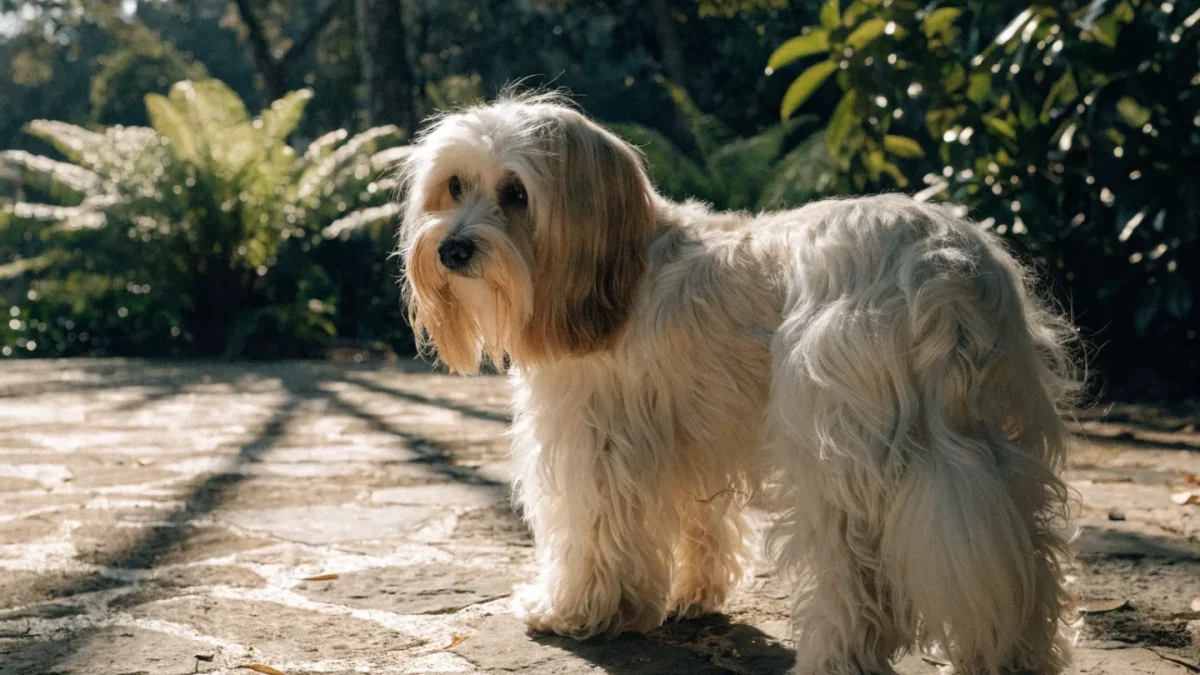
By 1970, only eleven Havanese dogs were known to exist in the entire United States. Eleven. The national dog of Cuba — a breed that had spent three centuries as the favored companion of Havana's wealthiest families — had been reduced to a handful of animals carried out of the country by refugees fleeing the 1959 revolution. Every Havanese alive today outside of Cuba descends from those few survivors, a genetic bottleneck so severe that it shaped the breed's health profile, coat diversity, and population structure in ways that are still measurable.
The Havanese is a small companion breed in the Bichon family, typically weighing between 3.5 and 6 kilograms and standing 21 to 29 centimeters at the shoulder. It's best known for a profuse, silky coat that doesn't shed in the conventional sense, a temperament that bonds intensely to its people, and an adaptability that makes it one of the few toy breeds genuinely suitable for a wide range of living situations. If you're looking for a havanese breed guide that goes beyond the basics — into the history, health realities, grooming demands, and honest lifestyle fit — this is it.
But first, some context. The Havanese's story is unlike any other popular breed. It's a story of colonial wealth, political upheaval, near-extinction, and a rescue effort that depended on a handful of families who refused to leave their dogs behind.
Origins and History
Colonial Cuba
The Havanese descends from small companion dogs brought to Cuba by Spanish settlers in the early 1500s. These dogs were likely Bichon-type breeds from the Mediterranean — related to what would eventually become the Bichon Frise, Maltese, and Bolognese. In Cuba's tropical climate, isolated from European breeding populations for centuries, these dogs developed distinct characteristics: a lighter, silkier coat suited to the heat, a slightly longer body, and the particular springy gait that breeders still evaluate today.
By the 1700s, the breed had become a fixture of Cuban aristocratic life. They were house dogs for the colonial elite in Havana — hence the name — and they served a social function as much as a companionship one. Owning a Havanese signaled status. European travelers to Cuba noted the breed in their accounts, and a small number of dogs were brought back to Europe, where they briefly gained popularity in the courts of Spain, France, and England during the 1800s. Queen Victoria owned two Havanese named Chico and Goliath — a photograph of the pair exists in the Royal Collection Trust. That European popularity faded by the late nineteenth century, but in Cuba, the breed remained deeply established.
Revolution and Near-Extinction
The 1959 Cuban Revolution changed everything for the Havanese. As wealthy Cuban families fled to the United States, some brought their dogs. Most didn't — or couldn't. The breed's association with the pre-revolutionary upper class made it politically inconvenient on the island, and organized breeding programs in Cuba collapsed.
In the United States, the breed existed in tiny numbers with no organized preservation effort. That changed in the late 1970s when Dorothy Goodale, a dog enthusiast, tracked down the remaining Havanese in the country — those eleven dogs — and began a deliberate breeding program to save the breed from extinction. She found most of them through classified advertisements and word of mouth among Cuban exile families in Florida.
The recovery was slow and careful. Goodale and a small network of early breeders worked to expand the gene pool while maintaining breed type. The Havanese Club of America was founded in 1979. Full recognition by major breed registries followed: the AKC admitted the Havanese to its Toy Group in 1996. From near-extinction to one of the fastest-growing breeds in popularity — the Havanese went from virtually unknown to consistently ranking in the top 25 breeds within two decades.
Breed Relationships
The Havanese belongs to the Bichon family, a group of small white companion dogs with shared Mediterranean ancestry. Its closest relatives are the Bichon Frise, Maltese, Bolognese, Coton de Tulear, and Lowchen. If the Bichon Frise is the extrovert of the family — bouncy, high-energy, always performing — the Havanese is the one who'd rather be in your lap, watching the party from a comfortable distance. Both are social, but the Havanese channels that sociability into quieter, deeper bonds.
Physical Characteristics
Size and Build
The Havanese is a sturdy small dog — slightly longer than tall, with a topline that rises slightly from withers to croup, giving it a distinctive silhouette and that characteristic springy, lively gait. Breed standards specify a height of 21 to 29 centimeters and a weight of roughly 3.5 to 6 kilograms, though individual variation is common.
Don't mistake small size for fragility. The Havanese has solid bone for its frame and a robust, compact build that handles moderate activity without the injury concerns common to more delicate toy breeds. This is a dog that was bred to be a companion in a tropical climate, not a decorative accessory — and the physical structure reflects that.
Coat
The coat is the breed's most defining physical feature. It's a double coat — soft undercoat beneath a longer, silky outer coat — that grows continuously rather than cycling through shed-and-regrow phases the way most dog coats do. This is why Havanese are often described as low-shedding, though "low-shedding" is not the same as "no maintenance." The coat that doesn't end up on your furniture ends up tangled on the dog if you don't stay on top of grooming.
Texture ranges from silky and straight to wavy. Breed standards generally prefer a soft, light texture that flows with movement. A coarser or cottony coat — which some Havanese carry — tangles more readily and requires more intensive maintenance.
Color is virtually unrestricted. Havanese come in white, cream, fawn, red, chocolate, black, silver, blue, and nearly every combination and pattern of those colors. Particolors, sables, and brindles are all found in the breed. This diversity is unusual among Bichon-type breeds, most of which trend toward white or light colors. The Havanese coat color often changes significantly from puppyhood to adulthood — a phenomenon governed by specific genetic mechanisms that the havanese genetics article covers in detail.
Distinguishing Features
The dark, almond-shaped eyes and the expression they create are the breed's hallmark. Havanese have an attentive, slightly mischievous look that experienced breed people describe as "intelligent softness." The ears are set high, drop forward, and are covered in long hair that blends into the head coat. The tail is carried arched over the back, plumed with long silky hair — it's the first thing that moves when the dog is happy, which is most of the time.
Temperament and Behavior
The Havanese temperament is built around one central fact: this is a dog that was bred, for centuries, to be in physical contact with a person. Not in the same room. Not nearby. On the person. In the lap, against the leg, draped across the feet. The breed's nickname — "Velcro dog" — isn't a joke. It's a job description. The havanese temperament article covers the behavioral dimensions in full, but here's the essential picture.
Attachment and Separation
Havanese form unusually intense bonds with their primary people. This manifests as following you from room to room, positioning themselves wherever you sit, and monitoring your movements with a level of attention that borders on surveillance. For many owners, this is exactly what they wanted in a companion breed. For owners who value independence or spend long hours away from home, it becomes a problem.
Separation anxiety is common in the breed — not universal, but common enough that any honest breed guide has to flag it. A Havanese left alone for extended periods may vocalize, become destructive, or develop stress-related behaviors. This isn't a training failure. It's a consequence of selecting for extreme human attachment over hundreds of years.
Social Nature
With other dogs, Havanese are generally friendly and non-confrontational. They're not typically dog-aggressive, though some individuals can be reserved with unfamiliar dogs until they warm up. With strangers, reactions vary more than breed profiles usually suggest — some Havanese are enthusiastically social with everyone, while others are initially cautious and take time to engage. Neither extreme is unusual for the breed.
With children, the Havanese can be a good fit, with caveats. The breed is playful, patient, and genuinely enjoys interaction. But at 3.5 to 6 kilograms, a Havanese is vulnerable to injury from rough handling by very young children. Supervision is essential — not because the dog is aggressive, but because it's small enough to be hurt accidentally.
What Most People Get Wrong About This Breed
The biggest misconception I encounter: "Havanese are just lapdogs."
They are lapdogs — spectacularly good ones. But "just" undersells the breed's cognitive and emotional complexity. Havanese are intelligent, trainable, and responsive to an extent that surprises people who associate toy breeds with limited working capacity. They've been used successfully in therapy work, scent detection at a basic level, agility, and rally obedience. Their biddability is closer to a sporting breed than to most of their Bichon relatives.
The second misconception: "Havanese don't need exercise because they're small." They need less than a sporting breed, certainly, but a Havanese with no structured activity beyond a bathroom walk will become restless, attention-demanding, and behaviorally difficult. The breed needs daily walks and play — the details are covered in the havanese exercise needs article.
Health Profile
For a toy breed, the Havanese has a remarkably solid health profile. This is one of the breed's genuine strengths, and it deserves honest acknowledgment alongside the conditions that do affect the breed.
Lifespan
The average Havanese lifespan is 14 to 16 years, which places it among the longer-lived breeds. Many Havanese remain active and healthy well into their teens. This longevity is one of the practical advantages of the breed — a commitment to a Havanese puppy is a commitment measured in a decade and a half, often more.
Common Health Conditions
- Patellar luxation: The kneecap slips out of its normal groove. Common across toy breeds, and the Havanese is no exception. Severity ranges from a mild intermittent slip that self-corrects to a permanent displacement requiring surgical intervention. Breeding stock should be evaluated.
- Hip dysplasia: Less common in the Havanese than in larger breeds, but it does occur. The Orthopedic Foundation for Animals ranks the Havanese 91st for hip dysplasia incidence among evaluated breeds, placing it in the middle of the pack, with roughly 10 percent of evaluated dogs receiving a dysplastic rating.
- Progressive retinal atrophy (PRA): A group of inherited eye diseases that cause gradual vision loss. DNA testing can identify carriers.
- Cataracts: Both juvenile and adult-onset cataracts occur in the breed. Annual ophthalmologist evaluation is recommended.
- Chondrodysplasia (CDDY/CDPA): Certain forms of dwarfism-related skeletal abnormalities that can affect intervertebral disc health. DNA testing is available.
- Legg-Calve-Perthes disease: Degeneration of the femoral head, leading to pain and lameness. Most commonly appears in puppies between five and eight months of age.
- Liver shunts (portosystemic shunts): Abnormal blood vessels that bypass the liver, preventing proper detoxification. Symptoms typically appear in young dogs and can range from mild to life-threatening.
- Deafness: Congenital deafness, sometimes linked to white coat color and pigmentation genetics, occurs in the breed at a low rate.
The Genetic Bottleneck Factor
The breed's near-extinction in the 1970s created a founder effect that still influences health today. The limited number of founding dogs meant less genetic diversity than breeds with large, established populations. Responsible breeding programs work to maximize diversity by avoiding tight linebreeding and utilizing health databases to track condition prevalence across family lines.
Grooming Requirements
The Havanese coat is beautiful. It is also relentless. If the temperament is the breed's defining psychological trait, the coat is the defining management commitment. Anyone who tells you the Havanese is low-maintenance has never maintained one.
Full Coat Care
A Havanese kept in full coat — the long, flowing style seen in show rings — requires daily brushing. Not a quick pass with a bristle brush, but thorough, layer-by-layer combing with a pin brush and metal comb that reaches all the way to the skin. The coat mats if you miss a day. It mats faster during the transition from puppy coat to adult coat, typically between eight and fourteen months, when the softer puppy hair tangles with the incoming adult coat at a rate that seems to defy physics.
Bathing every one to two weeks is standard for a full-coated Havanese, followed by careful blow-drying that separates and straightens the coat. Air-drying a long Havanese coat is a shortcut to mats.
The Puppy Cut Alternative
Most pet Havanese owners opt for a shorter clip — typically 2.5 to 5 centimeters all over — that dramatically reduces daily maintenance. A puppy cut still requires regular brushing (two to three times per week) and professional grooming every four to six weeks, but the time commitment drops from daily sessions to manageable upkeep. There's no shame in the puppy cut. It's the practical choice for the vast majority of owners, and the dog doesn't care.
Ears, Eyes, Nails, and Teeth
Ear cleaning is a routine need — those dropped, hair-covered ears trap moisture and debris. Weekly inspection and cleaning prevent infections. The hair inside the ear canal may need periodic plucking or trimming, though opinions vary among grooming professionals on the best approach.
Eye staining — reddish-brown tear tracks below the eyes — is common in light-colored Havanese. It's usually cosmetic rather than medical, caused by porphyrins in tears. Daily wiping with a damp cloth manages the staining. Persistent or sudden-onset tearing warrants veterinary evaluation.
Nails need trimming every two to three weeks. Dental care — brushing several times per week — is important in a toy breed, since small dogs are disproportionately prone to periodontal disease.
Exercise and Activity Needs
The Havanese is not a high-energy breed, but it's not a zero-energy breed either. Think moderate — a dog that enjoys activity and benefits from it without requiring the structured, intensive routines of a sporting or working breed.
A minimum of 30 to 45 minutes of daily activity suits most adult Havanese. This can be split between walks, play sessions, and indoor games. The breed adapts well to apartment living precisely because its exercise needs are manageable within a smaller space — but "manageable" still means "daily and consistent."
Mental stimulation matters more than distance covered. Havanese are intelligent dogs that get bored, and boredom in a companion breed manifests as attention-seeking, barking, and occasionally creative destruction. Puzzle toys, short training sessions, and varied walking routes keep the brain engaged.
Puppy and Senior Adjustments
Havanese puppies are energetic in bursts — short periods of intense play followed by naps. The five-minutes-per-month-of-age guideline is reasonable for structured exercise, though free play on soft surfaces can be more generous. Avoid repetitive jumping activities while growth plates are still open.
Senior Havanese often remain playful well into their early teens. Adjust duration and intensity based on the individual dog's condition, but don't assume advanced age means no activity. Gentle daily walks and light play maintain muscle tone, joint health, and cognitive engagement.
Nutrition Fundamentals
Small size makes caloric management critical — a few extra grams of body fat on a 5-kilogram dog is a much larger proportional burden than the same gain on a 30-kilogram breed. Feed measured meals: two per day for adults, three for puppies under six months. Caloric needs typically range from 250 to 450 calories per day, depending on age and activity level. Monitor weight by feel — ribs should be easily palpable with light pressure, and a visible waist should be apparent from above.
Living Situation Compatibility
The Havanese is one of the most adaptable breeds for varied living situations. Low exercise requirements, minimal shedding, and moderate vocalization make it a genuinely practical apartment dog. Houses with yards work too, though a yard is a bonus rather than a requirement.
The breed tolerates warm climates well — better than most double-coated breeds — reflecting its Cuban origins. Cold weather is manageable for short outings, but this is not a dog built for prolonged cold exposure. Havanese generally coexist well with other dogs and cats, especially when introduced during puppyhood.
Choosing a Havanese
The breed's popularity has attracted operations of widely varying quality. At minimum, parent dogs should have evaluations for patellar luxation, hips, eyes, and hearing, plus DNA tests for PRA and chondrodysplasia. Ask to see documentation — not verbal assurances, actual results. Walk away from operations with multiple litters available simultaneously, no health clearances, puppies available before eight weeks, or "rare" color pricing. Meet the mother, observe the socialization environment, and expect the breeder to ask as many questions about you as you ask about the dogs.
The Right Owner for This Breed
A Havanese is the right dog for you if:
- You want a companion that's genuinely present — on your lap, at your feet, in whatever room you're in
- You have the time for regular grooming or the budget for professional grooming every four to six weeks
- You're home enough that the dog isn't left alone for extended periods most days
- You want a breed that's trainable and intelligent without the intensity of a working breed
- You appreciate a dog that adapts to your pace — happy with a walk around the block or a longer outing
- You understand that a 14-to-16-year lifespan means a long commitment
A Havanese is the wrong dog for you if:
- You want a dog that's independent and comfortable being alone for eight or more hours daily
- Grooming feels like a chore rather than a bonding activity, and you won't commit to it consistently
- You want a breed with strong guarding instincts or one that's aloof with strangers
- You prioritize a dog that needs minimal ongoing maintenance
- Is a Havanese right for you? covers the full decision framework if you're still weighing the choice
The Havanese survived political upheaval, near-extinction, and a genetic bottleneck that should have ended the breed. It came through all of that with its temperament intact, its health surprisingly strong, and its fundamental nature unchanged: a small dog that exists to be close to its person. The breed asks for your presence more than anything else. If you can give that, it gives back everything it has.
Frequently Asked Questions
Are Havanese hypoallergenic?
The Havanese is often marketed as hypoallergenic, but no dog breed is truly hypoallergenic. What the Havanese does have is a coat that sheds minimally compared to most breeds — loose hair tends to stay caught in the coat rather than falling onto surfaces. This reduces the amount of dander distributed around a home, which may be beneficial for some allergy sufferers. However, allergic reactions are triggered by proteins in saliva, urine, and skin cells, not just by hair itself. People with dog allergies should spend time around Havanese before committing to ownership.
How much grooming does a Havanese actually need?
A Havanese in full coat needs daily brushing — 15 to 30 minutes of thorough combing through every layer, down to the skin. Most pet owners choose a shorter puppy cut that reduces this to two or three brushing sessions per week plus professional grooming every four to six weeks. Either way, grooming is a non-negotiable ongoing commitment. Skipping sessions leads to mats that can become painful and require shaving.
Can Havanese be left alone during a work day?
Havanese tolerate short periods alone, but this breed is poorly suited to households where all occupants are away for eight or more hours daily. Their deep attachment to humans means isolation causes genuine stress for many individuals, manifesting as vocalization, destructive behavior, or house-training regression. If your schedule requires extended absences, a midday visit from a dog walker or pet sitter, a doggy daycare arrangement, or a second companion animal can help — but the Havanese is fundamentally a breed that needs significant daily human contact.
Do Havanese bark a lot?
Havanese are not typically excessive barkers, but many develop alarm-barking habits — alerting to doorbells, passing pedestrians, or unusual sounds. This is manageable with consistent training but worth knowing about, particularly in apartment settings where noise carries. Some individual Havanese are notably quiet; others are more vocal. The breed as a whole falls in the moderate range for vocalization compared to other toy breeds.
How do Havanese compare to Bichon Frises?
Both breeds share Bichon-family ancestry and a companion-dog purpose, but they differ meaningfully. The Bichon Frise tends to be more consistently outgoing and energetic, with a powder-puff coat that requires a specific grooming style. The Havanese is generally calmer, bonds more intensely to one or two people, has a wider range of coat colors and textures, and often shows more trainability in structured activities. The Bichon Frise averages a slightly shorter lifespan at 12 to 15 years versus 14 to 16 for the Havanese. Both are excellent companion breeds — the right choice depends on whether you want a dog that entertains the room or one that stays close to you specifically.