

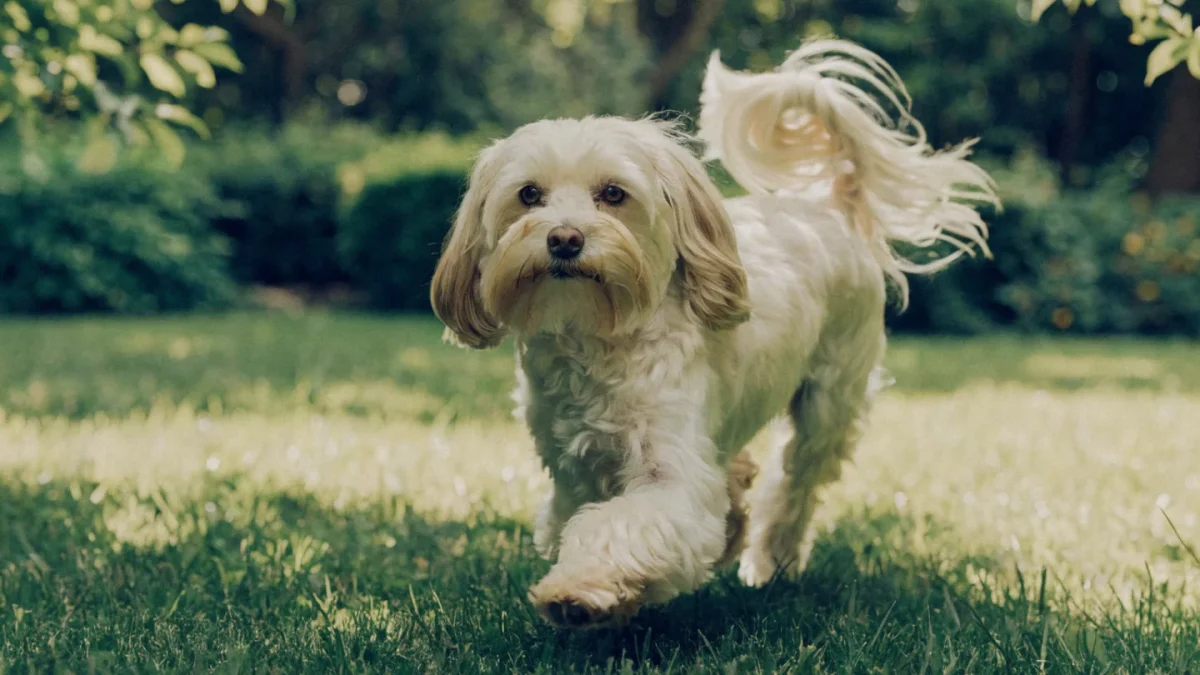
The Havanese was bred to cross the distance between a parlor chair and a human lap. That's roughly 90 centimeters of athletic endeavor, perfected over three centuries. Nobody selected this breed for endurance, speed, or field stamina — and yet the assumption that a companion breed needs no exercise at all has created more behavioral problems in Havanese than almost any health condition.
Havanese exercise needs are modest in absolute terms. This is not a breed that requires 90-minute trail runs or structured retrieving sessions. But "modest" and "none" are different categories, and the gap between them is where frustrated owners and restless dogs end up.
The Numbers
An adult Havanese in good health benefits from 30 to 45 minutes of daily activity. That's a baseline, not a ceiling — some individuals, particularly younger adults, will happily take more. The activity can be split across two or three sessions throughout the day: a morning walk, an afternoon play session, and a short evening outing works well for most households.
The pace matters less than the consistency. A Havanese doesn't need power walks. A moderate stroll with opportunities to sniff and explore satisfies the physical component. What this breed cannot tolerate is day after day of nothing — no walk, no play, no structured interaction beyond bathroom breaks.
Puppies under a year need shorter, more frequent activity bursts. The five-minutes-per-month-of-age guideline provides a reasonable framework for structured walks. A four-month-old gets roughly 20 minutes per session. Free play on soft surfaces — a living room, a grassy yard — can be more generous, since the puppy controls its own intensity.
Senior Havanese remain more active than many toy breeds in their later years. A 12-year-old Havanese that's been active throughout its life often still wants and benefits from 20 to 30 minutes of gentle daily movement. Adjust for individual condition, but don't assume old age means inactivity in a breed with a 14-to-16-year lifespan.
Why Mental Stimulation Outweighs Distance
Here's what separates havanese exercise needs from those of a sporting breed: the brain matters more than the legs.
The Havanese is an intelligent dog — more trainable and cognitively engaged than most toy breeds. That intelligence requires input. A Havanese that gets a 30-minute walk but zero mental stimulation is a Havanese that invents its own entertainment, and the inventions tend to involve barking at nothing, demanding attention with escalating persistence, or rearranging household items.
The havanese temperament article covers the breed's cognitive profile in detail. The practical takeaway for exercise is that a 10-minute training session — learning a new trick, practicing known commands with variation, working through a puzzle feeder — can tire a Havanese more effectively than a 30-minute walk. Both are useful. The combination is ideal.
Puzzle feeders and interactive toys work well for this breed. Havanese are food-motivated enough to engage with treat-dispensing puzzles but not so food-obsessed that they destroy the toy to get at the contents. Snuffle mats, Kong toys with frozen filling, and simple hide-and-seek games with treats scattered around a room all provide low-effort mental stimulation that you can deploy daily.
Indoor Activity Options
One of the Havanese's genuine advantages as a companion breed is that a meaningful portion of its exercise needs can be met indoors. This makes it viable for apartment dwellers, people with mobility limitations, and anyone dealing with weather that makes outdoor walks impractical.
Short indoor fetch sessions work — a hallway or living room provides enough space for a Havanese to chase a small ball. Tug games with a rope toy provide physical and interactive engagement. Training new tricks — spin, shake, weave through legs, find a hidden object — doubles as both exercise and mental work.
The key is active interaction, not passive coexistence. A Havanese sitting on the couch next to you while you watch television is content but not exercised. The breed needs moments in the day when you're actively doing something with it, not just near it.
Outdoor Activities
Walks are the foundation. The Havanese is not a distance dog, but it enjoys exploring at its own pace — and the sensory input from an outdoor walk (new smells, sounds, surfaces) provides stimulation that indoor activity alone doesn't replicate.
Moderate hiking on easy terrain is feasible for fit adult Havanese. Keep distances reasonable — a 3-to-5-kilometer walk on flat to gently rolling ground is a solid outing. Watch for signs of fatigue: slowing pace, lagging behind, sitting down. The breed's short legs and compact build mean it covers more ground per step than you do relative to its body length, and it will tire before a larger dog would on the same route.
Dog parks can work for well-socialized Havanese, with supervision. The breed's small size makes it vulnerable in play with much larger dogs, even when the larger dog means no harm. Separate small-dog areas are ideal. If only a mixed-size area is available, keep a close eye on the interactions.
Swimming is not a natural strength. Some Havanese enjoy water; many are indifferent or cautious. The breed was not developed for aquatic work, and the long coat becomes heavy when wet. If your Havanese shows interest in water, supervised shallow wading is fine. Don't force it.
Signs of Insufficient Exercise
A Havanese that isn't getting enough activity tells you through behavior:
- Escalating attention demands — pawing, barking, pushing into your space with increasing insistence
- Restless pacing, particularly in the evening
- Excessive barking at minor stimuli (doorbell, passing pedestrians) beyond the breed's normal alert tendency
- Destructive behavior directed at soft items — cushions, slippers, paper products
- Difficulty settling at night
These signals are easy to misread as behavioral problems that need correction, when they're actually exercise deficits that need filling. The complete havanese breed guide covers the breed's behavioral baseline — use it to calibrate what's normal versus what's a sign of unmet needs.
A Practical Daily Routine
For an adult Havanese in a typical household: a morning walk of 15 to 20 minutes, an afternoon interactive session (training, play, or a puzzle feeder) of 10 to 15 minutes, and a short evening outing of 10 to 15 minutes. That's the minimum. On days when weather or schedule disrupts outdoor walks, increase the indoor mental stimulation to compensate.
The breed's flexibility is one of its strengths. A Havanese that gets a long, stimulating walk on Saturday and a shorter routine on a busy Tuesday doesn't fall apart. What matters is the pattern over weeks, not the precision of any single day. Consistent, moderate daily activity — adapted to the individual dog's age and condition — keeps a Havanese physically healthy, mentally engaged, and behaviorally manageable.