

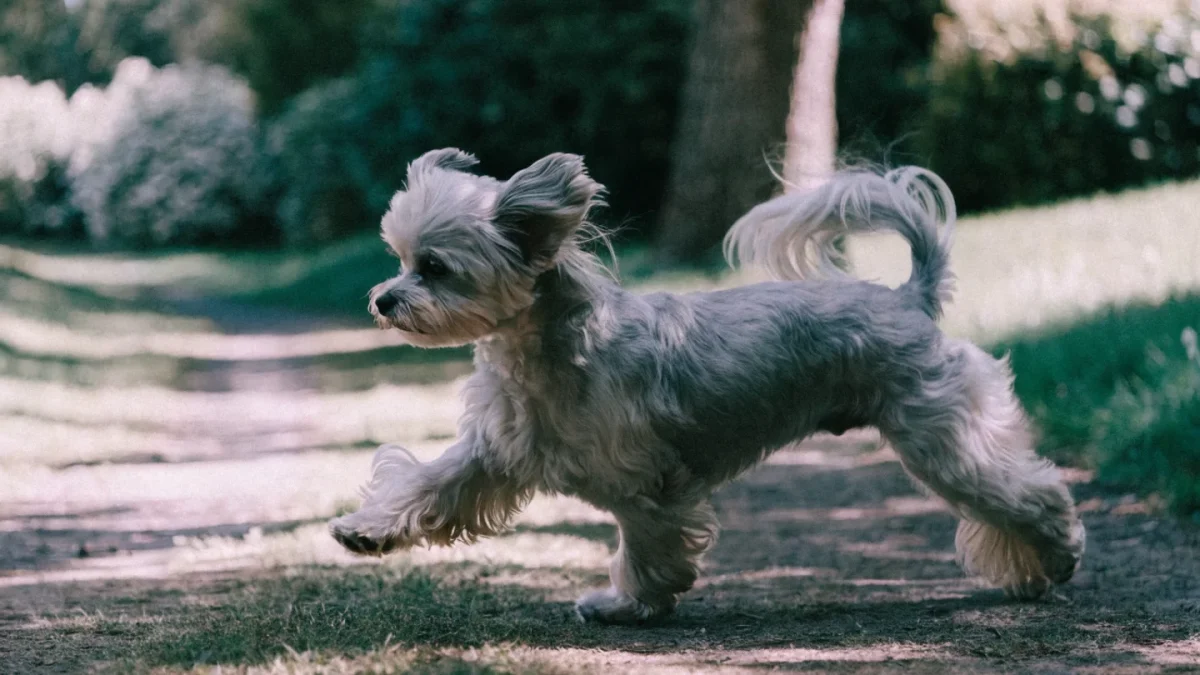
Research into the genetics of progressive greying in dogs has advanced significantly in recent years — a 2020 study identified variation in the KITLG gene as associated with pigment intensity, though the precise gene variant responsible for progressive greying (the theoretical G locus) has not yet been definitively confirmed. What's clear is the phenotype: the same mechanism turns a jet-black Havanese puppy into a silver adult by its second birthday. Before that discovery, Havanese breeders had been navigating color prediction by pedigree intuition and experience, knowing that their breed changed color more dramatically than almost any other but lacking the molecular tools to explain exactly why. The havanese genetics coat color fading story is now significantly clearer, though the science still holds surprises.
The Havanese is genetically one of the more interesting toy breeds. Its coat color diversity — spanning black, chocolate, red, gold, cream, silver, white, and virtually every combination thereof — is unusual within the Bichon family, where most relatives trend heavily toward white. Its coat texture variation, health-relevant DNA markers, and the genetic consequences of its 1970s population bottleneck all make the breed worth examining through a genetic lens.
The Color-Fading Mechanism
The most visually dramatic genetic trait in the Havanese is progressive greying, sometimes called "silvering." A puppy born with a rich, dark coat — chocolate, black, or deep red — may lighten substantially over its first two to three years of life, sometimes ending up a color that bears almost no resemblance to its birth coat.
This is controlled primarily by the G locus (greying gene). Dogs carrying one or two copies of the dominant G allele experience a gradual reduction in pigment deposition in the hair shaft as they mature. The pigment-producing cells (melanocytes) remain present and functional, but the amount of pigment they deposit per growth cycle decreases over time.
The result: a black puppy may become dark grey, then silver, then a pale platinum by adulthood. A chocolate puppy may fade to café au lait or light gold. A red puppy may lighten to apricot or cream. The degree of fading depends on whether the dog carries one copy (heterozygous, typically moderate fading) or two copies (homozygous, typically more extensive fading) of the greying allele.
Not all Havanese carry the greying gene. Dogs that are G/G or G/g at this locus will show progressive color change. Dogs that are g/g will hold their birth color into adulthood. This is why two black puppies from the same litter can end up looking completely different as adults — one may stay black while the other fades to silver, depending on their individual genotype.
Commercial DNA testing for the G locus is not yet widely available from major canine genetics laboratories, though tests for other coat color loci (E, A, B, D, S) can help predict base color outcomes. Breeders who want to predict puppy color outcomes — or buyers who have a strong color preference — can use this test to reduce uncertainty, though other modifying genes can still influence the final result.
Beyond Greying: Other Color Genetics
The Havanese's broad color palette involves the same gene loci that control color in all dog breeds, but the breed carries alleles at multiple loci simultaneously, producing a wider range of combinations than most single breeds express.
The E Locus (Extension)
The E locus determines whether a dog can produce black/brown pigment (eumelanin) in its coat. Dogs with at least one dominant E allele produce eumelanin normally. Dogs homozygous for the recessive e allele (e/e) produce only red/yellow pigment (phaeomelanin), regardless of what's happening at other color loci. In the Havanese, e/e dogs appear red, gold, or cream depending on intensity modifiers.
The A Locus (Agouti)
The agouti locus controls the distribution pattern of eumelanin and phaeomelanin in the coat. The Havanese carries several agouti alleles, including sable (Ay), which produces a coat with dark-tipped hairs over a lighter base. Sable Havanese puppies often appear much darker than they will as adults — the dark tips of the puppy coat give way to the lighter adult coat as hair cycles, producing a color change that's distinct from greying but often confused with it.
The tan-point pattern (at) also occurs in the Havanese, producing the characteristic pattern of dark body color with tan markings above the eyes, on the cheeks, chest, and legs — similar to the pattern seen in Rottweilers and Dobermanns, but in a miniature, silky-coated package.
The B Locus (Brown)
Dogs homozygous for the recessive b allele (b/b) at this locus produce brown (chocolate) pigment instead of black. In Havanese, this affects not only coat color but nose leather, eye rims, and paw pad color — brown Havanese have liver-colored noses rather than black. When combined with the greying gene, a b/b dog born chocolate may fade to a distinctive café au lait or champagne shade.
The S Locus (White Spotting)
White markings in Havanese are controlled by the S locus. The breed shows significant variation in white distribution, from solid-colored dogs with minimal or no white to heavily particolored dogs with large white patches. The genetics of white spotting remain less fully characterized than other color loci, and modifier genes likely influence the extent and symmetry of white patterns.
Coat Texture Genetics
The Havanese breed standard describes a silky, flowing coat, but not all Havanese produce this texture. Two main coat types occur: the desirable silky coat and a cottony or woolly coat that mats more readily and has a different feel.
The genetic basis for coat texture in the Havanese involves variation at several genes, including those controlling curl, hair length, and hair shaft structure. A 2009 study published in Science identified three genes that control coat variation across domestic dogs: FGF5 (hair length), KRT71 (curl and wave pattern), and RSPO2 (facial furnishings). The Havanese carries variants at FGF5 and KRT71 that contribute to its characteristic long, wavy-to-curly coat texture.
The practical implication for owners: coat texture is partially heritable, and breeders who select for silky coat type over multiple generations produce litters with more consistent texture. A puppy from two silky-coated parents is more likely — though not guaranteed — to develop a silky adult coat than a puppy from parents with mixed coat types.
Texture becomes apparent gradually. Puppy coats are softer and fluffier regardless of adult type. The adult coat texture typically establishes itself between 12 and 18 months, during the coat transition period that challenges even experienced groomers.
Health-Relevant Genetics
The Havanese's genetic profile includes several conditions with identified DNA markers that allow screening and breeding management.
Progressive Retinal Atrophy (prcd-PRA)
Progressive rod-cone degeneration is an inherited eye disease that causes gradual vision loss, eventually leading to blindness. The mutation responsible has been identified, and a DNA test exists. The inheritance is autosomal recessive — a dog must carry two copies of the mutant allele (affected) to develop the disease. Carriers (one copy) are clinically normal but pass the allele to roughly half their offspring.
Responsible breeding programs test all breeding stock and avoid mating two carriers together. This doesn't eliminate the allele from the population — carriers can still be bred to clear (tested-normal) dogs — but it prevents affected puppies from being produced.
Chondrodysplasia and Chondrodystrophy (CDDY/CDPA)
These conditions affect skeletal development and intervertebral disc health. CDDY, in particular, is associated with an increased risk of intervertebral disc disease (IVDD). DNA tests identify dogs carrying the relevant variants, allowing breeders to factor disc-disease risk into breeding decisions.
The havanese history article covers the genetic bottleneck that shapes all Havanese genetics today. In a breed rebuilt from roughly eleven founding dogs, every genetic variant present in those founders has an outsized influence on the modern population. Conditions that might be rare in a breed with a larger founding population can reach meaningful frequencies in the Havanese simply because one or two founders carried the relevant alleles.
Congenital Deafness
Deafness in the Havanese has some association with extensive white pigmentation, following a pattern seen across multiple breeds where genes producing white coat areas also affect inner ear development. BAER testing confirms hearing status. The relationship is probabilistic — not every extensively white Havanese is deaf — but screening is warranted.
The Bottleneck's Genetic Shadow
Every aspect of Havanese genetics is shaped by the founder effect from the breed's near-extinction. Eleven founding dogs carry only 22 sets of chromosomes between them. Genetic diversity testing by the UC Davis Veterinary Genetics Laboratory indicates the Havanese has retained reasonable allelic richness, with a breed-average coefficient of inbreeding around 2.7 percent — well under the commonly advised limit of 6.25 percent. Breeders who track COI and select matings to minimize it are actively managing the founder-effect legacy.
In a breed with limited diversity, a single deleterious allele at high frequency can affect a disproportionate number of dogs. This makes every DNA test and every informed breeding decision more consequential than in a breed with a wider genetic base.
The Right Perspective
The Havanese's genetics are simultaneously a source of its charm — that extraordinary color diversity, the silky coat, the compact robust build — and a reminder of its vulnerability. The breed was rebuilt from almost nothing. The complete breed guide covers the practical implications. What the genetics tell you is that every responsible breeding decision matters more in this breed than in one with a wider genetic base, because the margin for error is smaller and the consequences of ignoring the data are harder to reverse.