

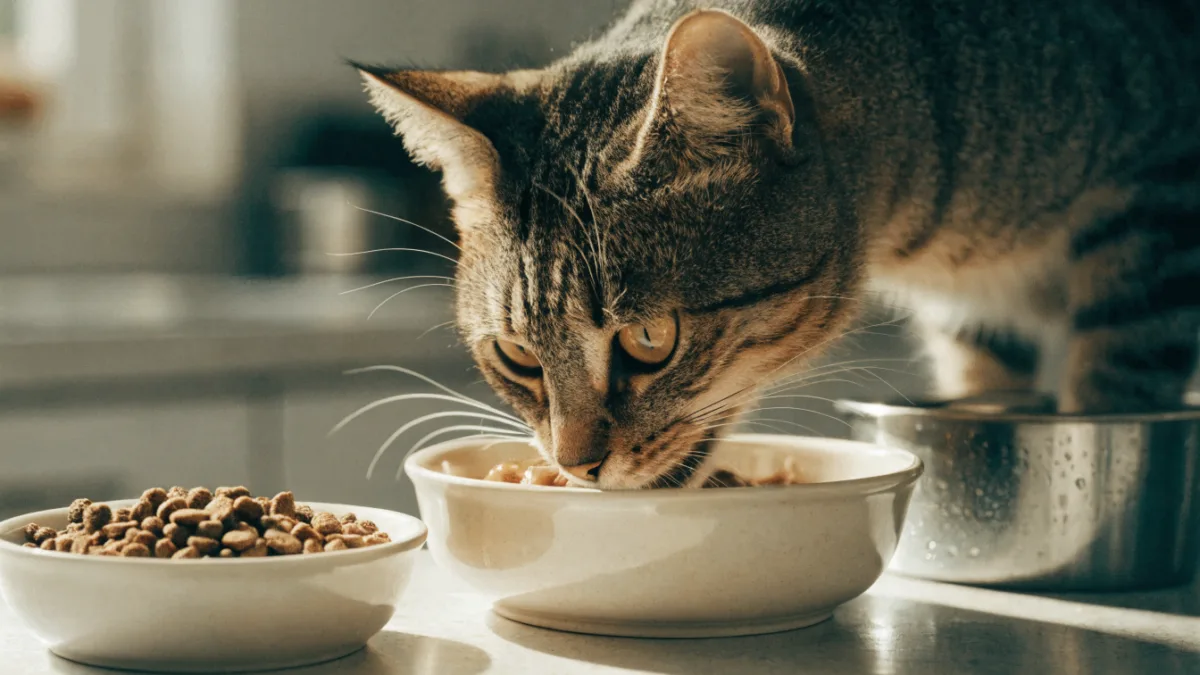
Picture a recent case: a woman named Karen brings her 8-year-old male cat, Whiskers, into the clinic. Whiskers had been straining in the litter box for two days, and Karen was terrified something was seriously wrong. She was right to be concerned — Whiskers had developed crystals in his urethra, a painful and potentially life-threatening condition that turns up far too often in cats fed exclusively dry kibble. Part of his treatment plan was transitioning to a wet food diet. Karen’s response is one vets hear almost weekly: “But isn’t wet food just expensive water?” That question gets at the heart of one of the most misunderstood topics in pet nutrition — and the answer might surprise you.
The Moisture Gap: What’s Actually in the Bowl
Let’s start with the numbers, because they’re striking. Dry kibble typically contains around 10% moisture or less. Canned wet food, on the other hand, averages about 82% moisture. That’s not a minor difference — it’s a fundamental shift in how your pet’s body processes what they eat.
When you look at a bowl of kibble, you’re seeing concentrated nutrition with almost no water. When you open a can of wet food, roughly four-fifths of what’s inside is moisture. This water isn’t filler or a manufacturer cutting corners — it’s biologically significant. The water in wet food is bound within the food matrix itself, which means it’s absorbed and utilized differently than water your pet drinks separately from a bowl. Think of it like the difference between eating a fresh orange and taking a vitamin C tablet with a glass of water. Both deliver the nutrient, but your body processes them quite differently.
Because water adds weight and volume without adding calories, wet food has what nutritionists call lower energy density — fewer calories per gram. This means your pet can eat a larger, more satisfying portion of wet food for the same caloric intake as a much smaller portion of kibble. As,[1] this difference has real implications for everything from weight management to urinary tract health.
The Feline Hydration Crisis: Why Cats Need Wet Food Most
If you share your home with a cat, this section is especially important. Cats evolved from desert-dwelling ancestors who got most of their moisture from prey — small rodents, birds, and reptiles that are themselves about 70% water. Because their ancestors rarely encountered standing water, modern cats developed a naturally low thirst drive. They simply don’t feel the urge to drink the way dogs do.
This evolutionary quirk becomes a serious problem when we feed cats dry kibble, which contains a fraction of the moisture they’d naturally consume. A cat eating only kibble will drink from their water bowl, sure — but studies show they typically don’t drink enough to fully compensate for the deficit. Their bodies stay in a state of chronic mild dehydration, and over time, this takes a toll.
Urinary Crystals and Kidney Disease
When a cat’s urine becomes concentrated due to inadequate hydration, minerals that would normally stay dissolved begin to form crystals. These crystals can irritate the bladder lining, cause painful inflammation (a condition called feline lower urinary tract disease, or FLUTD), and in male cats, completely block the urethra. That’s exactly what happened to Whiskers. Male cats have a narrower urethra than females, making blockages more common and more dangerous.
Chronic dehydration also stresses the kidneys, which must work harder to concentrate urine and conserve water. Chronic kidney disease (CKD) affects approximately 30% of cats over age 15, and while we can’t prevent all cases, maintaining good hydration throughout a cat’s life is one of the few interventions consistently shown to support kidney health.
Feeding wet food is one of the simplest, most effective ways to increase a cat’s water intake. When cats eat canned food, they’re consuming moisture with every bite — moisture that dilutes their urine, flushes their urinary tract, and supports kidney function. For cats prone to urinary issues, I consider wet food not a luxury but a medical necessity.
Canine Benefits: Satiety, Weight, and Recovery
Dogs aren’t as vulnerable to the urinary consequences of dry-only diets because they have a much stronger thirst drive. If a dog eats kibble, they’ll reliably drink enough water to stay hydrated. But that doesn’t mean wet food offers no benefits for dogs — in fact, for certain dogs, it can be transformative.
I think of a Labrador named Bruno who came to me weighing 112 pounds — about 30 pounds overweight. His owner, Miguel, had tried reducing his kibble portion, but Bruno was miserable, scavenging for food and whining constantly. We switched Bruno to a weight-management plan that incorporated wet food, and the change was remarkable. Because wet food has lower energy density, Bruno could eat a visually larger, more satisfying meal for fewer calories. The physical volume of food in his stomach triggered stretch receptors that signal satiety — the feeling of fullness — and Miguel reported that Bruno seemed genuinely content after meals for the first time in months.
Wet food is also invaluable for senior dogs whose teeth have seen better days. Arthritis in the jaw, missing teeth, or general dental pain can make crunching kibble agonizing. I’ve seen elderly dogs who’d been losing weight and energy simply because eating hurt — and who bounced back dramatically when their food was switched to something soft and palatable.
Post-Surgical and Recovery Nutrition
For pets recovering from illness or surgery, wet food is often the first thing I recommend. The strong aroma stimulates appetite in animals who feel too nauseous or weak to eat. The soft texture requires minimal effort to consume. And the high moisture content supports hydration during a period when drinking may be the last thing on a sick pet’s mind.
Debunking the Dental Myth
Here’s where I need to admit something: I used to tell clients that kibble helped keep their pets’ teeth clean. It made intuitive sense — the crunchy texture would scrape plaque off teeth, like a natural toothbrush. It’s a claim that’s been repeated in veterinary offices, pet stores, and marketing materials for decades.
The problem is, it’s largely untrue. Modern veterinary dentistry has shown that when most pets eat kibble, they crack the pieces on first contact and swallow the fragments. The abrasive scraping action we imagined doesn’t actually happen to any meaningful degree. As the experts at [2] explain, the texture of standard kibble simply doesn’t stay in contact with tooth surfaces long enough to clean them.
If you want to protect your pet’s dental health — and you should, because periodontal disease affects the majority of dogs and cats by age three — the answer isn’t choosing dry over wet. The answer is regular tooth brushing with pet-safe toothpaste, professional dental cleanings under anesthesia when your veterinarian recommends them, and dental products that carry the Veterinary Oral Health Council (VOHC) seal of acceptance. These are interventions proven to reduce plaque and tartar. Relying on kibble for dental care is like relying on crunchy crackers to clean your own teeth — it’s just not enough.
The Hybrid Approach: Best of Both Worlds
So should you feed kibble, canned, or both? For many households, the answer is a combination. Mixing wet and dry food lets you capture the advantages of each while mitigating the downsides.
The benefits of kibble are real: it’s more affordable per calorie, easier to store, doesn’t require refrigeration, and works well in puzzle feeders and automatic dispensers. The [3] on this topic notes that per calorie, dry food takes up significantly less volume and weight — which matters when you’re storing several weeks’ worth of meals.
A common approach I recommend is feeding wet food as the primary meal — particularly for cats — and offering a measured amount of kibble as a supplemental or enrichment food. For dogs, you might feed wet food mixed into kibble, reducing the overall calorie density while keeping mealtime interesting.
The Rise of Meal Toppers and Broths
If the cost of a full wet-food diet feels daunting — and I understand that it can, since wet food is notably more expensive per calorie — there are middle-ground options. High-moisture meal toppers and pet-safe broths can be poured over kibble to increase its water content without the full expense of switching entirely to canned food. If you go this route, look for products specifically formulated for pets, with no added sodium, onions, garlic, or other ingredients that can be toxic to dogs and cats. Never substitute human soup broths, which often contain dangerously high salt levels.
Addressing the “Paying for Water” Objection
Let’s return to Karen’s question, because it deserves a thorough answer. Yes, when you buy canned food, a significant portion of what you’re paying for is water. But that water replaces the moisture your pet would otherwise need to drink — and in many cases, wouldn’t drink enough of on their own.
The financial calculus changes when you consider long-term health costs. Treating a urinary blockage in a male cat can cost thousands of dollars — emergency surgery, hospitalization, catheterization, ongoing medication. Managing chronic kidney disease over years involves bloodwork, fluid therapy, specialized diets, and regular monitoring. If feeding wet food reduces even a fraction of these cases, the investment pays for itself many times over.
I’ve changed my own thinking on this over the years. Early in my career, I was more casual about wet versus dry food. I’d recommend whatever the owner found convenient. But after seeing the same urinary and kidney patterns repeat across hundreds of patients — and after watching cats like Whiskers recover when we addressed hydration through diet — I’ve become much more deliberate. For cats in particular, I now recommend wet food as a default, not an upgrade.
Practical Tips for Transitioning
If you’re convinced and want to incorporate more wet food into your pet’s diet, make the change gradually. Sudden dietary shifts can cause gastrointestinal upset — diarrhea, vomiting, or refusal to eat. Over seven to ten days, gradually increase the proportion of wet food while decreasing the kibble. Watch your pet’s stool quality and appetite, and adjust the pace if needed.
For cats who are stubbornly addicted to kibble (and many are — the crunchy texture and added flavor coatings can be genuinely habit-forming), try offering a small amount of wet food as a separate “treat” before mixing it into regular meals. Warming wet food slightly — to around body temperature — can enhance its aroma and make it more appealing to cats with diminished sense of smell.
And as always, talk to your veterinarian before making significant changes to your pet’s diet, especially if your pet has a medical condition. Every animal is an individual, and what works beautifully for one may not be ideal for another. Your vet knows your pet’s history, their specific risk factors, and can help you tailor a plan that makes sense.
Whiskers, by the way, recovered fully from his urinary blockage. Karen now feeds him a combination of prescription wet food and a measured amount of kibble, and he’s never had a recurrence. At his last checkup, she told me something that stuck with me: “I used to think wet food was a marketing trick. Now I think of it as preventive medicine.” She’s right. The hydration that wet food provides isn’t just water — it’s an investment in your pet’s long-term health, comfort, and longevity. And while we can’t control every factor that determines whether our pets stay healthy, choosing food that supports their biological needs — including their need for moisture — is one of the most powerful decisions we make as caregivers. Our pets depend on us to understand not just what fills their bowls, but what nourishes their bodies at a cellular level. That knowledge, applied with compassion and consistency, is the best medicine any veterinarian can offer.
Sources
- PetMD notes — petmd.com
- VCA Animal Hospitals — vcahospitals.com
- Fromm Family FAQ — frommfamily.com