

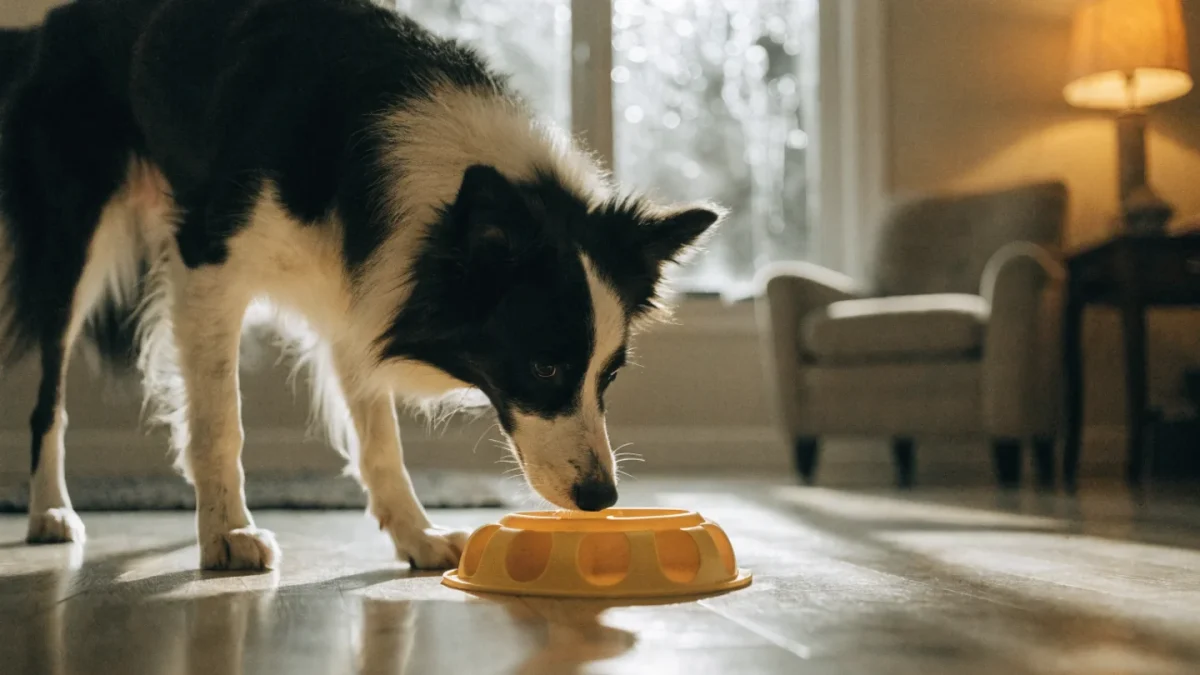
By mid-February, Benny has usually figured out my routine well enough to know exactly when a walk isn't happening. He doesn't sulk exactly — he's too easygoing for that — but there's a particular look he gets when I close the curtains instead of picking up the leash. Resigned. Slightly reproachful.
The thing is, he's telling me something real. When the outdoor time drops, the behavioral needs don't. Dogs still need stimulation; cats still need to hunt, play, and investigate. The season changes the logistics, not the animal's requirements. And that gap — between what winter allows and what your pet needs — is where the behavioral issues tend to appear: destructive chewing, restlessness, over-grooming, attention-seeking at 3am.
The solution is indoor enrichment, which sounds fancy but mostly means giving your pet's brain and body something to do with the energy that would otherwise go toward dismantling your couch.
Here's what actually works.
For Dogs
1. Puzzle feeders and food toys
This is the highest-ROI enrichment tool for most dogs. Instead of serving food in a bowl, put it in a puzzle feeder, a stuffed Kong, a snuffle mat, or a lick mat. The dog has to work for the food — it takes longer, requires problem-solving, and uses real mental energy.
A dog who eats their meal from a puzzle feeder is often noticeably calmer afterward than one who wolfs it from a bowl. You're meeting the "work for food" instinct that domestic life doesn't otherwise give them much outlet for.
Start simple — the first time your dog encounters a puzzle feeder, make it easy so they don't get frustrated and disengage. Increase difficulty over time.
For dogs who eat quickly anyway, spreading a thin layer of food in a lick mat or snuffle mat slows them down while providing sensory engagement.
2. Nose work and scent games
Dogs have an extraordinary sense of smell and using it is genuinely tiring for them. Scent games don't require a lot of space or special equipment.
The simplest version: hide small pieces of kibble or treats around a room (under a pillow, behind a table leg, in a corner) and tell your dog to "find it." Most dogs catch on within a few minutes and will work the room systematically.
A more structured version: place small containers (cups, boxes, muffin tin) upside down and hide a treat under one. Let your dog figure out which one. Increase the number of containers over time.
Formal nose work or scent training takes this much further — dogs learn to identify specific scents and are timed and scored — and many areas have local classes. It's genuinely competitive and mentally exhausting in the best way.
3. Training sessions
Winter is actually a great time to work on training, because you have the undivided attention of your dog and the incentive to do something together. Short sessions — 5 to 10 minutes, two or three times a day — are more effective than long ones.
New tricks are an obvious choice: shake, roll over, bow, back up, fetch by name, leave it. But training can also mean polishing existing behaviors, working on loose-leash walking in the hallway, or practicing calm behavior around distractions.
The focus required for training uses real mental energy. Benny can be walked for 20 minutes and come back the same level of restless. Benny after a 10-minute focused training session is noticeably calmer.
4. Indoor fetch and movement
Not every home has room for this, but if yours does, a hallway or open space works for modified fetch. Use a soft toy rather than a hard ball, and a low throw arc rather than a full launch.
Stair running (if you have stairs and your dog's joints are up to it) can burn significant energy in a short time. Controlled — one trip up and down at a time — not frantic sprinting.
5. Tug
Tug of war has a bad reputation based on old training advice that it creates dominance issues. The current consensus is that it doesn't — and it's fantastic exercise in a small space, engages a lot of natural drive, and is genuinely tiring.
Rules that make it work: teach "drop it" so you can end the game on your terms, and start and stop deliberately rather than leaving a toy permanently available. Some dogs get overstimulated and need wind-down time after tug.
6. Social visits with other dogs
If your dog has a friendly, compatible dog pal, indoor playdates (assuming the space allows it and both dogs are comfortable together) are one of the better solutions to winter boredom. Dogs play differently inside than outside — usually calmer, shorter bursts — and both dogs benefit.
7. New places, low-key
On milder winter days, switching up the walk destination counts as enrichment. A dog who walks the same route every day isn't getting the same level of sniff-novelty as a dog who explores a new park or neighborhood. The smells are the point — give them time to actually investigate rather than moving at a clip.
Some areas have indoor dog-friendly spaces: pet stores, certain cafes, hardware stores that allow dogs. Even a slow walk through an indoor space with novel smells is enriching.
For Cats
For the cat-specific breakdown with more detail on each activity, see keeping your cat active in winter. These are the highlights:
8. Window enrichment
The single most impactful thing for most indoor cats: a perch with an interesting view. Birds, squirrels, and passing activity are genuine entertainment.
Feeders placed so birds come close to a window upgrade this significantly. In winter, birds are actively seeking food, so you'll get more visitors. The cat gets hours of enrichment. Win-win. (Well, the birds probably don't see it that way, but they're at safe distance behind glass.)
9. Interactive play — actually scheduled
Most cat owners say they play with their cats. Many of them mean they drag a wand toy around half-attentively for two minutes while looking at their phone.
Real interactive play — 10-15 minutes, full engagement, moving the toy like prey (erratic, varying speed, hiding under blankets) — is categorically different from the casual version. It meets the hunting drive, tires them out, and has a noticeable effect on overnight behavior and general restlessness.
Two sessions a day in winter, when they can't supplement with outdoor activity, is genuinely worthwhile.
10. Rotation of novel objects
Cats are highly responsive to novelty. A toy that's been sitting out for two weeks is furniture. A new cardboard box or paper bag that just appeared is the most interesting thing that's happened this month.
Keeping a rotation of objects — rotating in different crinkly things, new textures, different shapes — maintains engagement without requiring expensive toys. Paper bags (remove handles), cardboard boxes in different sizes, large paper wrapping.
11. Food puzzles and hide-and-seek feeding
Same principle as dogs: making cats work for food is mentally engaging and better matches their natural feeding behavior (small prey, frequently hunted).
Food puzzles range from very simple (kibble in a cardboard tube with the ends folded) to commercial puzzle feeders with moving parts. Start simple.
Hide kibble in multiple small amounts around the house and let your cat find it. They use scent and memory. It takes time and uses brain energy.
12. Cat TV
Wildlife videos — birds, fish, squirrels, mice — designed for cats, played on a tablet or screen at cat-height. Not all cats engage with screens, but many do. It's not a substitute for interactive play, but as background enrichment while you're working, it can add stimulation.
13. Cardboard and paper
I cannot overstate how entertaining a simple cardboard box is for most cats. Add tissue paper inside. Put it in a new location. Put a treat in the bottom. Stack two. Cut holes in the side. The investment is almost zero and the entertainment-to-cost ratio is excellent.
Both Species
14. Training
Yes, cats too. Cats absolutely can learn things — come when called, sit, high five, target training. The work it takes and the focus it requires is enriching regardless of whether the trick has obvious utility.
With cats, very short sessions (2-3 minutes, high-value treats, end while they're still engaged) work better than sustained attempts.
15. Consistent routine
This is less obviously "enrichment" but it matters: pets who have predictable daily routines — meals at the same time, play at the same time, sleep patterns that follow yours — tend to be calmer and better adjusted than pets whose schedule is unpredictable. In winter when the outdoor enrichment drops, leaning into consistent routine compensates for some of the stimulation loss.
For indoor cats in summer, many of these same ideas apply — see keeping indoor cats entertained in summer for the warm-weather parallel.
The common thread across all of this: your pet's enrichment needs don't drop in winter just because the weather does. The activities change, the timing changes, the logistics change — but the underlying needs stay the same. Build the indoor habits in November when the shift first happens, and by February they'll feel normal rather than like extra effort.