

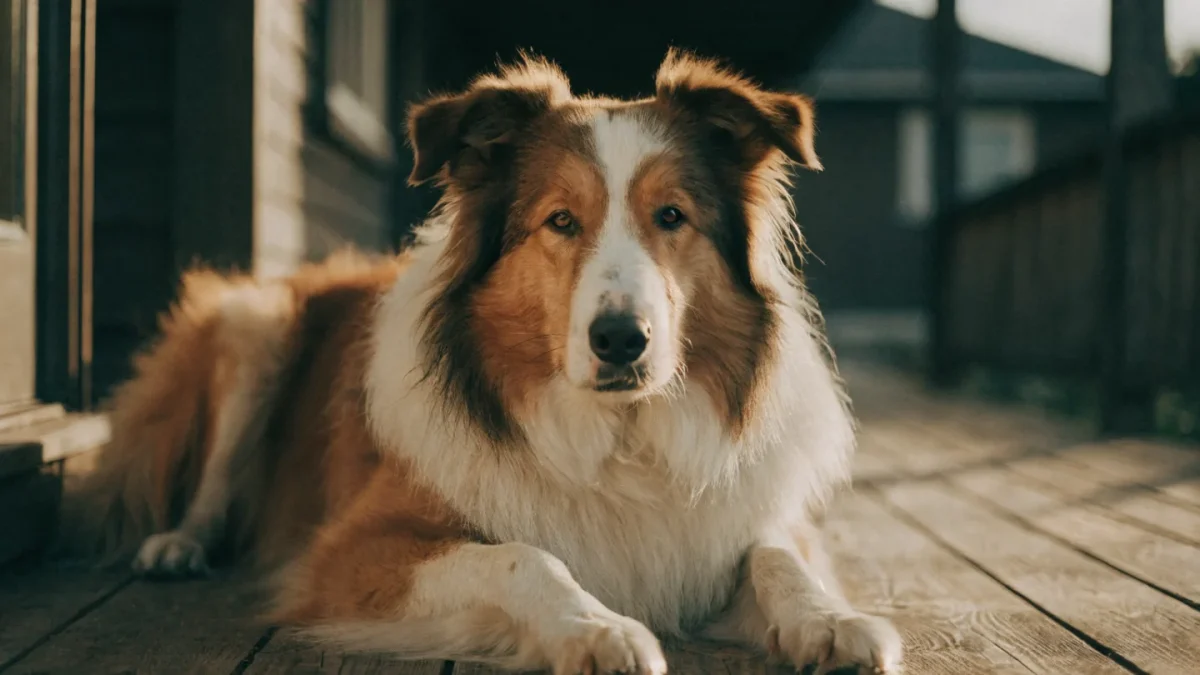
Most people who ask about collies have a picture in their head that comes from one source: Lassie. The TV show ran from 1954 to 1973, and its influence on public perception of the breed has lasted more than five decades. The real collie shares Lassie's loyalty and intelligence. It does not share the fictional character's silent stoicism, effortless obedience, or ability to rescue children from wells on a weekly basis.
The actual collie is a sensitive, vocal, deeply bonded herding dog that requires specific handling and comes with trade-offs that the Lassie mythology conveniently omits.
The Non-Negotiables
Barking Is Part of the Package
Collies bark. They bark at visitors, at squirrels, at cars passing the house, at changes in routine, at things only they seem to notice. The bark is sharp, high-pitched, and carries distance — a trait bred into dogs that needed to communicate with shepherds across open hillsides.
Training can reduce unnecessary barking. It will not eliminate it. If you live in an apartment, a condo with thin walls, or a neighborhood with noise complaints, a collie will create problems you can manage but not fully solve.
Sensitivity Requires Gentle Handling
The collie temperament and sensitivity profile details a breed that reads human emotion with uncanny accuracy and reacts to it proportionally. Raised voices, tension in the household, or harsh physical corrections don't toughen a collie up — they create an anxious, shut-down dog that becomes progressively harder to work with. Training methods must be positive, consistent, and patient. This breed does not bounce back from harsh handling the way a Labrador or terrier might.
Grooming Is Significant (Rough Variety)
If you're drawn to the rough collie's iconic flowing coat, you're signing up for serious grooming. Thorough brushing two to three times per week minimum, with more frequent sessions during the biannual coat blow. Mats form behind the ears, in the armpit area, and along the hindquarter feathering. A rough collie coat that isn't maintained becomes a matted mess that eventually requires professional intervention. The smooth collie is dramatically easier to groom — weekly brushing suffices for most of the year.
You're a Good Fit If
- You want a loyal companion that bonds deeply to its family
- You can provide 60 to 90 minutes of daily exercise through walks, play, and training
- You appreciate a dog that's tuned into your emotional state and household rhythms
- You're patient with training and comfortable with positive reinforcement methods
- You can tolerate barking and are willing to manage it through training (not eliminate it)
- You have children old enough to interact gently — collies and respectful kids are often an excellent match
- You enjoy grooming as a bonding activity (rough collie) or prefer a lower-maintenance coat (smooth collie)
You're Not a Good Fit If
- You want a dog that handles your absence easily — collies can develop separation anxiety
- You live somewhere with strict noise restrictions
- You prefer an independent, self-entertaining dog
- Your training style involves raised voices or physical corrections
- You're unwilling to commit to regular coat maintenance
- You want a high-intensity sporting partner for competitive agility or distance running — collies are moderate athletes, not extreme ones
The Honest Trade-Offs
Collies give you loyalty that borders on devotion, a gentle presence with children, moderate exercise needs, and a trainable intelligence that makes daily life genuinely pleasant. In return, they ask for consistent presence, gentle handling, regular grooming, and tolerance for a dog that will alert you vocally to everything it finds noteworthy — which is a lot.
The full collie breed guide lays out the complete picture. The breed's strengths are real. So are its demands. The question is whether both sides of that equation fit your life, not just the side that looks like a TV show. For owners weighing herding-breed options, the parallel exercise of deciding whether a Shetland Sheepdog is right for you covers a closely related breed whose demands overlap considerably with the collie's.
Frequently Asked Questions
Are collies good for first-time dog owners?
Collies can work for first-time owners who are committed to learning positive reinforcement training and are prepared for the grooming and barking. The breed's sensitivity and biddability make training rewarding for beginners. However, the sensitivity also means that first-time owners who default to frustration-based corrections will struggle. If you're willing to invest in training education, a collie is more manageable for a first-time owner than most herding breeds.
Can collies live in apartments?
A collie can live in an apartment if exercise needs are met outside the home and barking is actively managed through training. The practical challenge is the barking — collies in apartments with shared walls will test your neighbors' patience and potentially violate noise policies. A house with a yard is a more natural setting, though the yard alone doesn't replace structured exercise.
How do collies handle being left alone?
Collies prefer company and can develop separation anxiety if left alone for extended periods regularly. Four to five hours is a reasonable maximum for most adult collies, with appropriate mental enrichment provided (puzzle toys, safe chews). Puppies need shorter intervals. If your daily schedule requires eight or more hours away from home, a collie will struggle — and you'll hear about it from the barking.