

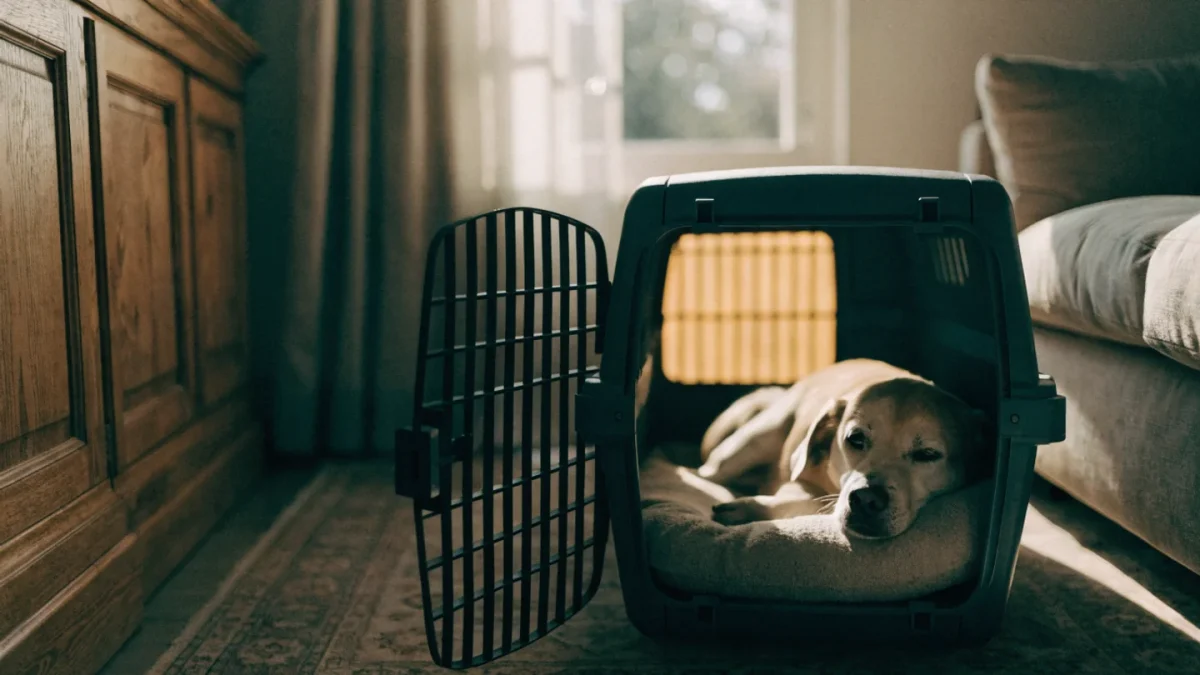
Crate training generates strong opinions. Some owners see it as a natural management tool; others see it as confinement that no animal should experience. The debate is mostly about crating done wrong — and there's a lot of crating done wrong.
Let me try to separate what's harmful from what isn't.
When Crating Is Not Cruel
A dog with a properly introduced crate has a space that meets some real canine needs:
Den instinct. Most dogs naturally seek enclosed, semi-dark spaces for rest. Under beds, behind furniture, in closets — dogs choose these spaces unprompted. A crate provides a clean, consistent version of that.
Safety. An unsupervised dog with access to an entire house has access to electrical cords, toxic substances, and objects that can cause intestinal obstruction. A crate prevents exposure to those hazards during the hours when supervision isn't possible.
Management during transitions. New puppies, rescue dogs in adjustment periods, dogs recovering from surgery — crating during uncertain periods is protective, not punitive.
If a dog enters the crate willingly, settles inside without distress, and exits calmly — the crate is serving its function well. That dog is not suffering.
When Crating Becomes Harmful
The "cruelty" comes from specific misuses:
Excessive duration. A dog in a crate 10+ hours daily is being denied the exercise, social interaction, and environmental stimulation they need. That causes genuine behavioral and psychological harm over time.
As punishment. Sending a dog to the crate in anger, or saying "crate" in a threatening tone — this poisons the association with the crate. The dog learns to fear it.
Before adequate training. A dog forced into a crate they've never been conditioned to accept will experience genuine distress. The fear is real, even if the crate itself is a neutral object.
Ignoring distress signals. Some dogs develop genuine panic responses to confinement — those dogs need different management solutions, not enforcement of crating.
What the Research Suggests
Studies on canine denning behavior and stress physiology back this up. A widely cited 2007 study in Physiology & Behavior tracked cortisol levels in dogs before and after being introduced to kennels, and found dogs already habituated to confinement showed a much smaller stress spike than dogs facing it cold — and stayed lower for weeks afterward. Dogs that associate crates with positive experiences show calming effects.
The problem in studies and in practice isn't the crate itself — it's inadequate habituation, excessive duration, and punishment-based use.
FAQ
Do all dogs need to be crate trained?
No. Dogs that don't need house training management, that don't travel, and that have no medical recovery situations may never need a crate. It's a tool, not a requirement.
Should the dog be able to stand and turn around inside?
Yes, at minimum. A crate too small to allow standing, turning, and lying fully stretched is genuinely cruel.
What if my dog seems fine but I feel guilty?
Observe your dog's behavior, not your feelings about the concept. A dog that enters willingly, relaxes inside, and exits calmly is fine. A dog that shows stress signals during crating warrants a closer look at the setup. (See also: how long can a dog stay in a crate? age-based.)
The crate is not inherently cruel. Improper use of a crate can absolutely cause harm. The distinction matters because the misused-crate cases are what drive the entire debate. How to crate train properly is where the ethics resolve themselves — do it right, and the welfare concerns disappear.