

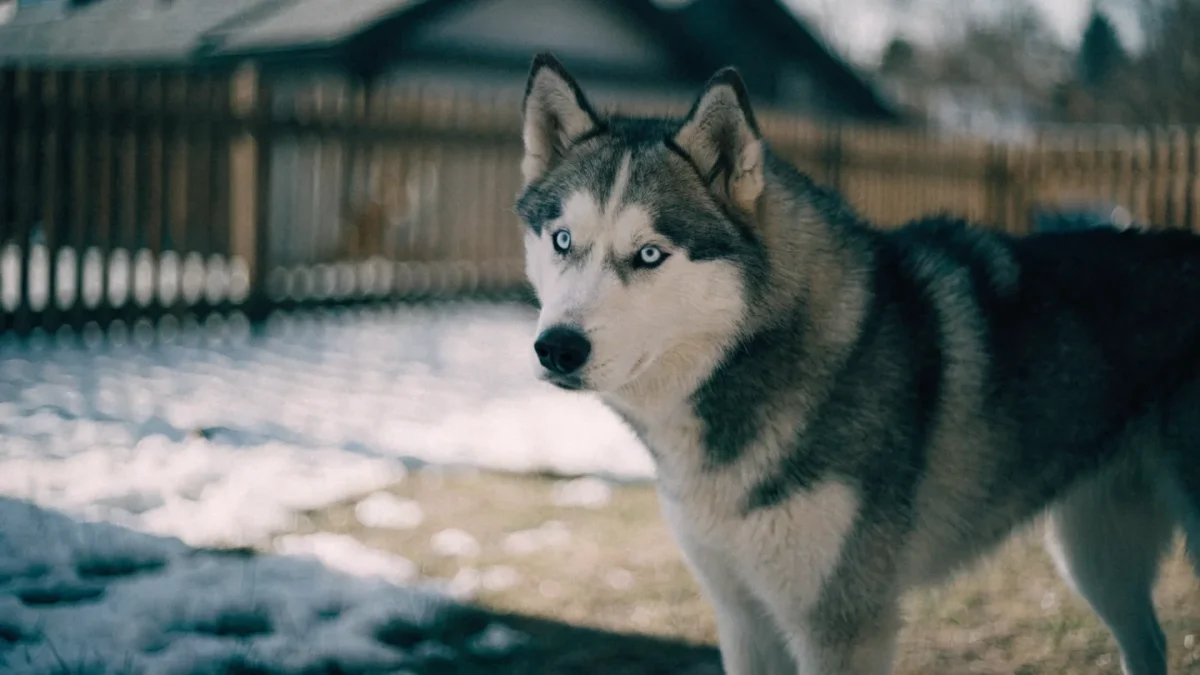
The Siberian Husky consistently ranks among the most surrendered and returned-to-rescue purebred dogs. That statistic isn't about the breed being bad. It's about the gap between expectation and reality being wider for this breed than for almost any other.
People see the striking blue eyes, the wolf-like appearance, the dramatic coat — and they decide they want one. What they don't see is the 90-plus minutes of daily exercise, the 1.8-meter fence with dig guards, the seasonal fur avalanches, the 3 a.m. howling sessions, and the dog that looks you dead in the eye, understands your command perfectly, and chooses not to comply. This isn't a breed that fits into most lifestyles. But for the right person, it's one of the most rewarding dogs on the planet.
Here's the honest assessment. No sugarcoating.
The Non-Negotiable Demands
Exercise: Not Flexible
Ninety minutes of vigorous exercise daily is the minimum. Not walking. Not backyard time. Running, hiking, mushing, bikejoring — activities that engage a dog built to cover 50 to 100 km per day in harness. This happens rain or shine, summer or winter, whether you feel like it or not. If 90 minutes of daily hard exercise sounds like an aspiration rather than a given, this breed will overwhelm you. The complete Siberian Husky breed guide breaks down why the exercise demand is structural, not behavioral.
Containment: Not Optional
Standard fencing doesn't hold a determined Husky. You need at least 1.8 meters of solid fence with no climbable cross-members, dig guards at the base (buried wire, concrete, or L-shaped footer), and latches that can't be manipulated by a surprisingly dexterous dog. Regular fence inspections aren't paranoia — they're routine maintenance. If you rent, live in a community with HOA fence restrictions, or can't modify your property, the containment challenge becomes significantly harder.
Off-leash freedom in unfenced areas is effectively off the table for most Huskies. Their recall, even with excellent training, is unreliable when prey, other dogs, or open space compete for their attention. An off-leash Husky in an unfenced area is a lost Husky.
Shedding: Not Manageable, Only Tolerable
The double coat sheds year-round at a moderate level and then blows the entire undercoat twice a year in events that last two to four weeks each. During coat blow, you will pull handfuls of fur out by the fistful, daily, and your vacuum cleaner will question its life choices. Between blows, fur is a constant presence on clothing, furniture, and food. There is no version of Husky ownership where your home is fur-free.
Noise: Not Trainable
Huskies howl. They woo. They produce dramatic vocal sequences that neighbors three houses away can hear. This is hardwired breed behavior, not a training issue. You can manage triggers — reducing boredom and isolation helps — but you cannot eliminate the vocalization. If you live in an apartment, a duplex, or any housing with shared walls and noise-sensitive neighbors, this is a genuine practical obstacle.
Who Thrives With This Breed
The people I've seen succeed with Siberian Huskies share specific traits, and physical fitness is only one of them.
Active people who exercise regardless of conditions. Not gym-active — outdoor-active. Runners, hikers, cyclists, mushers. People who are already spending 90-plus minutes outdoors daily and want a canine partner for it. If the Husky is the reason you're starting an exercise routine, history suggests the routine won't survive the first winter.
People who find independence interesting. The Husky's independent decision-making frustrates people who need obedience. It delights people who appreciate a thinking animal that negotiates rather than simply complying.
Experienced multi-dog households. Huskies are pack animals that do well with other dogs of compatible energy. A household with an active dog and multi-dog infrastructure is often a better fit than a single-dog home where the Husky is alone during work hours.
People without small animals. High prey drive toward cats, rabbits, and small dogs is a breed-level trait. Some individuals coexist with cats when raised together from puppyhood, but counting on it is a gamble.
Who Should Look Elsewhere
First-time dog owners. The combination of independence, escape behavior, prey drive, and exercise demands is a steep learning curve. A less demanding breed builds skills that make Husky ownership manageable later.
People who work long hours with no dog care plan. Huskies left alone 8 to 10 hours daily develop severe behavioral issues. Without a second dog, dog walker, daycare, or work-from-home arrangement, the dog suffers and your house shows it.
Anyone expecting off-leash reliability. The breed's recall is inherently unreliable in distracting environments. Permanent leash management is part of the deal.
People in warm climates without climate control. Huskies can adapt, but it requires air conditioning and careful exercise timing. Without infrastructure to keep the dog cool, warm-climate ownership is irresponsible.
If the Arctic-dog aesthetic appeals but the exercise and containment demands feel like more than you can reliably meet, the Samoyed complete breed guide covers a related Nordic breed with a somewhat gentler disposition, though the shedding and vocal tendencies remain substantial.
The Honest Bottom Line
The Siberian Husky is a spectacular dog for the right person. It is a disaster for the wrong one. The difference between those outcomes isn't luck or the individual dog's personality — it's preparation, infrastructure, and honest self-assessment.
If you're reading this and checking boxes — yes to the exercise, yes to the fencing, yes to the shedding, yes to the noise, yes to the independence — then the next step is finding a well-bred or well-assessed rescue dog. The Siberian Husky puppy buying guide covers what to evaluate.
If you're reading this and feeling defensive about the items that don't fit your life, that reaction is important information. The breed doesn't adapt to an incompatible lifestyle. It breaks down. And the cost of that breakdown is measured in surrendered dogs and broken fences, not in inconvenience.