

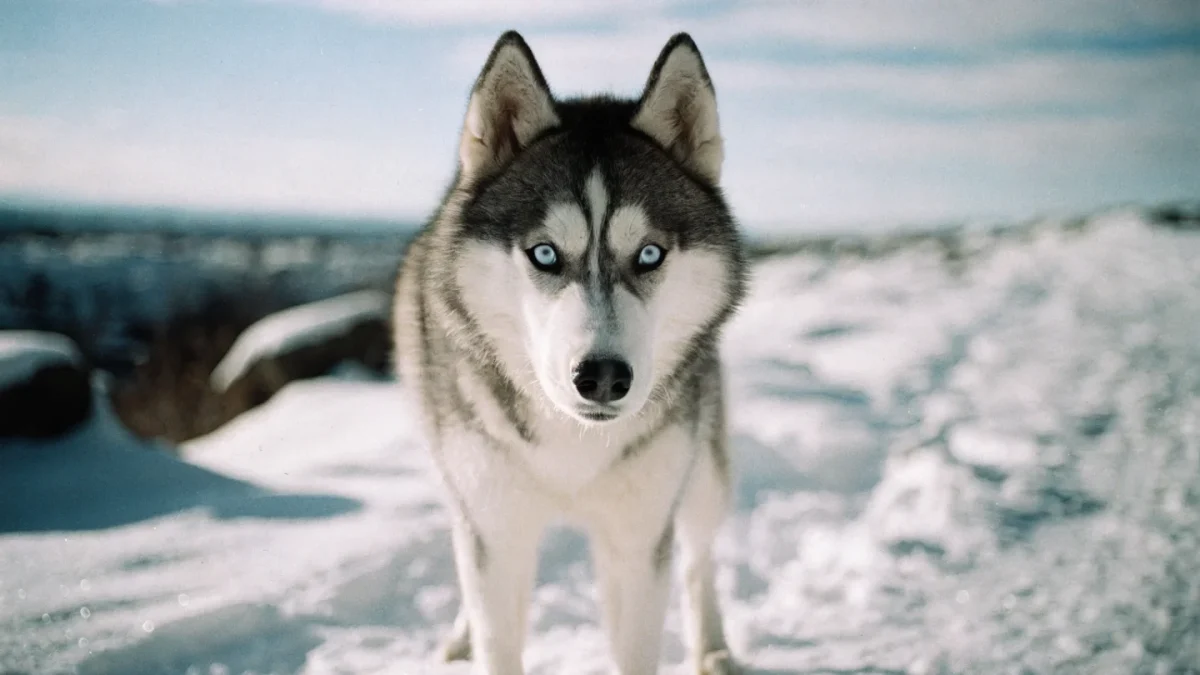
Few breeds attract as much confident misinformation as the Siberian Husky. The wolf-like appearance, the piercing eyes, and the dramatic reputation generate assumptions that have hardened into accepted truths through sheer repetition. Some of these siberian husky misconceptions are harmless. Others lead directly to poor ownership decisions, neglected dogs, and preventable suffering.
Here are five that need correcting.
1. "Huskies Are Part Wolf"
This is the misconception I encounter most frequently, and it's flatly wrong. Siberian Huskies are a fully domesticated dog breed developed by the Chukchi people of northeastern Siberia over at least 3,000 years. They share a distant common ancestor with wolves — as do all domestic dogs — but they are not wolf hybrids, wolf crosses, or wolves in any meaningful genetic sense.
The confusion comes from appearance. The erect ears, almond eyes, facial markings, and overall silhouette resemble popular images of wolves. But visual similarity is not genetic closeness. Chihuahuas are more closely related to wolves than they look; Huskies are less closely related than they look. Breed appearance is shaped by the specific traits breeders selected for, and the Chukchi selected for sled performance and family compatibility — not for wolf resemblance.
This misconception matters because it feeds the second one.
2. "Huskies Are Aggressive and Dangerous"
The wolf-hybrid myth leads directly to the assumption that Siberian Huskies are aggressive toward people. The data says the opposite. The Chukchi specifically bred out human aggression over thousands of years because their dogs lived inside family dwellings, slept with children, and were handled by community members daily. A dog that bit a person was not bred again.
The result is a breed with remarkably low human aggression relative to its popularity. Huskies are generally gentle, social, and enthusiastic with people — including strangers. They make genuinely terrible guard dogs precisely because they tend to greet unfamiliar people with curiosity and friendliness rather than suspicion.
Bite statistics sometimes misrepresent the breed because Huskies, Malamutes, and actual wolf hybrids get conflated in incident reports — a problem noted in multiple peer-reviewed analyses of dog bite data, including a 2013 literature review in the Journal of Veterinary Behavior that highlighted breed misidentification as a persistent confounding factor. Understanding the breed's actual temperament and behavioral profile is essential to separating reputation from reality. What Huskies do have is high prey drive toward small animals — but prey drive toward squirrels is fundamentally different from aggression toward humans.
3. "Shaving a Husky Helps Them Stay Cool"
This one causes direct harm, which is why it frustrates me more than the others. Every summer, well-meaning owners shave their Huskies' thick double coats, believing they're providing relief from the heat. They're doing the opposite.
The Siberian Husky's double coat works as an insulation system — against both cold and heat. The dense undercoat traps air, creating a buffer between the dog's skin and the external temperature. The guard hairs on the outer coat reflect UV radiation and protect the skin from direct sun exposure. Remove the coat, and you remove the UV protection, the insulation layer, and the air circulation system that regulates temperature.
A shaved Husky is more vulnerable to sunburn, overheating, and insect bites. The coat may grow back with an altered texture, with the undercoat dominating and the guard hairs failing to reach proper length — permanently degrading the coat's protective function.
The correct approach to heat management is providing shade, fresh water, air conditioning indoors, and restricting exercise to cool hours. The complete breed guide covers warm-climate living in detail. The coat is part of the solution, not the problem.
4. "Huskies Can't Live in Warm Climates"
This is the overcorrection from understanding that the breed is Arctic-adapted. People conclude that because Huskies were bred for extreme cold, they can't survive in temperate or warm environments. In reality, Siberian Huskies live successfully in warm climates around the world — but it requires active management from the owner.
The double coat provides meaningful heat insulation, as discussed above. Exercise must shift to cool hours — early morning and late evening. Air conditioning indoors is not a luxury but a basic requirement. Constant access to shade and fresh water goes without saying. Swimming is excellent warm-climate exercise because it provides cooling and physical output simultaneously.
The breed's coat naturally adjusts its undercoat density somewhat between seasons. A Husky that lives permanently in a warm climate will typically carry a somewhat lighter undercoat than one in a cold environment, though the coat blow cycle continues regardless.
Can a Husky be as comfortable at 35C as at -35C? No. Does that mean the breed can't live south of the Arctic Circle? Also no. The distinction is between "ideal" and "manageable," and with responsible owner management, warm-climate Huskies live full, healthy lives.
5. "Huskies Are Dumb Because They Don't Obey"
This misconception conflates obedience with intelligence, and it says more about human expectations than about the dog. Siberian Huskies are highly intelligent. They learn commands quickly, remember them reliably, and demonstrate sophisticated problem-solving abilities — particularly when the problem involves escaping a yard, opening a container, or getting something they want.
What they don't do is obey reflexively. The breed was developed to make autonomous decisions under dangerous conditions. A lead dog that blindly followed a musher's command to cross unstable ice was a lead dog that killed the team. The Chukchi bred for judgment, and the result is a dog that evaluates commands before executing them.
In standardized obedience-based intelligence tests, Huskies score lower than breeds like Border Collies or Poodles — not because they can't learn, but because they choose not to perform on demand without sufficient motivation. This registers as low intelligence only if you define intelligence as willingness to comply. By any functional measure — problem-solving, adaptability, environmental awareness, social intelligence — the breed ranks high.
The most capable Husky owners understand this temperament and train accordingly. They make compliance rewarding rather than demanding it, and they accept that some degree of negotiation is built into every interaction with this breed. The dog isn't dumb. It just doesn't work for free.