

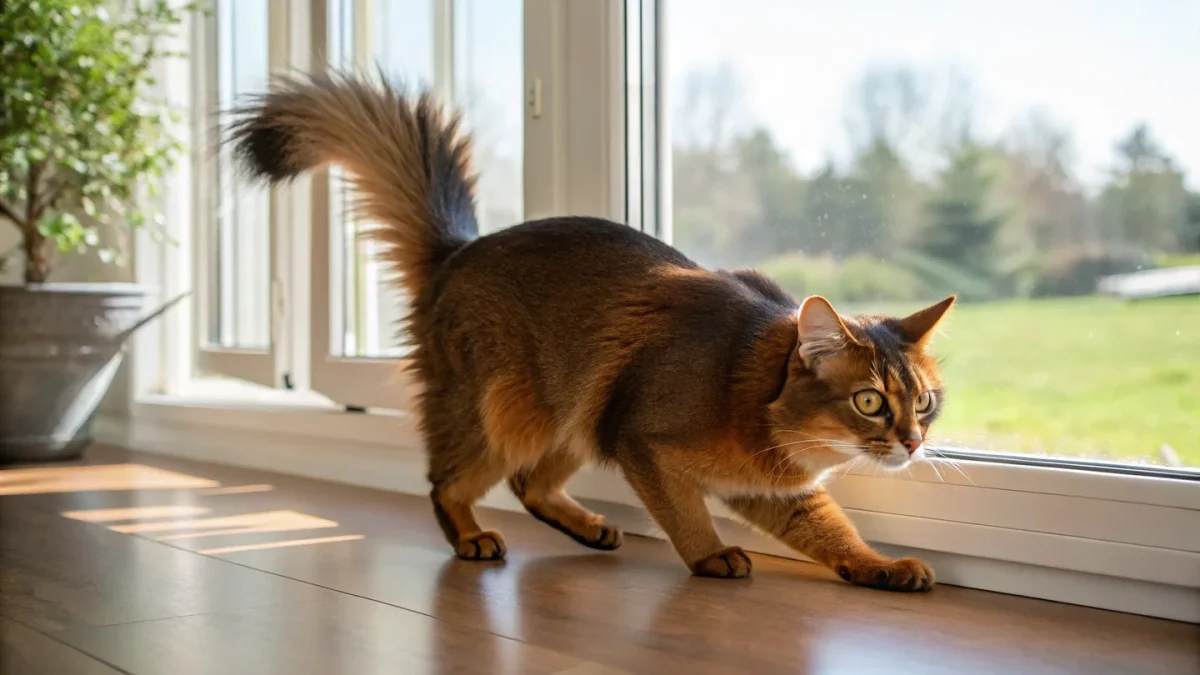
The Somali is a cat that tends to make a strong impression. People who encounter them and have never seen one before often need a moment to figure out what they're looking at — the wild look, the plumed tail, the intense alertness — and then immediately want one.
That initial reaction is worth examining before acting on it. The Somali cat breed guide and Somali temperament article cover what you're actually getting. This is the fit assessment.
Who a Somali Suits
Active owners who want engagement. The Somali's defining characteristic is its energy and curiosity. It needs play, stimulation, and interaction. Owners who enjoy watching a cat navigate its environment with intelligence, who engage in daily play sessions, and who find a curious, interactive companion more rewarding than a decorative one — these owners thrive with Somalis.
Households with other active cats. Two Somalis, or a Somali paired with an Abyssinian or similarly energetic breed, is a particularly happy combination. They entertain each other, reduce the demand on human participation, and form genuinely affectionate feline bonds.
Experienced cat owners. Not because Somalis are dangerous or extraordinarily difficult — they're not — but because owners with experience managing active, intelligent cats will find the breed easier to navigate. First-time cat owners sometimes underestimate what an active breed requires.
People who work from home or have flexible schedules. The social need is real. Consistent presence makes for a significantly happier Somali than frequent long absences.
Who a Somali Doesn't Suit
People who want a calm, placid companion. The Somali is not this. The comparison to the Ragamuffin is useful: the Ragamuffin is a cat that settles near you and is content to rest; the Somali is a cat that settles near you for twenty minutes and then resumes its investigation of the third shelf of the bookcase. If calm is the primary goal, the Somali is the wrong breed.
People who will be away for extended periods regularly. A Somali in an empty apartment for ten or twelve hours without enrichment, play, or animal companionship isn't thriving. Without a second cat, this situation wears on them.
Owners resistant to proactive health management. Somalis have breed-specific health concerns — specifically, pyruvate kinase deficiency (PKD2) and progressive retinal atrophy (PRA) are hereditary conditions for which DNA tests exist. Responsible breeders test their breeding animals; responsible owners should ask for these results and maintain regular veterinary monitoring.
People primarily attracted to the exotic appearance. The coat is spectacular. The temperament is as demanding as the coat is beautiful — they're proportional. An owner who wants the look without the engagement is going to find the relationship challenging.
The Grooming Reality
Weekly brushing manages the Somali coat well — it's not a high-maintenance coat by longhaired standards. Seasonal shedding requires more frequent brushing for a few weeks in spring. That's the full picture. No daily combing, no extensive bathing schedule, no mat crisis management.
This is one area where the Somali's exotic appearance is genuinely misleading: the coat looks dramatic but is easy to manage.
The Health Management Commitment
Ask breeders for PKD2 and PRA test results on both parents before acquiring a kitten. These are DNA tests — not invasive, not expensive — and responsible breeders run them routinely. A breeder who doesn't test or can't provide results is not operating at the standard the breed deserves.
Ongoing: routine veterinary care, dental attention (the breed can be susceptible to periodontal disease), and an eye check at annual visits to monitor for any developing vision changes.
The Right Owner for a Somali
Someone who wants a cat that is genuinely present in their life — not just residing in it. Someone whose day is improved by a cat that follows them, initiates play, investigates the world with visible intelligence, and makes its presence known.
The Somali gives a great deal back to owners who are ready for it. The energy, the curiosity, the beauty — they're offered to you every day. What the breed asks in return is the same: engagement, enrichment, and genuine participation in the relationship.
That's the exchange. For the right person, it's an extraordinary one.