

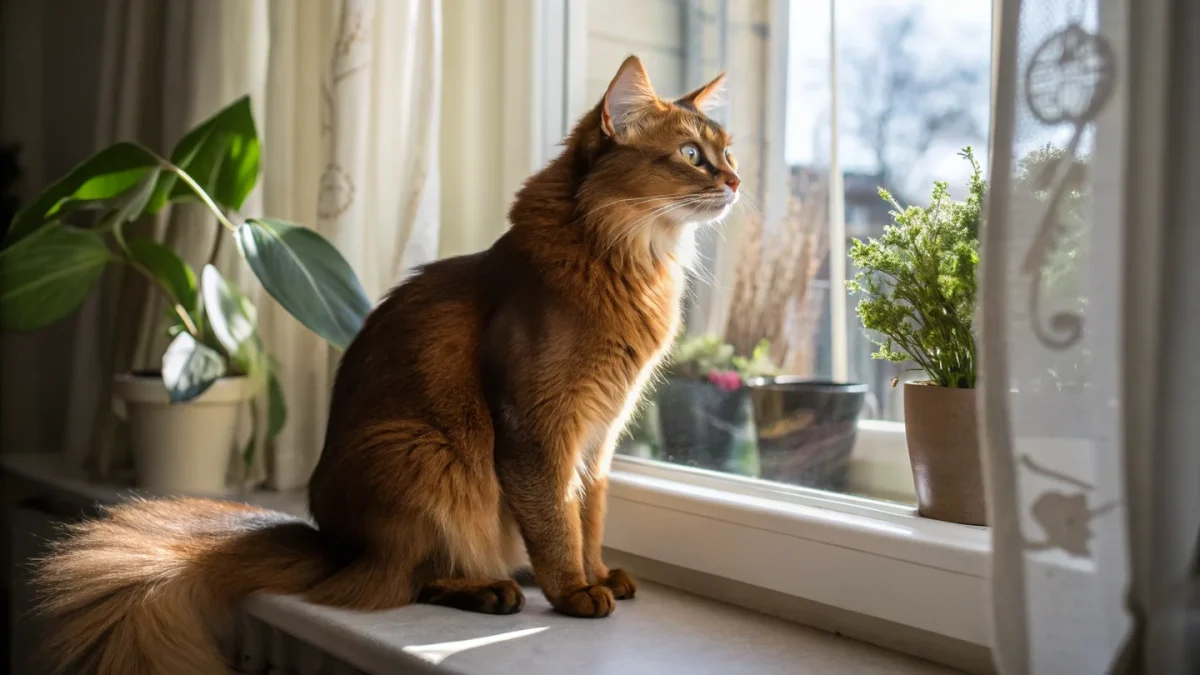
The Somali's coat is one of the things that makes the breed visually extraordinary — the ticked pattern in medium-long fur creates a shimmer in natural light that photographs can't fully capture. The good news is that maintaining this coat is significantly easier than its dramatic appearance suggests.
The Somali cat breed guide covers the full breed picture. The full ownership overview puts grooming in context with everything else the breed requires.
Understanding the Somali Coat
The Somali's semi-long coat is fine and silky rather than thick and dense. It has less undercoat than double-coated breeds like the Norwegian Forest Cat or Maine Coon, and the individual hairs have a texture that resists compacting and tangling.
This resistance to matting is the key distinction from longhaired cats with denser undercoats. A Persian or Himalayan neglected for a week will have developing mats; a Somali neglected for a week will have slightly increased shedding and a dull coat. That's a meaningful practical difference.
The coat's structure is the same ticked tabby pattern as the Abyssinian, just on longer hairs. The banding on each individual hair — alternating dark and light segments — is what creates the glowing, iridescent quality when the cat is in motion.
Weekly Grooming Routine
Brushing or combing: Once per week is typically sufficient for a pet-quality Somali. Use a medium-tooth steel comb or a slicker brush. Work through the coat in sections from head to tail, paying attention to:
- The ruff and neck: The fur here is longer and denser. It can develop minor tangles if the cat wears a collar (consider a breakaway collar with minimal friction) or has been sleeping in the same spot repeatedly.
- The armpits: Where the front legs meet the body, friction from movement can encourage tangling. Quick attention here prevents the occasional developing mat.
- Under the tail: The fur in this area benefits from regular combing.
- The tail itself: The plume is the Somali's most spectacular feature. Comb gently from base to tip. The tail is usually self-maintaining between sessions.
A full weekly grooming session for a well-maintained Somali takes about 10 minutes.
Shedding Management
Somalis shed throughout the year with heavier periods in spring and autumn. The medium-length fur is noticeable on dark furniture and clothing. Regular weekly brushing removes the bulk of the loose coat before it distributes itself around the house.
During heavy shedding periods, increasing brushing frequency to twice a week makes a significant difference. Some owners use a deshedding comb or rubber curry brush (designed to lift loose fur from shorter-coated areas) in addition to the steel comb during these periods.
Bathing
Somalis don't require frequent bathing — their coat doesn't accumulate oils the way a Persian's does. Many owners bathe once or twice per year, or when the cat has gotten into something.
If you do bathe: use a cat-specific shampoo, rinse thoroughly, and dry completely. The Somali's coat dries faster than that of heavier-coated breeds. Towel dry then allow air drying or use a low-heat dryer.
Introducing bathing early in kittenhood produces a more cooperative adult. An adult Somali that has never been bathed will likely have opinions about it.
Ears and Nails
Somalis have large, upright ears that catch dirt and debris more readily than folded or smaller ears. Check the ear weekly during grooming sessions. Light cleaning with a veterinarian-recommended ear cleaner as needed. If the ear interior is very dirty, red, or the cat is shaking its head, have a vet check for infection or mites.
Nail trimming every 2–3 weeks. Regular trimming also prevents the nails from catching in the coat during the cat's own grooming.
The Seasonal Reality
Spring shedding can be dramatic for Somali owners used to the manageable year-round shed. The coat that looked easily managed in winter can seem to be vacating the cat's body all at once in March and April.
This is normal. A two-week period of daily brushing during the peak of spring shed removes the bulk of the old coat quickly and restores the manageable weekly routine. Don't be alarmed by the volume — it's temporary.
Coat as Health Indicator
The Somali's coat quality reflects overall health more clearly than in shorter-coated breeds. A healthy Somali has a silky, richly colored coat with a subtle gloss. Dullness, dryness, excessive shedding outside seasonal patterns, or changes in texture can indicate nutritional issues, parasites, stress, or health problems worth investigating.
Including a coat assessment in your weekly grooming session — not just brushing through it but actually looking at it — gives you an ongoing window into the cat's health that's worth having.