

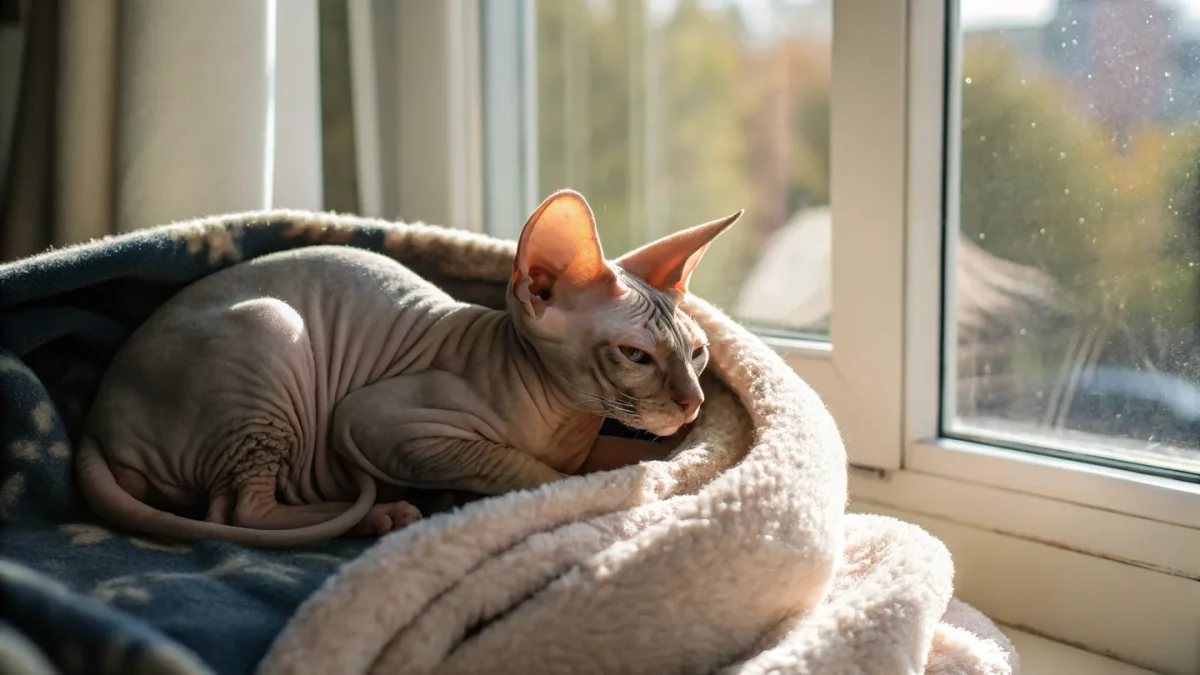
The Sphynx gets noticed for the appearance first. That's inevitable — it is a visually striking animal, and the hairless body, the enormous ears, the warm wrinkled skin are genuinely unusual. But the decision to live with a Sphynx should be made on completely different grounds. The appearance is permanent. The relationship is what you're actually committing to.
What the Sphynx Genuinely Requires
Weekly bathing. This isn't optional and it isn't a myth. The Sphynx produces the same skin oils as any cat, but without fur to absorb them, those oils accumulate on the skin surface. Without regular bathing, the accumulation creates odor, skin irritation, and visible residue. Once a week is the minimum; some individuals need bathing every five days. This commitment must be consistent for the life of the cat — typically 12 to 15 years.
Consistent social interaction. The Sphynx cat temperament is genuinely demanding. The breed is constitutionally extroverted and does not cope well with long periods of solitude. A Sphynx in an empty house for nine or ten hours a day, five days a week, is not a happy Sphynx. This isn't the breed for a lifestyle where the cat will largely take care of itself.
Warmth. Without insulating fur, Sphynx cats seek supplemental warmth constantly. Your home needs to stay at a temperature that's comfortable for a hairless animal — and that means heated cat beds, access to warm resting spots, and covers that the cat can burrow under. In cold climates, this has practical implications for your heating costs and home setup.
Health monitoring. The breed carries an elevated risk of hypertrophic cardiomyopathy (HCM). Annual cardiac screening is the standard recommendation. This is an ongoing veterinary cost and commitment that owners should factor in from the start.
Who the Sphynx Suits
Work-from-home households. The Sphynx's need for social interaction is best met when its people are genuinely present. Home-based workers who can provide company during the day, respond to the cat's social approaches, and integrate the cat into their daily routine are ideal.
Multi-pet households with compatible animals. A second cat — ideally another social breed — provides the company the Sphynx needs during hours when the owner is unavailable. A compatible dog can also provide this. The social need doesn't always require you specifically; it requires someone.
People who genuinely want an interactive companion. The Sphynx's social behavior is feature, not bug — if you want a cat that sits on your chest, follows you everywhere, and greets your guests with the enthusiasm of a dog, you've found your breed. But this is the basis for the match, not a side effect of the hairless appearance.
Consistent groomers. Not people who are fastidious about everything — just people who, once they've established a routine, stick to it reliably. The weekly bath is a 15 to 20 minute commitment after the first few sessions. It's not burdensome if you do it on schedule.
Who the Sphynx Doesn't Suit
People who work long hours outside the home without a companion animal for the Sphynx. People who travel frequently and can't arrange appropriate care. People who want a cat that blends into the household background without requiring attention. Anyone who finds the grooming commitment burdensome in principle — not because of the time, but because they'd rather have a cat that simply didn't need it.
The allergy angle deserves a direct mention: if you're acquiring a Sphynx specifically because you believe it's hypoallergenic, please spend time with individual cats first. The Fel d 1 protein that triggers most cat allergies is in saliva and skin secretions — not fur. Individual response varies, but the breed is not a safe assumption for cat-allergic people.
The Practical Finances
A brief, honest note: Sphynx cats from reputable breeders who conduct health testing (HCM echocardiograms, genetic tests) carry a purchase price that reflects that testing. Ongoing costs include veterinary care weighted toward cardiac monitoring, potentially heated beds and other warmth infrastructure, and the grooming supplies for the weekly bath. These are manageable costs for most households but should be planned for rather than discovered.
The complete Sphynx cat breed guide provides full context on health risks, history, and what daily life with the breed involves. This article is the honest version of the assessment question. The Sphynx is a wonderful breed for the right household. Knowing whether your household is that household is worth the honest thinking before the commitment.