

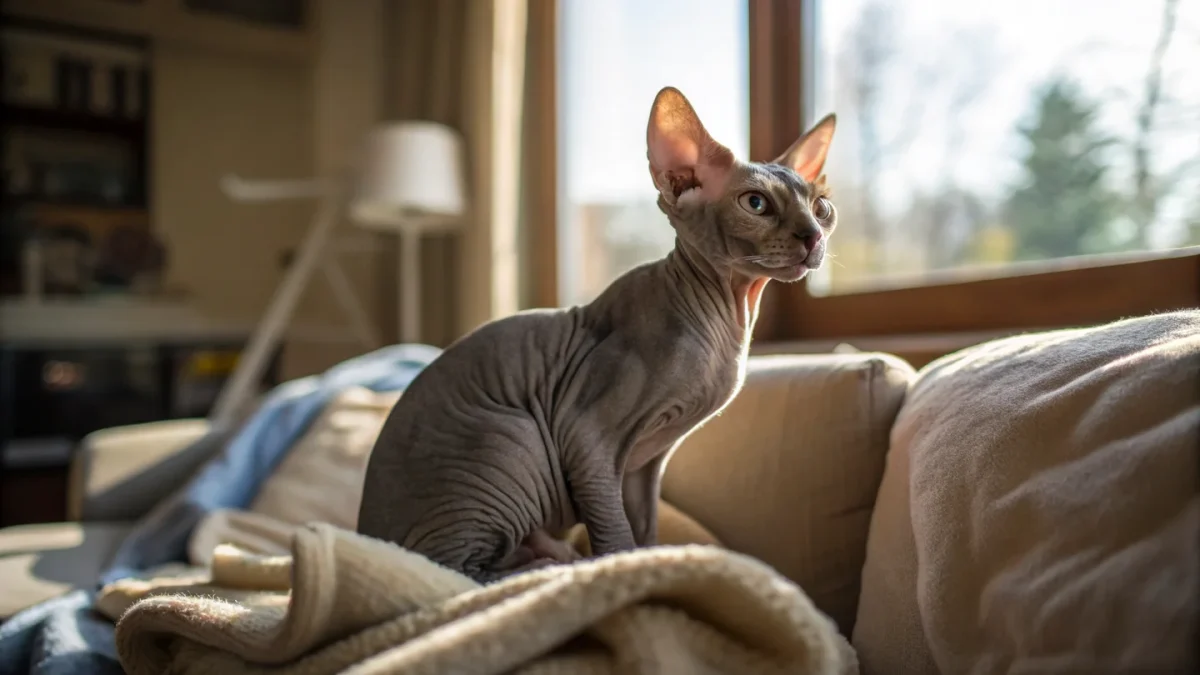
The Sphynx requires a different approach to grooming than any coated cat — not harder, exactly, but different. The standard cat grooming toolkit (brushes, deshedding combs, mat-removing sprays) is mostly irrelevant. What matters instead is a consistent routine for managing skin oils, ear wax, and sun exposure.
This routine is non-negotiable. An owner who commits to a Sphynx and then skips the bathing schedule will end up with a cat that develops skin irritation, odor, and discomfort — none of which are acceptable outcomes.
Why Bathing Is Essential
A coated cat's fur absorbs and distributes the sebaceous oils produced by the skin. The oils are shed gradually as fur cycles through growth and loss. The Sphynx has the same oil-producing glands — without the fur to absorb and manage those oils.
The result: sebaceous secretions accumulate on the skin surface. Over time, oxidized oil produces a brownish, tacky residue that collects especially in skin folds, under the "armpits," along the belly, and at the base of the tail. This residue smells unpleasant, attracts debris, and can cause irritation or secondary skin infections if left unaddressed.
Weekly bathing removes this accumulation before it becomes a problem. This is straightforward skin hygiene, not a cosmetic procedure.
The Weekly Bath: A Practical Guide
1. Warm water, never hot. Sphynx skin is sensitive and will react to temperature extremes. Lukewarm water — comfortable on your wrist — is correct.
2. Use a gentle, unscented shampoo formulated for cats. Human shampoos and many dog shampoos have pH levels unsuitable for feline skin. Cat-specific formulations exist and should be used. Fragrance-free options minimize the risk of skin irritation.
3. Pay particular attention to skin folds. The wrinkles around the neck, muzzle, armpits, and groin collect the most oil. Gently work the shampoo into these areas and rinse thoroughly — soap residue left in folds causes irritation.
4. Rinse completely. This is the step most often rushed. Any shampoo residue left on the skin continues to interact with the oils and can cause contact dermatitis. A second rinse is not excessive.
5. Warm towel drying. Sphynx cats get cold quickly. Dry the cat thoroughly immediately after bathing using a warm, soft towel. A brief exposure to a low-heat hair dryer at a significant distance is acceptable for cats that tolerate it, but warm towel drying is sufficient for most.
Most Sphynx cats that are introduced to bathing as kittens accept it reasonably well as an established routine. Adult cats introduced for the first time require patience and positive association-building — begin with very brief exposures and progress gradually.
Ear Cleaning
The Sphynx's large, open ears produce noticeably more cerumen (ear wax) than most coated breeds. The absence of fur inside the ear canal means there is less barrier to trap debris, and the prominent ear canal is more exposed to air and environmental particulates.
Weekly ear cleaning is standard maintenance. Use a veterinarian-recommended ear cleaning solution and cotton pads (never cotton swabs inside the ear canal). Gently wipe the visible inner surface of the ear flap and the opening of the canal. Do not insert anything into the canal itself.
A buildup of dark, crumbly material should be examined by a veterinarian — this can indicate ear mites or infection rather than normal wax accumulation.
Nail Care
The waxy buildup that accumulates in the groove where a cat's nail meets the nail bed is more visible and more pronounced in Sphynx cats. Regular nail trimming (every two weeks is a reasonable interval) removes this accumulation along with keeping the nail length appropriate. Gently clean the base of the nails with a soft damp cloth as part of the nail trimming session.
Sun Protection
The Sphynx's unprotected skin is genuinely susceptible to sunburn. Cats that have access to sun-filled windows or outdoor areas can develop redness and skin damage on their exposed surfaces — the back, shoulders, and top of the head are most vulnerable.
For primarily indoor cats, moderating direct sun exposure (closing blinds during peak sun hours, providing shaded resting spots near windows) is usually sufficient. For cats with any outdoor access, sun exposure should be actively managed and limited during peak sun intensity. Pet-safe, cat-specific sun protection products exist for cats that spend significant time in sun — discuss appropriate options with a veterinarian.
Frequency and Consistency
The weekly schedule is a real minimum, not an optimistic target. Some cats with more active oil glands or living in warmer environments may need more frequent bathing — every five days for some individuals. The test is practical: if the skin is developing visible oil accumulation or odor before the next bath, the interval is too long.
A good reference for the full context of Sphynx ownership is the Sphynx cat breed guide, which covers the breed's history, temperament, and health considerations alongside its grooming requirements. The skin care routine is demanding in its consistency, but the actual time investment per session is modest once established. Most experienced Sphynx owners complete the weekly bath in 15 to 20 minutes.