

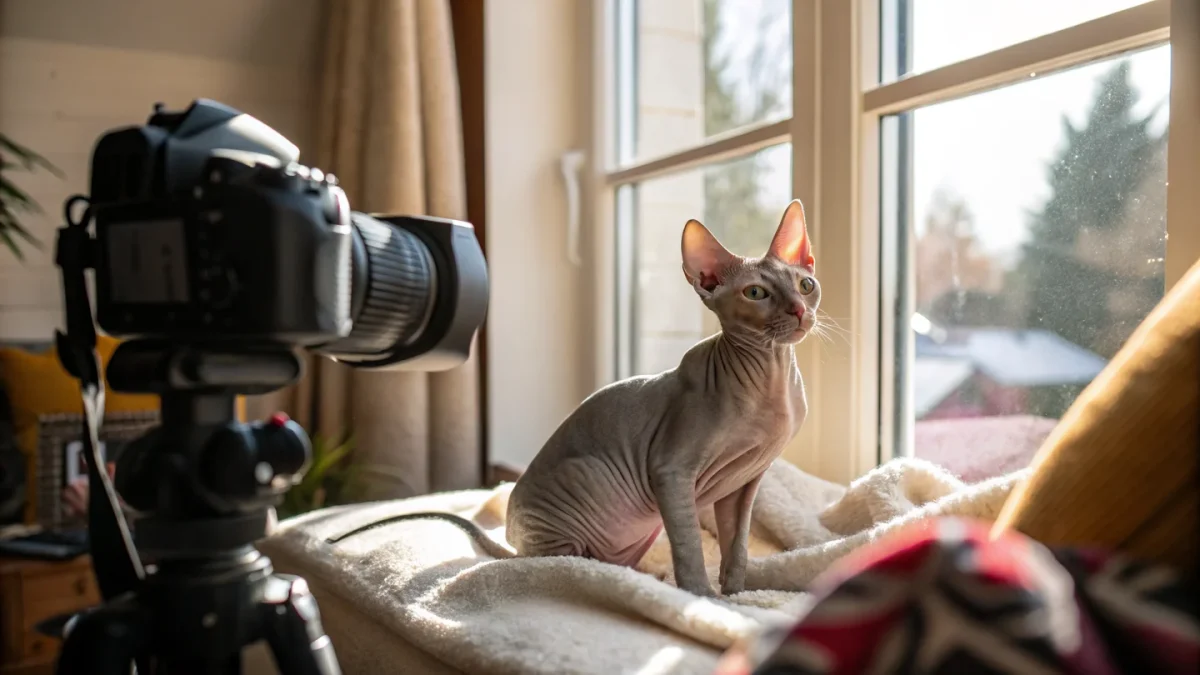
The Sphynx carries more persistent misconceptions per capita than almost any other breed. Some stem from the unusual appearance; some from genuinely misleading marketing; some from assumptions that don't survive contact with reality. Here are the most common, addressed directly.
1. "Sphynx Cats Are Hypoallergenic"
This is the most consequential misconception because it causes real harm — people with cat allergies acquiring a Sphynx on this basis and then experiencing reactions that were entirely predictable.
The facts: cat allergies in most people are triggered primarily by a protein called Fel d 1. This protein is produced predominantly in the salivary and sebaceous glands — not in the fur itself. Fur spreads the allergen through the environment (as shed hair carries dried saliva from grooming, and as dander carries skin secretions), but removing the fur does not remove the allergen.
A Sphynx cat produces Fel d 1 in normal cat quantities. Its skin secretions coat its body surface. When the cat brushes against furniture, bedding, and you, it transfers those secretions directly. Some allergy sufferers report better tolerance with Sphynx cats than with coated breeds — possibly because there is no shed fur carrying allergen through the air, possibly because individual variation affects the experience. But no peer-reviewed research establishes the Sphynx as categorically safer for cat-allergic people — a 2024 review in Allergologie Select puts it plainly: there is no scientific evidence for a hypoallergenic cat breed, hairless included. Individual cats vary in Fel d 1 output by as much as 80-fold, and that individual variation swamps any breed-level effect.
The responsible guidance: if you have cat allergies, spend time with the specific cat you're considering acquiring before committing. This applies to Sphynx cats as much as any other breed.
2. "They're Easy to Care For Because They Don't Shed"
No shedding is a genuine advantage for people who find cat fur on furniture and clothing genuinely problematic. But "easy to care for" as a characterization of the Sphynx overall is misleading.
The weekly bathing requirement is real, non-optional maintenance. The ear cleaning frequency (also weekly in most cases) is higher than most coated breeds. The skin fold attention, the nail base cleaning, the warmth management — these are all active care requirements that replace the passive coat maintenance of a brushed breed. It's different maintenance, not less maintenance.
3. "They Must Be Cold and Uncomfortable"
This concern comes from genuine empathy — a cat without fur looks like it should be cold. The reality is more nuanced.
Sphynx cats are not cold in their normal environments. They are excellent at regulating their body temperature through behavioral strategies: seeking warm surfaces, burrowing under covers, pressing against warm bodies, and running a slightly higher ambient body temperature than coated cats. In a properly heated home, a Sphynx is warm.
What they are is sensitive to temperature extremes in a way coated cats are not. A cold house, prolonged exposure to cold surfaces, or an outdoor environment in cold weather does present a genuine risk. This is a management issue, not an ongoing suffering issue.
4. "The Temperament Is Unusual Because of the Appearance"
People sometimes project the unusual appearance onto the personality — expecting a mysterious, strange, perhaps aloof cat to match the alien aesthetic. The Sphynx cat temperament is, in fact, the opposite of this. The Sphynx is one of the most emphatically normal, outgoing, conventional-in-its-affection cats you can own. It wants attention, gives attention, plays enthusiastically, and is constitutionally friendly.
The appearance is unusual. The personality is warm, social, and straightforward.
5. "They're Fragile"
The Sphynx looks delicate. It is not. The compact, muscular body under the wrinkled skin is robust. The breed is athletic, physically resilient under normal circumstances, and not prone to the fragility the visual impression might suggest.
What the Sphynx does have is specific health vulnerabilities — primarily the elevated HCM risk — but these are very different from physical fragility. A Sphynx that climbs, plays, and rough-houses is not doing something dangerous by virtue of not having fur. It's just doing what cats do.
The complete Sphynx cat breed guide covers the actual health picture in full. The point here is that "looks unusual" does not translate to "physically delicate," and the breed should not be treated as if it does.