

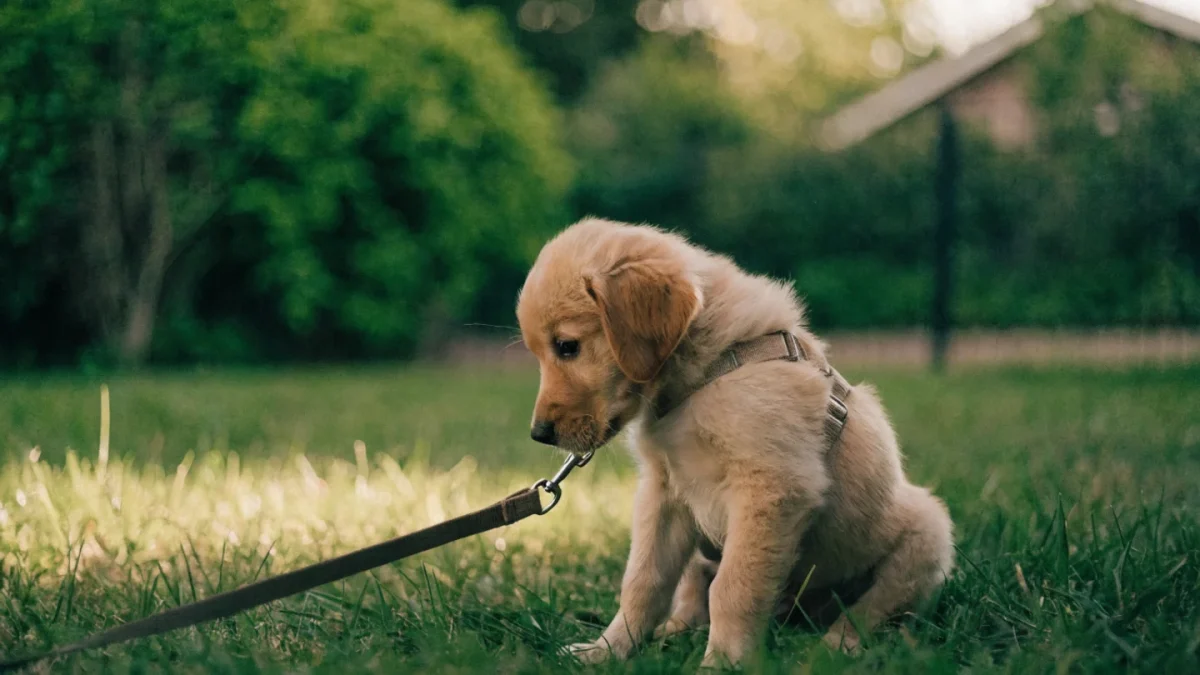
A puppy that's never worn a collar or felt a leash attached to them will often react in one of two ways: they freeze and refuse to move, or they flail and try to escape. Both are completely normal. Both go away pretty quickly if you approach the introduction systematically.
The goal in early leash training isn't to teach the dog to walk politely. That comes later. The goal is to make the collar, harness, and leash feel like neutral, comfortable equipment — not a trap.
Step 1: Collar or Harness Introduction
Before any leash, the puppy needs to wear the collar or harness comfortably.
Put it on during a meal or a play session — something the puppy finds genuinely enjoyable. Put it on, give the puppy something good to chew or eat, take it off before they've finished the good thing. Repeat. Within a few sessions, most puppies stop noticing the collar at all.
If the puppy freezes or scratches at the collar, keep sessions shorter. Three minutes wearing the collar while eating is more useful than ten minutes of the puppy being miserable.
Harness note: Some harnesses require you to slide the puppy's legs through. Go slowly. Handle paws, handle the body, make the whole process part of a calm routine. Never rush a puppy into equipment they're not comfortable with.
Step 2: Leash Dragging
Before you hold the leash, let the puppy drag it. Clip the leash on and let them wander around a familiar indoor space with it trailing behind them. Supervise closely so it doesn't snag on anything.
This gets the puppy used to the weight and feel of a leash without anyone pulling on the other end. Most puppies ignore it after a minute or two.
Step 3: Holding the Leash Indoors
Pick up the end of the leash. Don't do anything yet — just hold it. Let the puppy move around, follow their lead, keep slack in the leash. The puppy should feel no restriction at all in this step.
If the puppy sits, squat down and lure them toward you with a treat. As they walk toward you, praise them. You're building the first version of "following the person holding the leash."
Do this in a quiet hallway or living room before going outside. The puppy training fundamentals principle applies here: new skills go best in low-distraction environments first.
Step 4: Guided Short Walks Indoors
Start taking a few guided steps. Lure the puppy along with a treat held near your hip. Take two steps, treat. Take four steps, treat. Stop and squat down if the puppy is unsure — let them come to you, don't pull.
Never pull a puppy forward on a leash. If they stop, lure. If they sit and refuse, squat down and encourage. Pulling creates opposition reflex — the puppy leans back against the pressure and the foundation of pulling begins right there.
Step 5: First Outside Experience
The outside world is overwhelming for a puppy. New smells, sounds, surfaces, sights — the threshold for distraction is extremely low.
Take the first outside leash session in your own yard or a very quiet area. Keep it short — five minutes. Let the puppy sniff and explore on a loose leash. Don't try to walk in a straight line or maintain position. Just let the puppy have a low-key, positive experience on leash in a new environment.
Build duration and structure gradually as the puppy settles into outdoor experiences. The complete guide to leash training covers the next stages once the puppy is comfortable with the basics. (See also: loose leash walking.)
The single most important thing in first leash training is that the puppy never feels like the equipment is a threat. Every session should end before the puppy gets frustrated. Short, frequent, positive introductions build a dog who accepts and enjoys wearing a leash — and that's the foundation everything else is built on.