

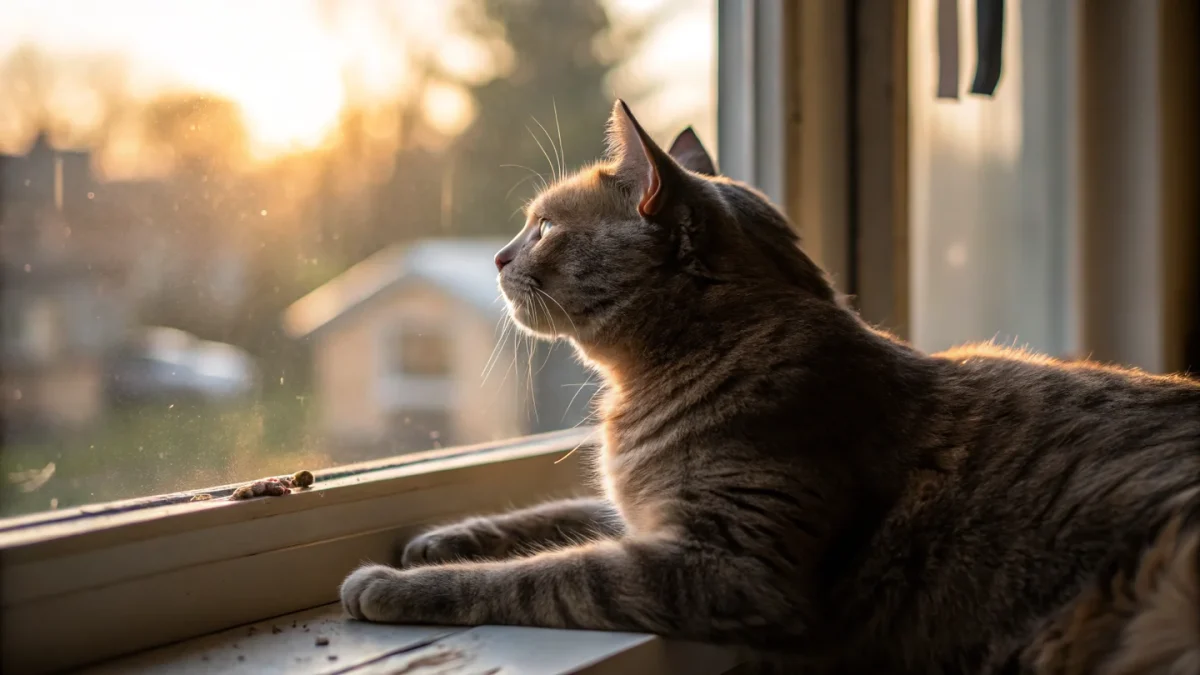
A caveat before this list: "low maintenance" is relative. All cats need consistent feeding, fresh water, a clean litter box, basic veterinary care, and some daily interaction. There is no cat you can simply provide food and water to and otherwise ignore — that's not humane pet ownership, and it doesn't produce a happy or healthy animal.
What "low maintenance" actually means in the context of cat breeds is: lower grooming demands, higher independence, less social need, and fewer consequences for variable schedules. Compared to a Siamese who needs three hours of daily interaction or a Persian who requires daily grooming, yes — some breeds are genuinely less demanding.
For the full selection framework, the cat breed selection guide covers all variables.
1. British Shorthair
The gold standard for independent, manageable companionship. Calm, self-sufficient, low vocalization, and content without constant engagement. The plush coat sheds but doesn't mat — weekly brushing is sufficient. They're warm without being clingy, which is precisely what busy owners often want: a companion that's there when you're there, and fine when you're not. The British Shorthair breed profile covers the breed's development from Roman-era working cats, the characteristic plush double coat, and the health screening relevant to the breed.
2. American Shorthair
Less famous than the British Shorthair but equally practical. The American Shorthair breed profile covers the breed's working history and why that heritage produces such an adaptable temperament. Adaptable, healthy, low-maintenance coat (nearly no grooming required), and a temperament shaped by generations of working cats — they manage their own business, enjoy interaction without demanding it, and fit into varied household rhythms without complaint.
3. Russian Blue
Quiet, self-sufficient, and bonds to a home environment in a way that makes them more comfortable with solitude than many breeds. They're loyal to their households without needing constant reassurance. The short double coat sheds moderately but requires minimal grooming. Good for: quieter homes with variable schedules.
4. Norwegian Forest Cat
Surprisingly independent for a large, heavily coated breed. The Norwegian Forest Cat manages itself well and doesn't demand constant engagement. The significant coat requires regular brushing — particularly during seasonal shed — but the personality is not demanding. They're calm and self-directed.
5. Exotic Shorthair
The Persian personality (calm, low-energy, quiet) with a coat that requires weekly brushing rather than daily. The flat face carries some health considerations, but in terms of daily management, the Exotic Shorthair is significantly less demanding than the Persian.
6. Ragamuffin
The Ragamuffin is less well-known than its cousin the Ragdoll but worth considering. Calmer and even more laid-back than the Ragdoll in many descriptions, they're gentle, easy-going, and lower in social demand. The semi-long coat needs regular brushing, but the temperament is genuinely low-maintenance.
What "Low Maintenance" Doesn't Mean
It doesn't mean no interaction. It doesn't mean no vet care. It doesn't mean you can leave a cat alone for a week. And it doesn't mean the breed will tolerate indefinitely inadequate conditions.
Low-maintenance breeds are better suited to people with full-time jobs, social lives that take them away from home regularly, and limited time for grooming — not people who want to opt out of cat ownership responsibilities entirely.
The best low-maintenance cat outcome comes from choosing an independent breed AND providing a good basic environment: enrichment toys, a window view, consistent daily feeding, and the daily interaction that keeps any cat mentally healthy — just not the sustained hourly engagement that high-social breeds need.