

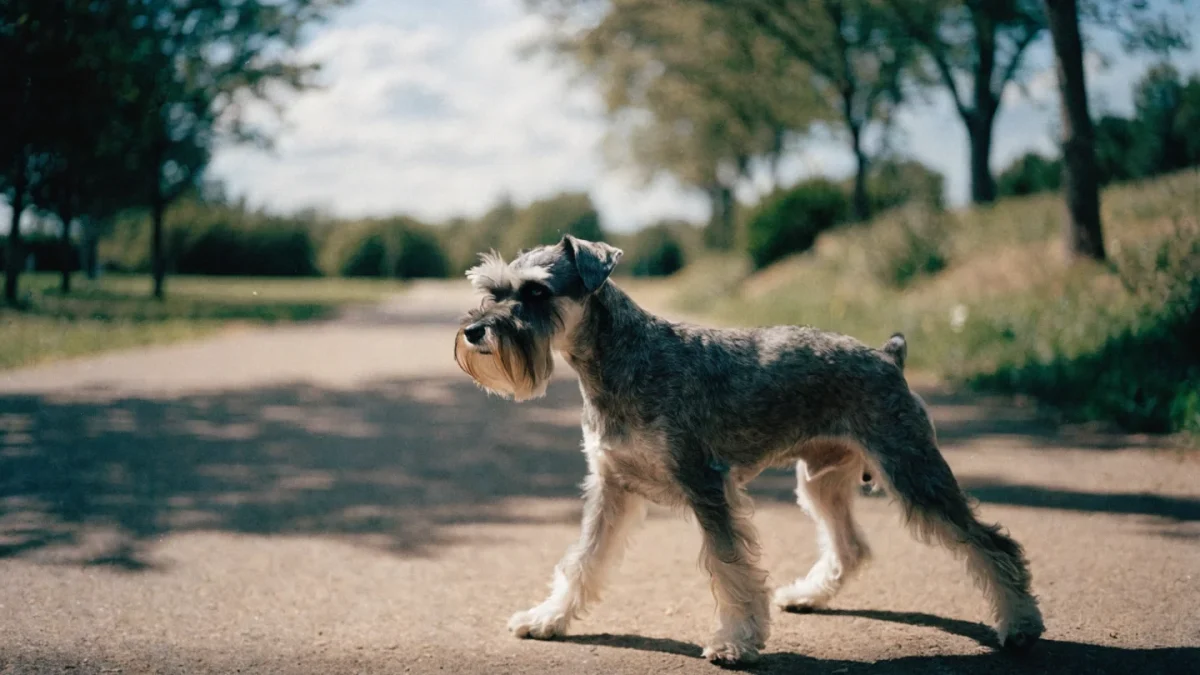
The miniature schnauzer has been one of the most popular small companion breeds for over half a century, and that kind of sustained popularity builds myths. Some of these misconceptions are relatively harmless. Others lead to mismatched adoptions, overwhelmed owners, and dogs surrendered because they behaved exactly like miniature schnauzers.
Here are five persistent myths that keep circulating despite the evidence against them.
1. Miniature Schnauzers Are Hypoallergenic
This is the myth that sells more miniature schnauzers to allergy-sensitive households than any actual breed characteristic. The claim has a kernel of truth — miniature schnauzers shed very little, and reduced shedding means fewer allergen-carrying hairs deposited on furniture, clothing, and floors. For people whose allergy symptoms are triggered primarily by airborne loose hair, the breed may produce fewer reactions than heavy shedders.
But "reduced shedding" is not "hypoallergenic." The primary dog allergen — a protein called Can f 1 — is produced in saliva, urine, and skin glands, not in the hair itself. Every dog produces Can f 1 regardless of coat type. When a miniature schnauzer licks its coat, licks your hand, or sheds microscopic skin flakes (dander), it distributes allergens just like any other breed.
Individual allergic responses vary enormously. Some people with dog allergies tolerate miniature schnauzers well. Others react just as strongly as they would to a Labrador. The only reliable way to determine your reaction is direct, prolonged exposure to the specific breed — not reliance on a "hypoallergenic" label that no scientific or veterinary body endorses for any breed.
2. They're Easy, Low-Maintenance Small Dogs
This misconception tracks with a general assumption that small dogs require proportionally less effort than large ones. In the case of the miniature schnauzer, that assumption collides with reality on multiple fronts.
Grooming alone places the miniature schnauzer in the high-maintenance category. Professional grooming every six to eight weeks is standard, not a luxury. Between appointments, the beard requires daily cleaning and combing, the body coat needs brushing multiple times per week, ear canal hair needs regular management, and dental care demands extra attention due to the breed's small jaw creating dental crowding. As the complete breed guide details, the coat maintenance commitment is substantially greater than breeds of similar size.
Exercise requirements are 45 to 60 minutes daily — comparable to many medium-sized breeds. Mental stimulation needs are high. The dietary requirements include fat-content monitoring due to the breed's predisposition to hyperlipidemia and pancreatitis. The vocal nature requires ongoing management.
A person looking for a genuinely low-maintenance small companion dog has several excellent breed options. The miniature schnauzer is not among them.
3. Small Size Means Small Personality
People who've never lived with a miniature schnauzer sometimes assume its compact frame correlates with a correspondingly modest temperament. They picture a quiet lap dog. What they get is a terrier.
The miniature schnauzer carries a personality scaled for a much larger dog. It is alert, opinionated, reactive to environmental stimuli, confident to the point of confronting dogs four times its size, and deeply invested in monitoring everything happening within its sensory range. The breed bonds with fierce loyalty, guards its territory with genuine conviction, and communicates its views on household events with regularity and volume.
This isn't a flaw — it's the breed functioning exactly as designed. But people who want a small dog specifically because they want a small personality will find the miniature schnauzer exhaustingly large in spirit. The terrier temperament is the core of the breed's character, and that temperament doesn't scale down with body size.
4. They Don't Bark Much
This one is baffling, because anyone who has spent more than thirty minutes with a miniature schnauzer knows it's false. Yet the myth persists, sometimes encouraged by descriptions that emphasize the breed's intelligence and trainability while glossing over its vocal nature.
Miniature schnauzers are among the most vocal small breeds. They bark at doorbells, strangers, passing dogs, unusual sounds, changes in routine, and — with some individuals — at stimuli their owners cannot identify. The bark itself is sharp, carrying, and repetitive. In apartment buildings and shared-wall housing, it becomes a management issue that requires consistent daily effort.
Training can teach a "quiet" cue and reduce barking frequency. Adequate exercise and mental stimulation lower overall arousal, which reduces trigger sensitivity. But the breed's alert-barking baseline is high, and no amount of training produces a reliably quiet miniature schnauzer. If you're choosing between this breed and a typically quieter alternative, the barking difference is significant enough to influence a housing-dependent decision.
5. All Miniature Schnauzers Are Basically the Same
The assumption that breed equals uniformity leads people to treat every miniature schnauzer puppy source as interchangeable. This is dangerously wrong.
Miniature schnauzers from health-tested parents in responsible breeding programs have dramatically different statistical health outcomes than those from unscreened, high-volume operations. The breed's predispositions — pancreatitis, urinary stones, eye conditions, MAC susceptibility — all have genetic components that screening can address. A puppy from tested parents isn't guaranteed healthy, but the odds improve significantly.
Temperament variation is equally wide. A miniature schnauzer from a program that selects for stable, confident temperaments and socializes puppies extensively will behave differently from one raised in a kennel with minimal human contact. Early socialization during the first eight to twelve weeks shapes the adult dog's reactivity, confidence, and social behavior in ways that later training can improve but not fully replicate.
The breed standard describes one dog. The breed population contains thousands of variations. Where your particular miniature schnauzer comes from matters as much as the fact that it's a miniature schnauzer at all.