

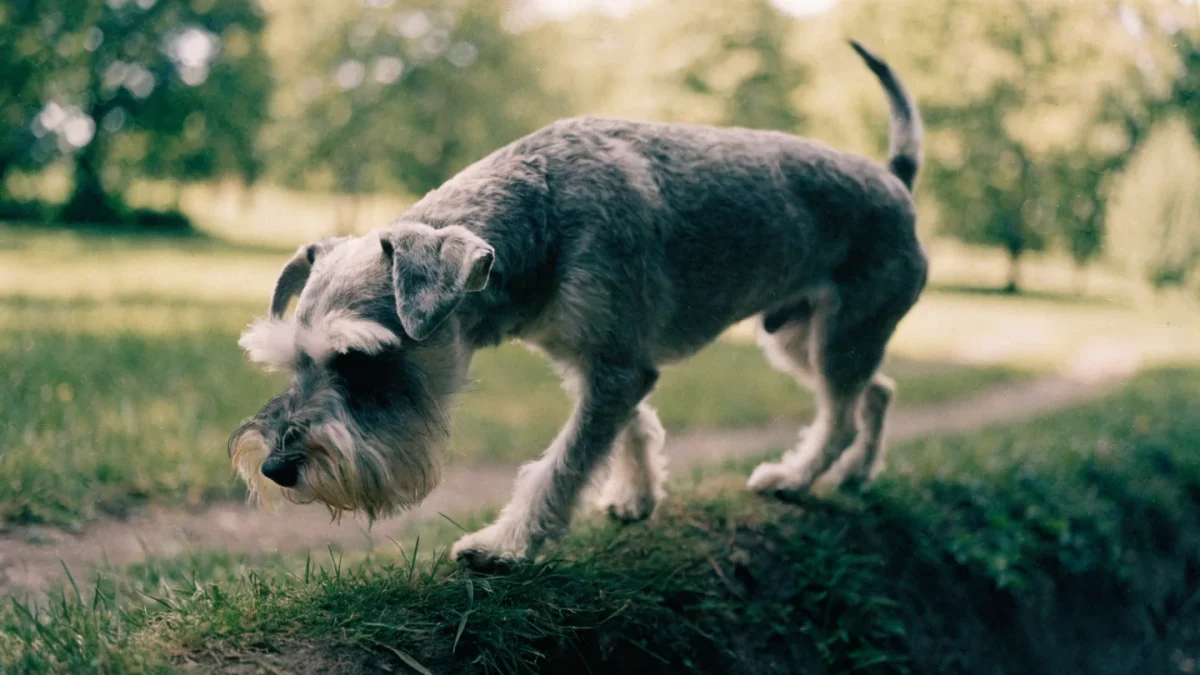
The miniature schnauzer was bred to chase and kill rats inside German barns — an activity requiring bursts of explosive speed, sharp directional changes, and sustained focus over hours. No owner needs to replicate that workload, but the physical and mental wiring behind it hasn't gone anywhere. A miniature schnauzer that gets a ten-minute stroll around the block and nothing else will channel its unused energy into the activities it can access: barking, digging, chewing, and redecorating your furniture.
Miniature schnauzer exercise needs sit in a zone that surprises people who chose the breed based on its compact 6 to 8 kg frame. This is a working terrier in a convenient package, and it needs activity that challenges both body and brain.
The Numbers
An adult miniature schnauzer in good health needs 45 to 60 minutes of daily exercise. That's a floor, not a ceiling — many individuals, particularly younger dogs and those from high-drive lines, need more. The breed maintains a consistent energy level from adolescence well into its senior years. A 10-year-old miniature schnauzer with no joint issues will still demand a proper outing.
Split the time across at least two sessions. Two 25- to 30-minute outings work better than a single longer block, partly because the mental break between sessions helps the dog process stimulation, and partly because miniature schnauzers do well with routine patterns that punctuate the day.
What Counts as Exercise
Not all movement is equal for this breed. A slow, controlled walk on a tight leash down the same route every day meets the physical minimum but leaves the brain starving.
Walks with exploration time. Let the dog sniff. The miniature schnauzer's prey drive means it processes environmental information through its nose and eyes simultaneously. A walk where the dog can investigate scents, track small-animal trails along fences, and evaluate the territorial markings of neighborhood dogs is mentally exhausting in a way that strict heel-walking is not.
Interactive play. Fetch, tug, chase games in a secure area — anything that engages the dog's drive and requires responsiveness. Miniature schnauzers are quick and agile, and they enjoy games that let them use that speed. Short, intense play sessions of 10 to 15 minutes can substitute for portions of the walk if weather or schedule demands it.
Structured activities. Agility courses, barn hunt trials, and rally obedience tap directly into the breed's strengths. The combination of physical movement and rule-following occupies the miniature schnauzer's mind far more effectively than unstructured running. Even informal backyard agility — jumps, tunnels, weave poles — provides excellent stimulation.
Puzzle-based engagement. Snuffle mats, food-dispensing toys, and hide-and-seek games with treats or toys tire the brain. A 15-minute puzzle session can reduce overall arousal levels for hours. For miniature schnauzer temperament personalities that skew toward higher reactivity, mental work is particularly valuable because it creates a calmer baseline.
Puppy Exercise
Puppies and adolescent miniature schnauzers need adjusted exercise. The general guideline of five minutes per month of age, twice daily, applies as a reasonable starting framework. A four-month-old puppy gets two 20-minute sessions. Vigorous, repetitive exercise — long runs, extended fetch on hard surfaces — should be avoided until growth plates close, typically around 12 months in this breed.
Free play in a safe area on soft ground is different from structured, forced exercise. Let puppies set their own pace during play and watch for signs of fatigue — slowing down, lying down mid-play, or seeking shade.
What Happens When They Don't Get Enough
The connection between exercise deficit and problem behavior in miniature schnauzers is direct and predictable. Under-exercised dogs escalate through a pattern:
First, barking increases. The dog reacts to lower-threshold stimuli — sounds and movements it might normally ignore become bark-worthy. Then destructive behavior appears: chewing furniture, digging at carpet or flooring, shredding bedding. Attention-seeking behaviors intensify — pawing, whining, following the owner obsessively, bringing toys and dropping them repeatedly. In some individuals, the frustration manifests as hyperreactivity toward other dogs or household members.
None of this is the dog being "bad." It's a terrier brain running at capacity with nowhere to direct its output. The fix is almost always straightforward: increase exercise and add mental enrichment. As the complete breed guide covers, the breed's intelligence makes boredom its primary enemy.
Senior Exercise
Miniature schnauzers maintain their activity levels well into later life. Most healthy individuals still want and need regular exercise at 10 to 12 years old. Joint stiffness, reduced vision, or cardiovascular changes may require adjustments — shorter walks, softer surfaces, and lower-impact games — but cutting exercise entirely accelerates decline. Keep moving, adjust the intensity, and let the dog tell you when it's done.