

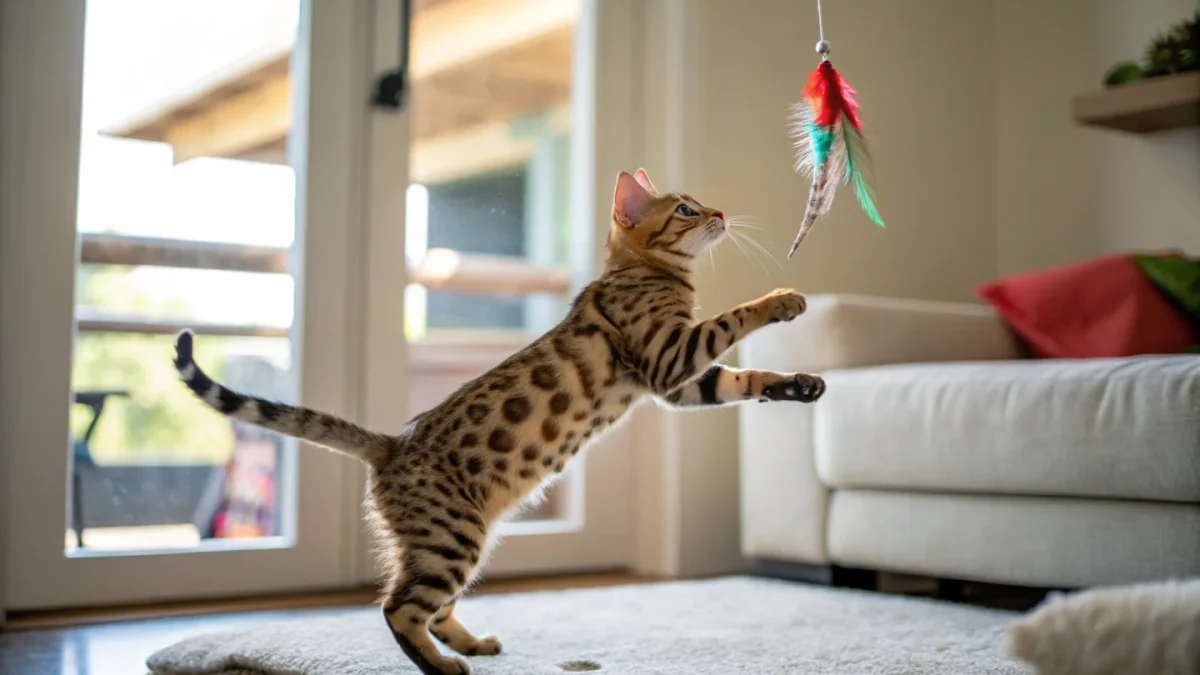
All cats play. Kittens of every breed spend their first months in constant motion, developing motor skills and coordination through play. The question isn't which cats play as kittens — it's which cats still want to actively play as adults.
In most domestic cats, play drive diminishes gradually through the first two years and settles into occasional engagement with toys or mild interaction. In the breeds on this list, that decline either doesn't happen or happens so subtly it's difficult to notice.
For the full framework on choosing a breed based on activity level, the cat breed selection guide is the starting point.
1. Bengal
The Bengal's play drive is connected to genuine prey instinct, not just entertainment — the Bengal breed profile covers the wild-cat heritage that produces this intensity. They stalk, pounce, and return to a toy with the focus of a working hunter rather than casual curiosity. Interactive wand toys are the best outlet; puzzle feeders satisfy both the activity drive and the food motivation that makes training this breed relatively productive.
The caveat: Bengal play is intense. A five-minute session isn't going to satisfy them. Plan for fifteen to twenty minutes of genuine engagement, twice daily.
2. Abyssinian
Probably the most consistently active breed across all life stages. Abyssinians at seven years old move through the house with the purpose and energy of a two-year-old. They're curious about everything, participate in everything, and find stimulation in environments other breeds would ignore. Fetch is a game many Abyssinians discover independently. The Abyssinian breed profile covers the breed's ancient domestic origins, the distinctive ticked tabby coat, and the enrichment requirements that come with the high activity level.
3. Siamese
The Siamese play drive is emotional as much as physical — they play partly because it means interaction with you. Wand toys that require your involvement get more engagement than toys left on the floor. The play drive persists with age and connects to the breed's strong social bond.
4. Cornish Rex
The Cornish Rex is the breed most often described as "never growing up," and the play drive is central to that. They maintain kitten-level activity interest throughout their lives. Many will retrieve small toys. All will engage enthusiastically with a wand. The key is that the interest is sustained — the seventh year looks much like the first.
5. Devon Rex
Similar to Cornish Rex in play drive, with a slightly more food-motivated approach that makes training and puzzle feeders particularly effective outlets.
6. Maine Coon
The Maine Coon's play drive is more moderate and better-calibrated to sessions followed by rest — they engage well, settle well, and don't require the continuous stimulation that the breeds above need. They're the playful breed that suits people who want active engagement without requiring it to be relentless.
7. Tonkinese
Playful, warm, and genuinely interactive — the Tonkinese sits between the Siamese and Burmese in personality and brings the play drive of the former with slightly more balance.
What Playful Breeds Actually Need
Interactive play sessions — not just toys left out to collect dust. A wand toy is only useful when wielded by a person. Automated toys help between sessions but don't replace them. The play-oriented breeds on this list have developed the expectation of human engagement, and a household that doesn't deliver it regularly will see the energy redirect toward less desirable activities.
If daily fifteen-minute play sessions sound like too much, a calmer breed is a better match. There's no shame in choosing based on realistic expectations.