

The first night with a new puppy in a crate is a rite of passage. They cry. You lie awake wondering if you're doing the right thing or if you're torturing them. You check your phone at 2 am and find fourteen conflicting pieces of advice.
Here's what actually helps.
Where to Put the Crate at Night
The most common overnight crate mistake: putting the crate in a separate room.
Puppies that have never slept alone before are suddenly isolated in an unfamiliar house. The crying often escalates to panic, and the situation gets worse each night instead of better.
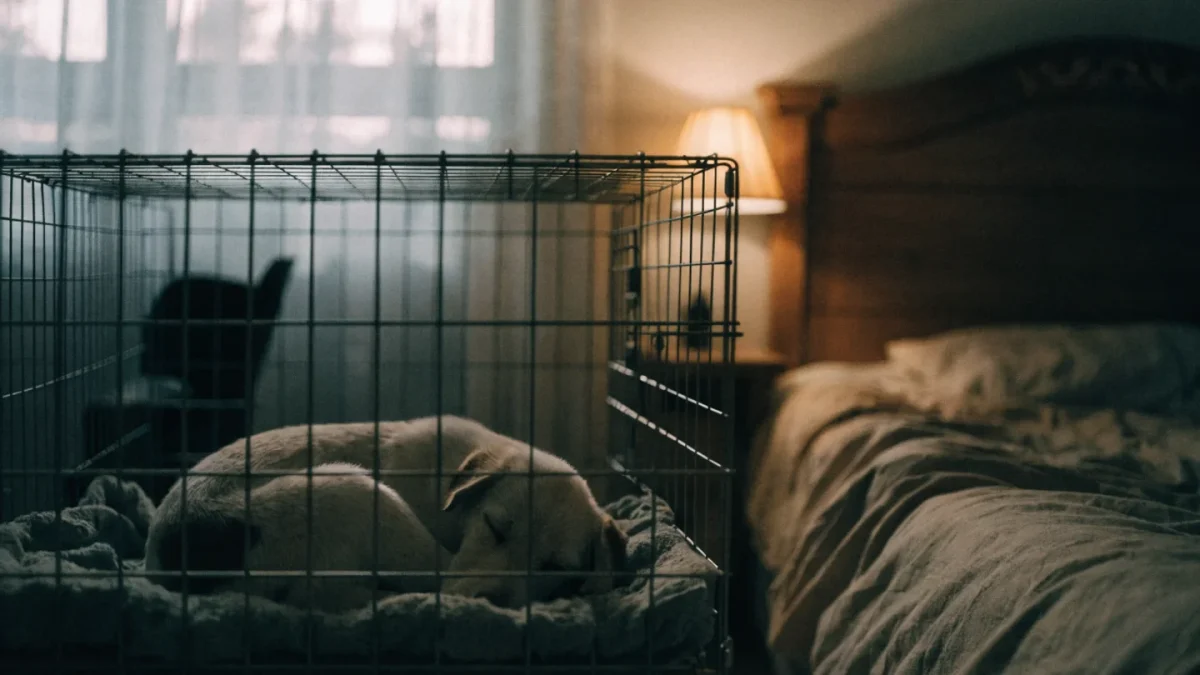
The better approach: crate next to or close to your bed for the first 2-4 weeks. Your presence and smell are calming. You'll hear if they need to go out. And the transition to independence is gradual rather than abrupt.
Over the first few weeks, you can move the crate gradually toward the door, then out of the bedroom, then to its permanent location. The dog adjusts over time rather than being placed in a strange room alone on night one.
The Bedtime Routine
Routines help. Dogs are good at learning sequences, and a consistent bedtime pattern signals "sleep is coming."
A workable routine:
- Last outdoor bathroom trip — make sure the bladder is as empty as possible
- Limit water 30-60 minutes before the last bathroom trip (for puppies)
- Brief calm settling time — no rough play before bed
- Crate with something that smells like you inside (worn t-shirt, used blanket)
- Consistent phrase ("go to bed," "nighttime," whatever you'll stick with)
- Lights off, quiet
Nighttime Bathroom Breaks for Puppies
Young puppies cannot hold their bladder all night. Expecting them to is unfair and leads to accidents that undermine house training.
I cover this in more depth in my piece on crate training an adult dog who.
A rough guide for how long puppies can hold overnight:
- Under 10 weeks: every 2 hours
- 10-12 weeks: every 2-3 hours
- 3-4 months: every 3-4 hours
- 5-6 months: every 4-5 hours
- 7+ months: most can make it through the night
Set an alarm for a middle-of-the-night trip before you go to sleep. Take the puppy straight outside, no talking, no play — just business. Back in the crate immediately after. This is not playtime.
The puppy nighttime bathroom setup matters here — having the bathroom option immediately accessible reduces accidents significantly.
Handling the Crying
Some crying is normal and does not require intervention. A puppy that's complaining about being put in a crate is not in distress — they're annoyed.
Distinguish between:
- Protest crying: Variable, stops and starts, often escalates and then settles. Doesn't require response.
- Distress or panic: High-pitched, unrelenting, escalating. May indicate genuine fear or a need to eliminate. Worth checking.
- Bathroom urgency: Often different in tone — more urgent, rhythmic, sometimes paired with circling or pawing.
If you go in every time the puppy whines, you've taught them that whining gets you there. But letting a puppy in genuine distress cry it out alone doesn't build calmness — it builds helplessness.
The nuance: respond to urgent bathroom signals. Don't respond to general protest. If you're not sure, wait 5 minutes before going in, and go calmly without talking or making arrival a reward.
What Helps With Settling
- A ticking clock near the crate (mimics mother's heartbeat)
- A warm water bottle under a blanket (mimics littermate warmth)
- An item of clothing you've worn
- A calming CD or white noise
These don't work for every dog but they're worth trying on rough nights.
When It's More Than Night Crying
If the overnight behavior escalates after the first week rather than improving, something more is going on. Check the complete crate training guide for troubleshooting steps. Separation anxiety specifically requires a different approach than crate resistance.
The first week is the hardest. By week two, most puppies are settling within a few minutes. By week four, most don't cry at all. Get through the early nights with patience — it does get better.