

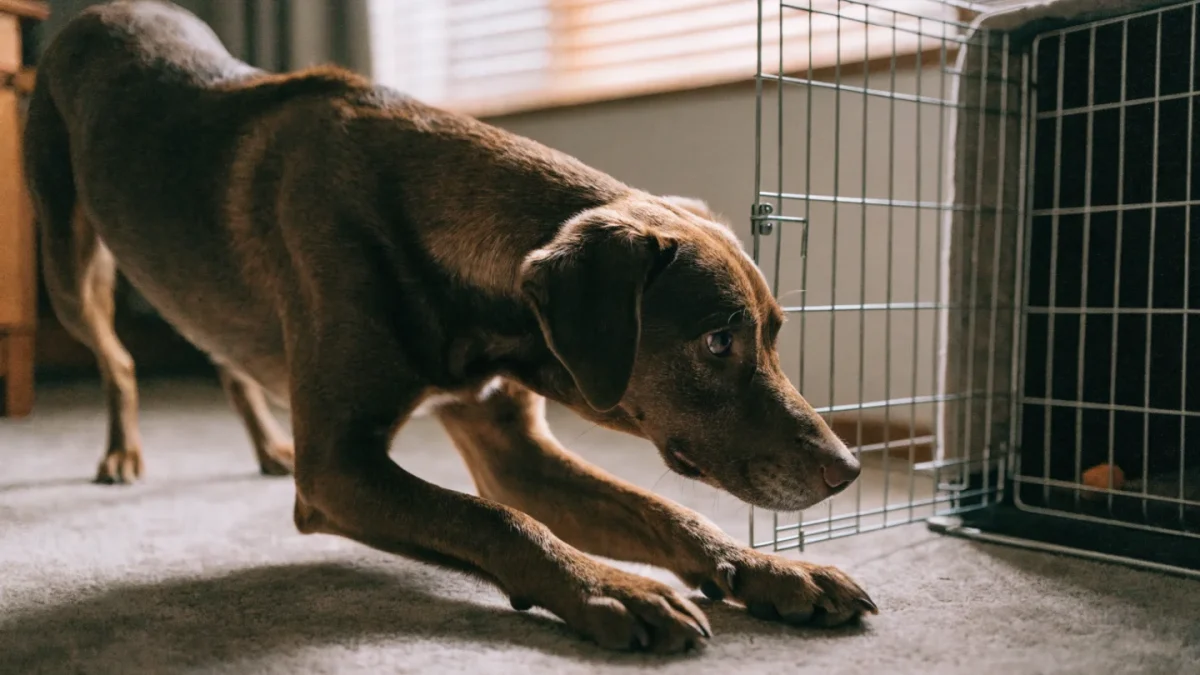
Adult dogs learn differently than puppies in a few important ways — but crate acceptance isn't one of them. With the right approach, most adult dogs can learn to accept and even appreciate a crate.
The common mistake is assuming adults need a faster timeline because "they should know better." They shouldn't know anything about crates if they've never experienced one. Treat the process exactly as you would with a puppy.
Why Adult Dogs Present Different Challenges
Established patterns: An adult dog has a longer history of doing things their own way. If they've always slept on the couch, the crate is competing with a well-established preference.
Stronger anxiety capacity: Adult dogs — especially rescue dogs — may have more developed stress responses than puppies. A crate with a closed door can feel like a trap to a dog with no experience of it.
Longer desensitization curves: If a dog has had any negative experiences with confinement, the desensitization curve is longer. Don't assume a calm demeanor means the dog is comfortable — watch closely for subtle stress signals.
Not all adults are the same: A five-year-old dog from a stable home with no crate experience is very different from a rescue dog who was caged in a shelter for months. Read your individual dog, not a generalized timeline.
The Introduction Process
Step 1: Positioning and comfort.
Put the crate somewhere accessible. Remove the door if it makes the dog nervous — just the open box at first. Put a comfortable blanket inside. Don't make the dog enter.
Step 2: Food and treats in and around the crate.
Drop high-value treats near the crate entrance. Let the dog eat them without entering. Over sessions, place treats just inside the entrance. Eventually, further inside. The dog decides when to go in — you just keep positioning the good stuff further in.
Step 3: All meals in the crate.
Feed every meal inside the crate, with the door open. This is the fastest way to build a positive association for most dogs.
I go deeper on this in crate training for travel.
Step 4: Door closed briefly.
Once the dog enters comfortably for meals, close the door while they eat. Open it before they finish. Then close it and open it 2-3 times while they eat. This gets them used to the door moving without it being a source of stress.
Step 5: Brief closures with you present.
Close the door for 1 minute. Stay in the room. Treat through the door every 15-20 seconds. Open. Don't open if the dog is whining — wait for even a two-second pause in the whining, then open. You're teaching the dog that the door closes and opens regardless.
Step 6: Build duration slowly.
Two minutes. Five minutes. Ten minutes. Only move forward when the dog is clearly relaxed at the current duration.
Signs the Process Is Going Well
- Dog enters the crate voluntarily to get treats
- Dog lies down inside without being asked
- Dog enters before you even close the door
- Dog is calm or asleep when you check during closed-door sessions
Signs You're Moving Too Fast
- Dog stands and paces inside the crate
- Dog vocalizes immediately when door closes
- Dog scratches at the door intensively
- Dog refuses treats they normally love inside the crate
If you see these, go back a step.
The Overnight Piece for Adults
Some owners need a crate-trained adult to sleep crated overnight. The overnight crate training process applies here — don't rush to overnight before the dog is comfortable with several hours during the day. Build daytime duration first.
The complete crate training guide covers the fuller picture including weaning off the crate when appropriate.
Adult dogs are not too old to learn this. I've successfully crate-trained dogs in their senior years when medical reasons required it. Patience, positive associations, and no rushing — that's the entire formula.