


The skin is the largest organ in a dog or cat's body. It serves as a physical barrier against pathogens and environmental hazards, regulates temperature, provides sensory information, and reflects the animal's internal health in ways that are often visible to attentive owners long before other symptoms appear.
I've seen dogs present for a skin complaint that turned out to be the first sign of hypothyroidism. I've seen cats with a subtly dull coat whose dietary protein intake was just barely insufficient — resolved entirely once their food changed. Skin and coat condition is, in many ways, one of the most informative things we look at during a wellness examination.
This guide covers what healthy skin and coat look like, what the common problems are, what causes them, and how to keep your pet's skin and coat in their best condition across their lifetime.
What Healthy Skin and Coat Actually Look Like
Understanding "normal" is the prerequisite for recognizing when something is off.
For dogs: Healthy skin is supple, not overly dry or greasy, and free from flakiness, redness, bumps, or bald spots. The coat should be dense and lie flat or in the pattern appropriate for the breed — a smooth-coated breed should have a glossy, close-lying coat; a double-coated breed should have a full undercoat without bare patches. A small amount of shedding appropriate to the season and breed is normal. Excessive shedding, clumping, or coat that breaks off easily is not.
For cats: Healthy skin is pale pink or pigmented depending on coat color, smooth, and without visible scaling or redness. The coat should be glossy in shorthairs — a smooth, reflective surface when viewed in light — and full-bodied without tangles or mats in longhairs. Cats are fastidious self-groomers, so changes in coat quality often indicate that grooming is being neglected, which itself signals pain, obesity, or systemic illness.
The sniff test: This sounds simplistic, but it's valid. A healthy pet's coat has a mild, characteristic odor — neither offensive nor particularly strong. A rancid, musty, or yeasty smell from the skin or coat is a clinical sign worth investigating.
Nutrition and Skin Health
Essential fatty acids
The skin barrier requires fatty acids to maintain its structure. Omega-6 fatty acids (particularly linoleic acid) are critical for maintaining the lipid layer that prevents water loss and blocks environmental irritants from penetrating. Omega-3 fatty acids (EPA and DHA) have anti-inflammatory properties and are frequently supplemented to reduce skin inflammation in allergic pets.
Commercial pet foods labeled as "complete and balanced" should provide adequate fatty acids, but the quality and freshness of the fat source matters. Rancid fats in poor-quality foods can actually exacerbate skin problems. A dull, dry coat in a pet eating commercial food sometimes improves significantly with a diet change.
Fish-based diets are often associated with better skin and coat condition in some pets — though when I look closely, the good evidence points to the omega-3 fatty acid content of the fish oil rather than the fish protein itself. I haven't seen solid comparative data showing marine protein specifically outperforms other quality protein sources for coat condition, so I'd treat that part of the claim as marketing more than science.
Protein
The coat is made of keratin, a protein. Inadequate protein — whether from a low-protein diet or from a condition that impairs protein absorption or utilization — produces a soft, dull, easily broken coat. In severe cases, areas of poor coat growth or hair loss develop.
Zinc
Zinc deficiency produces a characteristic skin condition in dogs — thickened, scaling skin with hair loss, particularly around the face and pressure points. Some breeds, notably Siberian Huskies and Alaskan Malamutes, have a genetic predisposition to zinc-responsive dermatosis even on complete diets — the veterinary dermatology literature describes this as Type 1 zinc-responsive dermatosis, a hereditary defect in intestinal zinc absorption seen almost exclusively in these Arctic breeds.
Vitamins A and E
Vitamin A is essential for normal skin cell turnover. Vitamin E functions as an antioxidant within skin tissue. Both can be supplemented under veterinary guidance for specific conditions, but supplementing fat-soluble vitamins beyond requirements can be harmful — excess vitamin A is toxic.
Grooming and the Skin Barrier
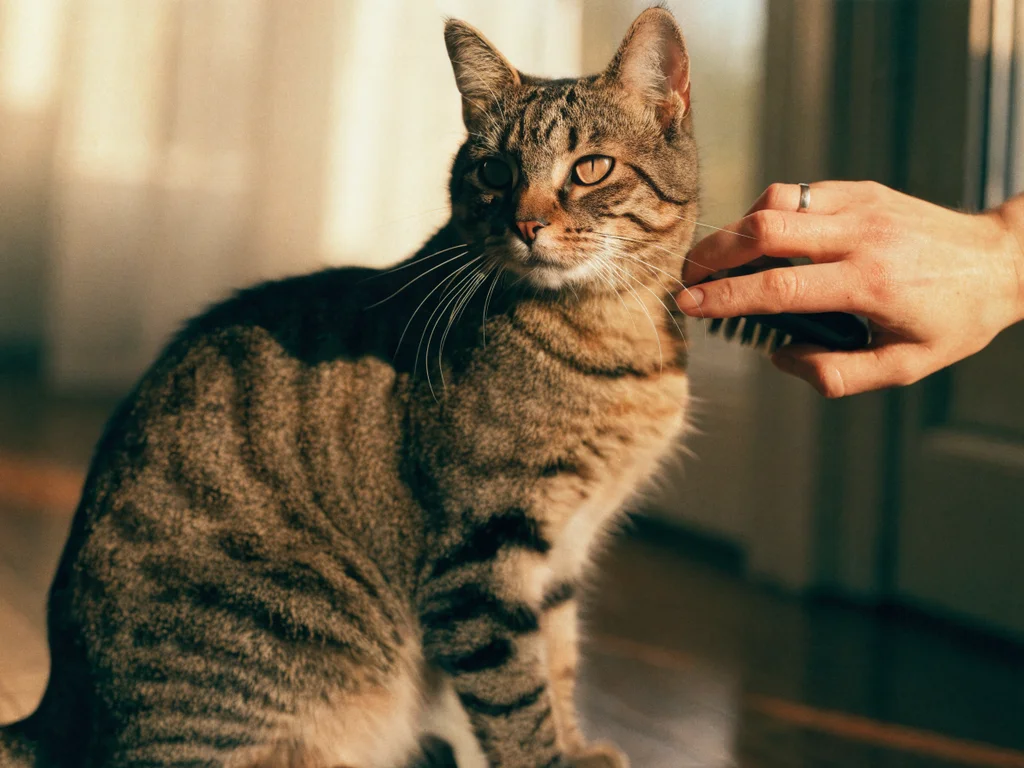
Grooming isn't just cosmetic. The mechanical action of brushing redistributes natural skin oils along the hair shaft, removes dead hair that would otherwise mat and trap moisture against the skin, and allows you to inspect the skin surface regularly.
For dogs
Grooming frequency depends on coat type. Short, smooth coats need relatively little — a rubber brush or grooming mitt once or twice a week removes loose hair and stimulates circulation. Dense double coats (like those of Huskies, Retrievers, and similar breeds) require regular brushing to prevent matting of the undercoat, particularly during seasonal shedding. Neglected undercoat mats can trap moisture, causing hot spots and skin infections beneath them.
Bathing frequency also matters. Too infrequent: sebaceous secretions accumulate, creating a greasy, odorous coat. Too frequent: the skin's natural oil barrier is stripped, leading to dryness and compensatory over-production of sebum. For most dogs, bathing every four to six weeks with an appropriate shampoo is a reasonable baseline — more often for dogs that swim or get dirty regularly.
Shampoo choice matters more than many owners realize. Human shampoos have a pH that is inappropriate for dog skin (more acidic than dog skin requires) and will disrupt the skin barrier over time. Use shampoos formulated for dogs; if your dog has a specific skin condition, use what your vet recommends.
For cats
Cats handle most of their own grooming. Your role is primarily in longhaired breeds — brushing to prevent mats in the armpits, belly, and behind the ears — and in monitoring the coat for changes that indicate the cat is grooming less (a possible pain signal).
A healthy cat should have no mats, no dandruff, and should not smell unpleasant. Cats who stop grooming are telling you something is wrong. The most common causes are obesity (can't reach all body areas), arthritis (grooming is painful), dental disease (mouth pain makes grooming uncomfortable), or systemic illness.
Common Skin and Coat Problems
Allergies and dermatitis
Skin allergies and dermatitis are among the most common reasons pets see a dermatologist. The three main types are environmental allergies (atopy), food allergies, and flea allergy dermatitis. All cause itching, redness, and secondary skin damage from scratching. Management varies by type.
Infections and parasites
Bacterial skin infections (pyoderma), yeast overgrowth, ringworm (a fungal infection despite the name), mange mites, fleas, and lice all affect the skin and coat. Each has distinct features and requires specific treatment. Skin infections and parasitic conditions covers these in detail.
Lumps, bumps, and growths
Finding a lump under your pet's skin or on the skin surface is one of the more anxiety-provoking discoveries for owners. Lumps, bumps, and growths on the skin provides guidance on assessment, the difference between benign and malignant lesions, and when to act urgently.
Hormonal and metabolic conditions
Hypothyroidism in dogs produces a characteristic skin presentation: bilaterally symmetric hair loss, thickened "elephant skin" texture in affected areas, and a coat that is dry, brittle, and slow to grow back after shaving. Hyperadrenocorticism (Cushing's disease) causes thinning skin, pot-bellied appearance, and easy bruising alongside hair loss. Both conditions require diagnosis through blood testing — the skin signs are the visible manifestation of an internal hormonal problem.
Hot spots (acute moist dermatitis)
A hot spot is a rapidly expanding area of moist, infected, painful skin — typically caused by a pet licking, biting, or scratching a spot that itches or hurts. The underlying trigger may be a flea bite, a skin abrasion, a mat pulling on the skin, or an allergy flare. Hot spots spread quickly and require veterinary attention for proper cleaning and treatment.
Grooming Inspection Routine
Every grooming session is an opportunity for a skin check. When you brush your pet, run your fingers along the skin and note:
- Flaking or scaling — visible white or grey flakes suggest dry skin, seborrhea, or ringworm
- Redness or inflammation — any area with a pinker or redder tone than surrounding skin
- Bumps, crusts, or scabs — anywhere on the body, particularly along the spine, on the belly, and in the axillae (armpits)
- Areas of hair loss — bald patches that weren't there before
- Changes in coat texture — areas that feel different: coarser, softer, thinner, or missing undercoat
- Signs of parasites — flea dirt (comma-shaped black specks that smear red when wet), visible lice, or ticks
Finding something at this stage means finding it early. Early skin problems are almost always easier and less expensive to treat than those that have been progressing for weeks.
Warning Signs That Need Prompt Veterinary Attention
Some skin changes can wait for your next scheduled appointment. Others shouldn't.
Urgent assessment:
- Rapidly spreading red, moist, painful skin (possible hot spot or cellulitis)
- Hives — raised welts across the body — particularly after a new food, medication, or vaccine
- Sudden facial swelling or swelling around the eyes
- A growth that appears to have appeared suddenly and is growing rapidly
- Open wounds or ulcerations on the skin surface
- Loss of significant coat area within a short time
Schedule soon (within one to two weeks):
- Progressive hair loss in any pattern
- Skin that has become thickened, darkened, or "elephant-like" in texture
- Persistent scratching, licking, or chewing despite no visible trigger
- A new lump or growth that you want evaluated
- Coat quality that has declined noticeably from your pet's norm
Supporting Skin Health at Every Life Stage
Puppies and kittens: The skin barrier matures during the first weeks of life. Young animals are more susceptible to parasites, ringworm, and infection. Establish a handling routine that includes regular skin checks. This is also when to begin flea prevention if you haven't already.
Adults: Maintain consistent nutrition, regular grooming, and parasite prevention year-round. Annual wellness exams should always include a skin and coat assessment. New lumps or bumps found at home should be noted and reported at the next visit, or sooner if they change rapidly.
Senior pets: Older animals develop more benign and malignant skin growths, are more prone to seborrhea, and may groom less effectively (especially cats). Thyroid and adrenal disorders become more common. The baseline coat quality you know from your pet's younger years helps you detect when something has shifted.
Frequently Asked Questions
Why does my pet's coat look dull even though I'm feeding a high-quality food?
Several factors can cause coat dullness despite adequate diet: inadequate protein intake for the individual animal's needs, poor fat absorption from a gastrointestinal condition, low omega-3 content in the food (these oxidize over time once a bag is opened), or an underlying health condition like hypothyroidism or Cushing's disease. If the coat doesn't improve with a recent bag of the same food or a diet change, a veterinary evaluation is worthwhile.
How much shedding is normal?
This varies enormously by breed, coat type, and season. Dogs with double coats shed substantially twice yearly as the seasons change. Short-coated breeds shed year-round at lower levels. "Excessive shedding" is meaningful only in the context of what's normal for your individual pet — a sudden increase in shedding beyond that baseline is worth investigating. Cats shed year-round and also have seasonal peaks.
Should I give my pet a supplement for coat health?
Omega-3 fatty acid supplements (fish oil is the most common source) are among the few supplements with genuine evidence of benefit for skin and coat condition, particularly for pets with inflammatory skin conditions — a placebo-controlled trial published in the Journal of Small Animal Practice found real improvement in itching and clinical scores in dogs with atopic dermatitis supplemented with EPA and DHA. Don't supplement without understanding what you're giving — excess fat-soluble vitamins can cause toxicity, and many marketed "skin and coat" supplements contain subtherapeutic doses of active ingredients.
My pet keeps licking or chewing one spot. Is that a skin problem?
Not always, but often. Localized licking and chewing are the primary way pets communicate that something is bothering them at a specific site. Possible causes range from allergic itch (which is often worst in certain locations like paws, ears, and armpits) to pain (a joint that hurts, for instance) to a foreign body embedded in the skin. If the behavior is new, persistent, or has created visible damage to the skin, veterinary evaluation will identify the cause.