

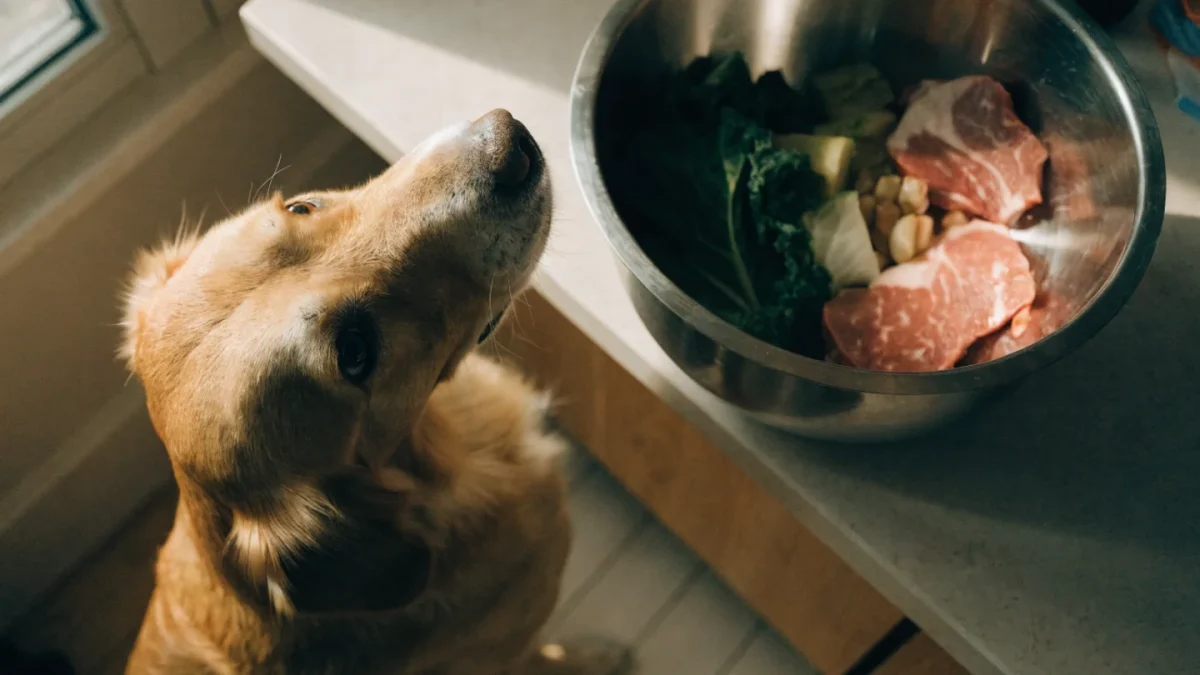
One of my colleagues at a veterinary conference a few years ago described the raw feeding debate as "two groups of people with strong opinions and weak data arguing past each other." That's a little harsh — there is real research — but the underlying point stands. The evidence base for raw pet food is genuinely thinner than the conviction on either side of the debate would suggest.
I've tried to read the literature carefully on this because clients ask about it constantly, and "the research is inconclusive" isn't a satisfying answer. So here's my honest assessment of what we do and don't know.
The Potential Benefits — What Research Supports
Digestibility. A consistent finding in multiple small studies is that raw meat-based diets tend to have higher apparent digestibility than extruded kibble — meaning a higher percentage of the food's nutrients are actually absorbed. A study in Translational Animal Science (Algya et al., 2018) found significantly higher macronutrient digestibility in raw-fed dogs versus those on extruded diets, a pattern replicated in multiple subsequent comparisons of raw and cooked versus kibble formats. Whether this translates to measurable health benefits in animals eating complete, balanced commercial diets is less clear.
Stool quality and volume. Owners who switch to raw frequently report firmer, smaller stools. This is also observed in some studies — Kerr et al. (2012) documented that cats on an extruded diet produced more than twice the fecal output (by dry matter) compared to raw-fed cats, and Sandri et al. (2017) found smaller, firmer stools in dogs switched from commercial dry food to raw beef. The likely mechanism is the higher digestibility — less undigested material means less stool volume. Less dramatic, maybe, than raw advocates suggest, but real.
Coat quality. This is harder to measure objectively. Owner-reported coat improvement is common. Some studies using objective measures have found coat quality improvements in raw-fed dogs — dogs fed raw meat-based diets showed higher objective coat scores than those fed extruded diets in a comparison published in BMC Veterinary Research (Morelli et al., 2019), and whole-rabbit-fed cats also appeared to have improved coat characteristics. The mechanism is plausible — better protein digestibility, higher fat intake, different fatty acid profiles. But confounders make it hard to attribute definitively to raw feeding specifically.
Weight management. Some evidence that raw-fed dogs and cats maintain leaner body condition than kibble-fed counterparts — a review in Animals (Anturaniemi et al., 2025) identified five Level I studies reporting stable body condition scores in dogs and cats consuming raw meat-based diets, which the authors interpreted as supportive of RMBDs' potential role in weight maintenance, though direct weight loss comparisons remain limited. Plausible mechanisms: higher moisture content (reduces caloric density), higher protein (increases satiety), lower carbohydrate content.
These findings are promising. They're also mostly from small, non-blinded studies with significant methodological limitations. I'm not dismissing them — but I'd characterize the evidence as "suggestive" rather than "established."
The Risks — What Research Documents
Bacterial contamination. This is the most consistently documented risk, and I take it seriously. Multiple studies examining commercially prepared raw pet food have found pathogenic bacteria at rates that are meaningfully higher than processed alternatives. Salmonella, Listeria monocytogenes, and E. coli O157:H7 have all been identified — a review in the Journal of Small Animal Practice (Davies, Lawes & Wales, 2019) found Salmonella contamination in roughly 5–21% of raw diets across international surveys, and Listeria monocytogenes in 16–54%, while comparable contamination rates in conventionally processed pet foods were near zero (0.2% or less).
The significance depends on context. Healthy adult dogs and cats can often carry these bacteria without becoming clinically ill — they're generally more resistant to Salmonella than humans, for instance. But they can shed the bacteria in their feces and through oral contact, creating transmission risk to humans in the household. For households with immunocompromised members, young children, or elderly individuals, this is a real public health consideration.
Nutritional imbalances. Studies examining homemade raw diets have found significant nutritional deficiencies and imbalances at high rates — a frequently cited analysis of 200 homemade dog diet recipes found that 95% had at least one essential nutrient below AAFCO minimums (Pedrinelli et al., 2017), and a European study of 95 homemade raw diets found major nutritional imbalances in 60% of them, most commonly calcium–phosphorus problems. Calcium and phosphorus balance is the most common problem, but vitamin and mineral deficiencies appear regularly too.
Commercially prepared raw diets fare better on this dimension, though quality varies.
Bone-related injuries. Raw bones carry genuine risks: dental fractures (particularly hard weight-bearing bones like knuckles and femurs), gastrointestinal obstruction from bone fragments, and rarely, perforation. Soft, raw bones like chicken necks and backs are considered much lower risk than large, dense bones, but no raw bone is entirely without risk.
Antibiotic resistance. There's real evidence that raw pet food can serve as a vector for antibiotic-resistant bacteria — including extended-spectrum beta-lactamase (ESBL)-producing organisms. A Dutch study (Baede et al., 2017) isolated ESBL-producing E. coli from 78% of raw meat-based pet diet samples, and a 2020 New Zealand study found clonally matched ESBL-producing strains shared between pets and humans in roughly a fifth of the households sampled — though that study stopped short of tying the sharing specifically to raw feeding rather than other household exposure. Even with that caveat, this is, in my view, the most underappreciated risk in raw feeding discussions. It's a serious public health concern that I think is underweighted in the raw feeding community's risk-benefit analysis.
The Honest State of the Evidence
I go back and forth on how to summarize this, because I don't want to either dismiss raw feeding as categorically dangerous or endorse it without acknowledging the legitimate concerns.
What I can say with reasonable confidence:
- Well-formulated commercial raw diets are nutritionally adequate
- Digestibility benefits are real and likely have some health implications
- Bacterial contamination risks are real and require genuine mitigation, not dismissal
- Most homemade raw diets need professional review to be nutritionally complete
- The evidence is not strong enough to say raw is clearly superior to high-quality commercial food
What I'm genuinely uncertain about:
- Long-term health outcomes for raw-fed vs. commercially fed pets (we don't have good data)
- Whether the digestibility benefits translate to clinically meaningful long-term differences
- The actual magnitude of bacterial transmission risk in typical household conditions
How to avoid the nutritional imbalances that raw diets commonly cause is the practical counterpart to this research review — the problems are documented, and some of them are preventable with the right approach.
My Clinical Observation
In my practice, the best outcomes I've seen with raw-fed pets have one thing in common: owners who take the food safety and nutritional formulation requirements seriously. The worst outcomes have also had something in common: owners who treated raw feeding as simpler than it is, assumed their pet's impressive energy and coat meant everything was working, and skipped the regular monitoring.
The diet can work. It requires more active management than opening a bag of kibble.
FAQ
Is commercial raw safer than homemade raw?
Generally yes, on both safety and nutrition dimensions. Commercial raw undergoes quality testing and is formulated by nutritionists. HPP-treated commercial raw has significantly lower bacterial loads than untreated raw. Neither is risk-free, but commercial raw reduces the two biggest failure points of homemade raw.
My dog has been on raw for two years and is healthy. Does that mean it's working?
Probably yes — a dog that's been healthy for two years on raw is a reasonable indicator that the diet is working. But some nutritional problems take years to manifest (taurine deficiency and dilated cardiomyopathy being the most concerning example), which is why baseline and follow-up bloodwork is genuinely useful even in apparently healthy animals.
Should I worry about bacterial contamination if my pet seems fine?
The concern isn't primarily about your pet — it's about people in your household. Healthy dogs can carry and shed Salmonella without appearing ill. The risk to humans through direct and indirect contact is real, particularly for young children and immunocompromised individuals. Good hygiene protocols (handwashing, separate prep surfaces, prompt cleanup) address most of this, but the risk doesn't disappear entirely.