

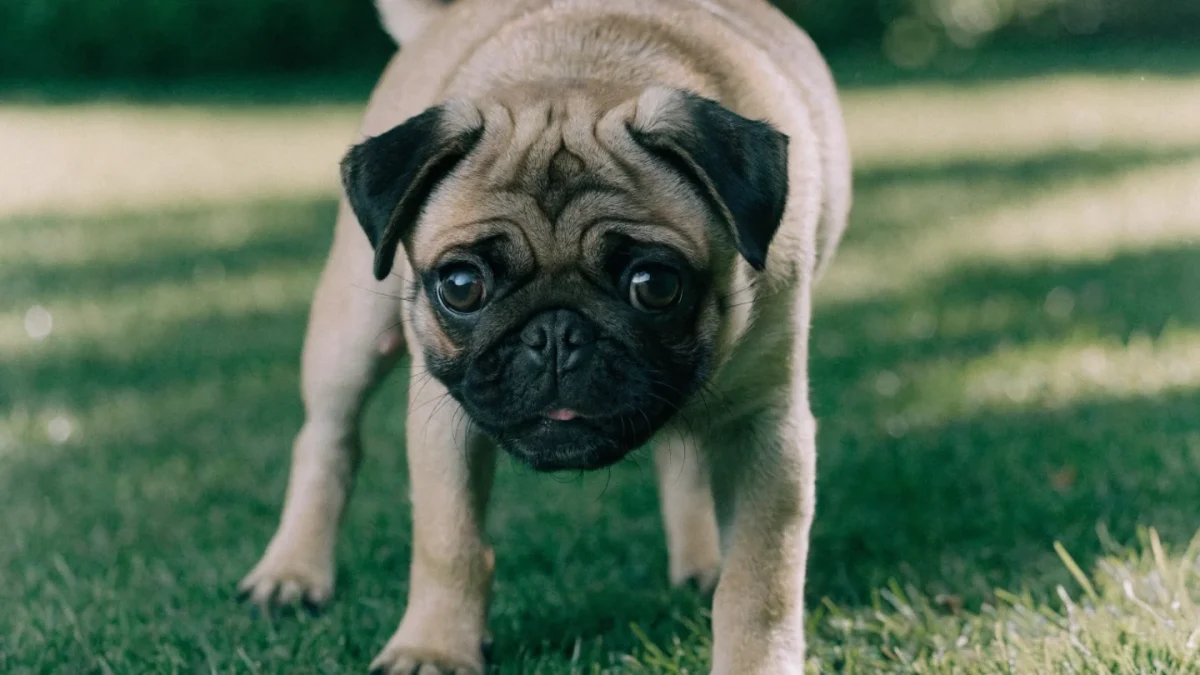
The single most consequential decision in pug ownership happens before the dog comes home. A pug puppy from health-tested parents with moderate facial structure may live 14 years with manageable breathing. A pug puppy from untested parents bred for extreme brachycephaly may spend its life struggling for air. The difference isn't luck. It's selection — yours.
Pugs are popular enough that supply is abundant, which means the quality range is enormous. This guide covers what to evaluate, what documentation to require, and what should make you walk away.
Breathing First
With any other breed, I'd start this guide with general health screening. With pugs, breathing comes first because it determines the dog's quality of life more than any other single factor.
When you visit a litter, listen. At rest — genuinely at rest, not just pausing between play bouts — a pug puppy should breathe relatively quietly. Some soft snuffling is normal for the breed. Loud snoring, wheezing, or audible breathing effort while the puppy is awake and calm is not normal, despite what you may be told. It's a signal that the airway is already significantly compromised.
Watch the nostrils. Open, round nostrils are what you want. Pinched, slit-like nostrils (stenotic nares) restrict airflow from the first breath and often require surgical correction later. The difference is visible to the naked eye.
During play, observe how the puppy recovers. A puppy that pants heavily for extended periods after moderate activity, or that disengages from play because it can't catch its breath, is showing early signs of exercise intolerance that will persist and likely worsen.
Health Testing That Matters
Responsible pug breeding programs screen for breed-specific conditions. Ask for documentation of:
BOAS grading on both parents. This evaluates the severity of brachycephalic airway obstruction in breeding stock. The Cambridge University Respiratory Function Grading Scheme — now adopted by the UK Kennel Club, the Orthopedic Foundation for Animals in the US and Canada, and Dogs Australia — grades dogs from 0 (unaffected) to 3 (severely affected) based on a structured exercise tolerance test. Other countries have developed similar protocols, but the principle is consistent across all of them: breeding dogs should demonstrate functional breathing capacity.
PDE DNA testing. Pug Dog Encephalitis is a fatal inflammatory brain disease unique to the breed. While the genetics aren't fully mapped, a DNA test identifies dogs at higher risk. Responsible programs test breeding stock and can discuss their approach to managing PDE risk in their lines.
Ophthalmologist examination. Pugs' prominent eyes are vulnerable to multiple conditions. Parent dogs should have a current eye examination from a veterinary ophthalmologist.
Patellar luxation evaluation. The kneecap slipping out of its groove is common in small breeds, pugs included. Screening identifies dogs with loose patellas before they're bred.
Hip evaluation. While hip dysplasia is less prevalent in pugs than in larger breeds, it occurs and is worth screening.
If a breeder can't produce these documents, that tells you what their priorities are. Health testing costs money and limits the pool of breeding-eligible dogs. Programs that skip it are cutting corners that your dog will pay for.
Visiting the Litter
Always visit in person. What you observe at the facility matters more than any website, social media presence, or promise made by email.
The environment should be clean and indicate that the dogs live with regular human contact. Pug puppies that aren't socialized with people during their first eight weeks start with a disadvantage that takes real work to overcome — and in a breed that depends on human attachment for its psychological wellbeing, poor early socialization creates problems that echo for years.
Meet the mother. Her temperament, her breathing, and her physical condition preview what her puppies may become. A pug dam should be friendly and curious. Her breathing at rest should be relatively comfortable. If the mother sounds like she's struggling to breathe while standing calmly in her own home, her puppies carry the same structural risk.
Evaluating Individual Puppies
At six to eight weeks, pug puppies show clear personality differences. Some are boldly social — approaching visitors immediately, climbing into laps uninvited. Others are more observant, watching from a slight distance before engaging. Neither extreme is wrong, but both should eventually show curiosity and willingness to interact. A pug puppy that won't approach a seated person after several minutes may have insufficient socialization.
Pick the puppy up. It should wriggle, mouth at your fingers, and settle within a minute or two. Look at the face up close: are the eyes clear and bright, without discharge? Are the nostrils open? Is the skin in the facial folds clean, without redness or odor?
Red Flags
Certain patterns should end the conversation immediately.
"That breathing is normal for pugs." This is the most dangerous thing a breeder can say. Labored breathing is common in pugs. It is not normal. Common and normal are different things, and a breeder who conflates them is either ignorant of or indifferent to the welfare of their dogs.
No health testing documentation. "My vet says they're healthy" is not a substitute for formal breed-specific health screening. General veterinary examinations do not evaluate BOAS severity, PDE risk, or orthopedic predispositions with the specificity that breed-specific testing provides.
Puppies available before eight weeks. Critical socialization happens between weeks six and eight. Removing puppies early disrupts that process.
Multiple litters available simultaneously. Particularly across different breeds. Volume operations cannot provide the individual attention that pug litters require — especially the daily wrinkle cleaning and health monitoring that pug puppies need from birth.
No questions asked of you. A breeder who will sell to anyone isn't screening for homes that can manage the breed's needs. Being asked about your living situation, your experience, and your understanding of pug health requirements is evidence that the breeder cares where the dog ends up.
The Adoption Path
Pugs appear in breed-specific rescues and general shelters with enough regularity that adoption is a realistic option. Adult pugs from rescue come with known temperaments and, often, known health histories — which removes significant uncertainty.
Senior pugs — often overlooked — can be remarkable companions for people who want the pug personality without the puppy phase. A seven-year-old pug has years of companionship ahead and often comes already settled into the rhythms of domestic life.
If you've already determined that a pug fits your lifestyle, and the complete breed guide hasn't changed your mind, adoption deserves serious consideration alongside purchasing.
The Right Owner for This Process
Choosing a pug responsibly takes more effort than choosing many other breeds, precisely because the health stakes are higher. The difference between a well-bred pug from health-tested parents and a pug from an unscreened operation isn't abstract — it's the difference between a dog that breathes reasonably well and one that doesn't.
Take the time. Ask the questions. Require the documentation. Your future dog's quality of life depends on the decisions you make before it enters your home.