

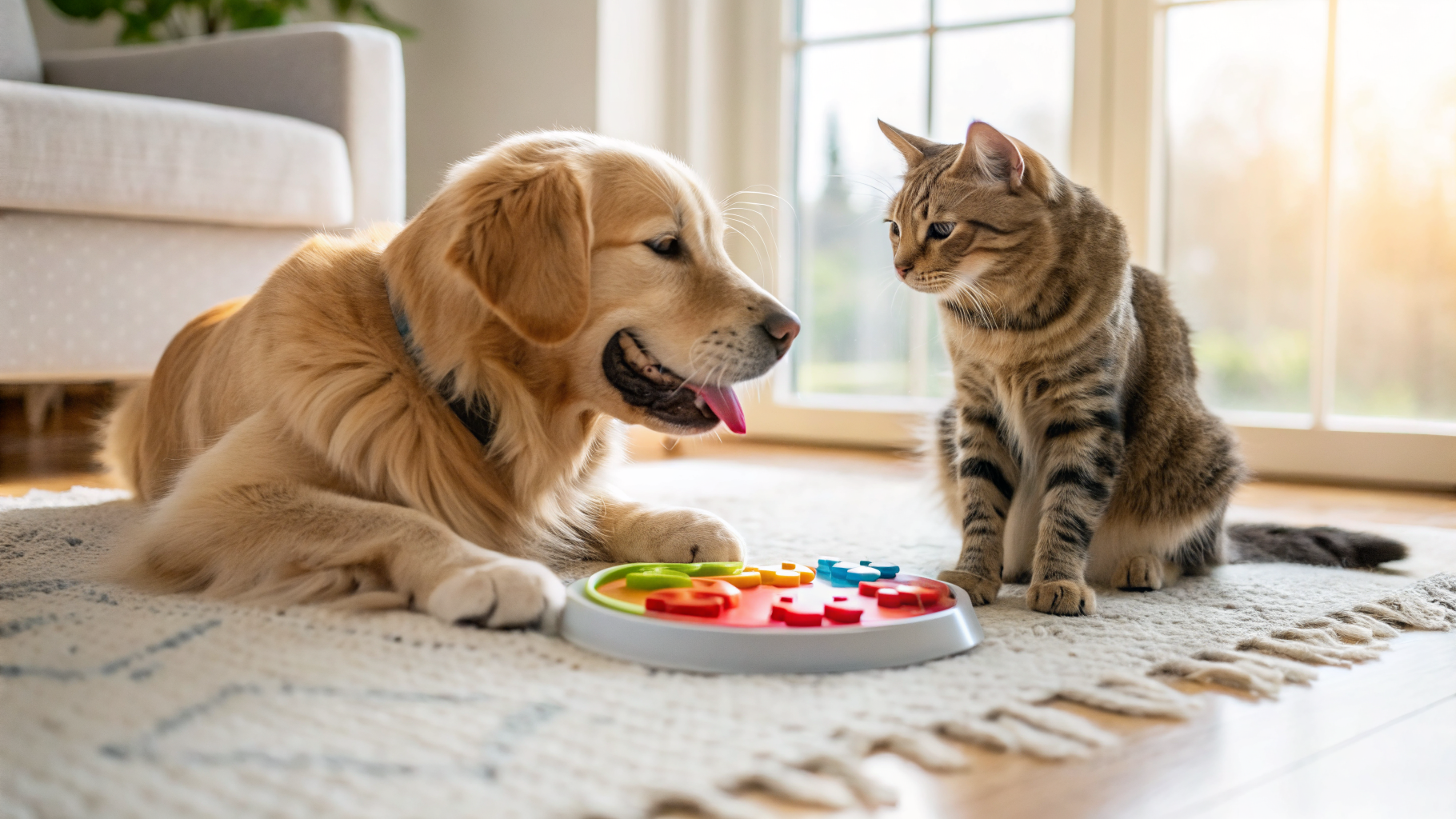
Barnaby, my overly enthusiastic shepherd mix, was pacing the living room like he was waiting for a bus. Mochi, my deeply unimpressed tortoiseshell cat, was lounging on the kitchen counter, slowly pushing a glass toward the edge just to watch me panic. It was a classic Tuesday evening. When you have a high-energy dog and a highly intelligent cat in the same house, you quickly realize that separate playtimes only do half the job. The real magic happens when you figure out how to tire them out together.
Getting a dog and a cat to play together isn’t just about cute photo opportunities—though I’ll admit, I live for those. Animal behaviorists call it “multispecies harmonization.” Basically, shared enrichment builds positive associations between your pets. If Barnaby and Mochi are busy having fun with a mutually enjoyable game, Barnaby becomes less of a nuisance to Mochi, and Mochi becomes less of a mysterious, fast-moving target to Barnaby. But you have to do it safely. Here are five enrichment games that bridge the species divide, keeping the peace and tiring out both brains and bodies.
The Ground Rules for Mixed-Species Play
Before we get to the fun stuff, we need to talk about safety. Throwing a pile of treats on the floor and letting nature take its course is a recipe for disaster. Dogs and cats have very different play styles and dietary needs, and things can escalate quickly if you aren’t paying attention.
Managing Resource Guarding
Dogs are often scavengers, and cats are often picky eaters. This means your dog might decide the cat’s treats are vastly superior to his own. Resource guarding is a real concern. If your dog is a food vacuum, you have to be strategic. Always use separate treat stations, or make sure the treats you scatter are safe and easily digestible for both species. And please, talk to your vet before letting your dog inhale handfuls of cat kibble—it won’t necessarily harm them, but it’s rich and can easily cause gastrointestinal upset.
Keeping Prey Drive in Check
When you’re playing games that involve moving objects, a dog’s prey drive can accidentally be triggered. Barnaby doesn’t want to eat Mochi, but when Mochi goes flying after a toy, Barnaby’s instinct is to chase whatever is moving fast. My partner Jake handles the formal dog training in our house, and his golden rule is to always maintain a “calm break” during high-arousal games. If the dog gets too loud or too focused on the cat rather than the toy, the game pauses.
5 Safe Enrichment Games for Dogs and Cats
1. The DIY Cardboard Box Apocalypse
You don’t need expensive plastic puzzle toys to make your pets happy. The upcycled enrichment trend is booming for a reason—pets love trash. Take a large, flattened Amazon box, an old towel, or crumpled newspaper, and sprinkle a mix of dry kibble and treats inside. Let them tear into it.
Both dogs and cats have a natural desire to forage and rip. Mochi loves the tactile sensation of shredding paper, while Barnaby is just thrilled he’s allowed to destroy something without getting yelled at. It’s highly stimulating and provides a safe outlet for destructive behaviors. Just be sure to remove any staples or plastic tape from the boxes first!
2. The Kibble Treasure Hunt (Scent Work)
Scent work is incredibly taxing on a pet’s brain. Cognitive fatigue—the kind that makes them sleep deeply for hours—comes much faster from sniffing than from running laps in the yard. Plus, both dogs and cats have incredibly developed olfactory systems.
To set this up, take a handful of dry kibble or small, safe treats and hide them around a room. Drape blankets over chairs, put a few pieces behind table legs, or tuck them under the edges of a rug. Release the hounds (and the felines). It’s fascinating to watch them work the room; Barnaby uses his nose like a vacuum, while Mochi is much more calculated, figuring out the physics of how to reach a treat lodged under a book.
3. The Indoor “Pet Picnic”
If your dog eats his meals in thirty seconds flat and then looks at you like you’ve starved him, slow feeding is your best friend. Skip the food bowls entirely for one meal a day and turn it into a shared grazing experience.
You can use a snuffle mat indoors or scatter their dry food directly across a clean, grassy patch in your yard. Mimicking natural foraging slows down fast eaters and forces them to use their noses and brains. Because the food is scattered widely, it drastically reduces the chance of a territorial standoff over a single food bowl. They’re both just peacefully grazing like two very different species of livestock.
4. Light Catchers and Shadow Games
This is a great option for physical exercise on a rainy day. Using a standard flashlight or a specialized light-catching toy, cast a beam onto the floor and walls. Both dogs and cats will enthusiastically chase the light, getting a solid cardiovascular workout without necessarily crashing into one another—mostly because the dog is usually trailing ten feet behind the cat.
Word of warning: Avoid traditional laser pointers. Many veterinary behaviorists warn that lasers cause immense frustration because the pet is chasing something they can never physically catch, which can lead to neurotic, obsessive behaviors. If you must use a laser, always end the session by pointing the beam directly onto a physical treat or a toy they can actually “catch” to provide closure.
5. Structured Wand and Feather Chasing
This is the ultimate cooperative game, but it requires space and supervision. Using a cat dancer or a feather wand, drag the toy along the ground in a large, open room. Dragging the toy mimics the movement of prey, activating the cat’s instinct to pounce and the dog’s instinct to chase.
The key here is space. If the room is too small, the dog will accidentally trample the cat in the excitement. Keep the toy moving in wide arcs so they are focused on the feather, not on each other. When Mochi catches the wand, I let her “kill” it for a few seconds while I redirect Barnaby with a sit command (okay, Jake redirects him, but I take credit) before starting the chase again.
Reading the Room
The most important part of mixed-species play is knowing when to stop. Watch your pets’ body language. If your cat’s ears pin back, her tail starts thrashing, or she begins growling, the game is over. Period. Cats communicate boundaries very clearly, and it’s our job to enforce them. Similarly, if your dog loses interest in the toy and starts obsessively trying to play rough with the cat, it’s time for a nap in their respective crates or separate rooms. Don’t push it. Five minutes of successful, harmonious play is infinitely better than twenty minutes that ends in a squabble.
Building a friendship between a dog and a cat takes time, patience, and a lot of trial and error. But providing them with structured, shared activities bridges that communication gap faster than almost anything else.
And if you ever need a reason to keep your pets mentally enriched indoors, look to wildlife conservation. Keeping our indoor cats—and our dogs when they’re out in the yard—engaged with structured activities satisfies their hunting instincts safely at home. A mentally exhausted pet is content to stay indoors, which directly protects native bird and small mammal populations in your local ecosystem. So, next time Barnaby is staring at you with boundless energy, grab an old cardboard box, hide some treats, and let the multispecies harmonization begin.