

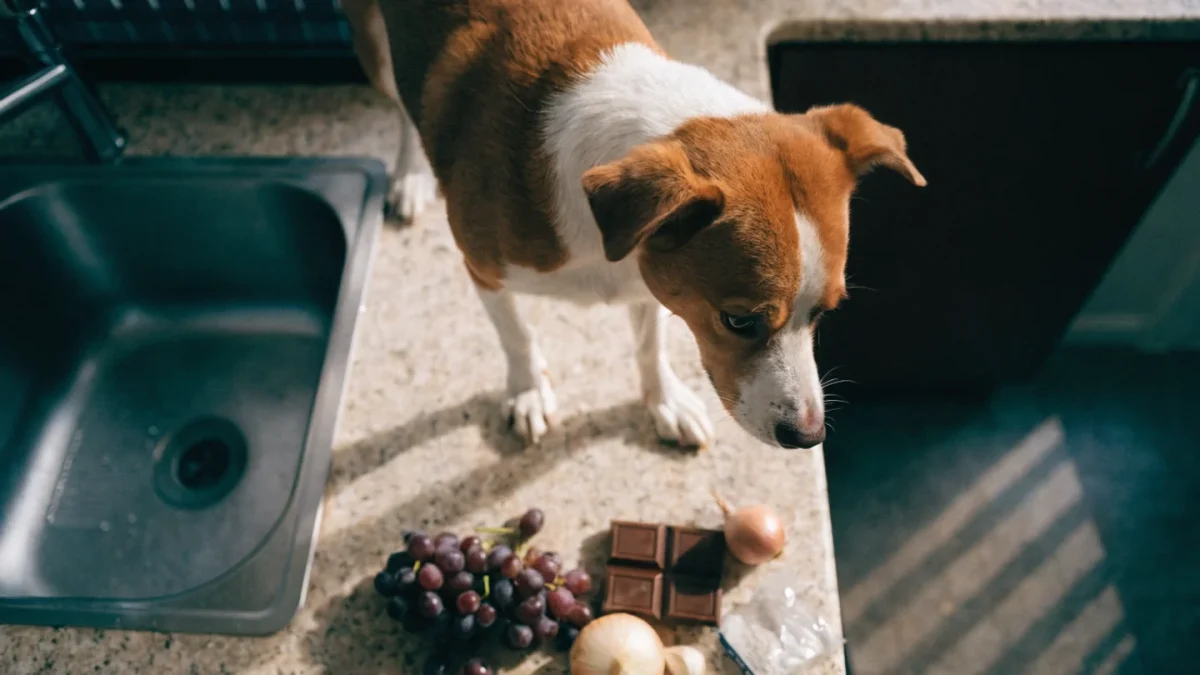
I've had two conversations I think about often when this topic comes up.
The first was a woman calling from a party, whispering into her phone because she didn't want to cause a scene. Her dog had gotten into a bowl of mixed nuts that included macadamia nuts. She didn't know how many. Could she just keep an eye on him at home?
I told her to leave the party.
The second was a man who'd been giving his dog a small piece of dark chocolate as a treat every evening for years. "He's always been fine," he said — he was calling because his neighbor had told him it was dangerous and he didn't believe her. I looked at his dog's weight (a large Labrador) and the amount he described (a small square), and explained that while he'd been lucky, the dose-dependent toxicity of chocolate meant this wasn't a safe habit, and that what's tolerated for years doesn't mean it's safe.
He stopped.
This list is the one I wish every pet owner had memorized, or at least bookmarked.
The Highest-Priority Toxins
Xylitol (and other sugar alcohols)
The most important one to know about in 2025 is xylitol, because it appears in so many products that seem harmless. Sugar-free gum is the most common source, but it also shows up in some peanut butters, sugar-free candy, certain baked goods, mouthwash, toothpaste, vitamins, and "natural" health products.
Xylitol causes a rapid and dangerous insulin release in dogs, leading to hypoglycemia — potentially life-threatening low blood sugar. It can also cause acute liver failure. Onset can be within 30 minutes or delayed by hours depending on the product and amount.
What to do: If you know or strongly suspect your dog ingested xylitol, don't wait for symptoms. Call your vet or an animal poison control line immediately. This is a genuine emergency.
Other sugar alcohols behave very differently from xylitol, and it's worth being clear about that rather than lumping them together. Erythritol in particular has a strong safety record — long-term feeding studies found it well tolerated in dogs at doses far higher than a pet would realistically encounter, with none of the insulin release or liver injury xylitol causes. Sorbitol and maltitol can cause loose stool or gas in larger amounts, but neither carries xylitol's acute danger.
Cats may be affected too, though there's less clinical data. Don't assume safety.
Grapes and Raisins
Toxic to dogs, mechanism still incompletely understood, safe dose not established. This means there is no amount I can tell you is safe. Some dogs have been affected by just a few grapes; others have eaten more without apparent ill effects. Given that inconsistency, the only rational approach is no grapes, no raisins, no grape juice, no products containing raisin extract or concentrated grape.
Zante currants are also implicated — worth flagging that these are actually a type of dried grape, not a true currant, and they share the same toxic mechanism as grapes and raisins. True currants, from the unrelated Ribes family of berries, aren't established as causing this same kidney injury, though given the naming confusion, I'd rather owners just treat "currant" as a word to be cautious around entirely.
The toxicity appears to primarily affect the kidneys — acute kidney injury is the main concern. Early signs include vomiting and lethargy; late signs of kidney failure can appear within 24 to 72 hours.
If your dog eats grapes or raisins: call your vet immediately, even if the dog seems fine. Don't wait. Early intervention (inducing vomiting, activated charcoal, IV fluids to protect kidney function) is far more effective than treating established kidney injury.
Onions, Garlic, Leeks, Chives (Allium Family)
Toxic to both dogs and cats — cats more sensitive than dogs. All forms are dangerous: raw, cooked, powdered, and dehydrated. The powdered/dehydrated forms are more concentrated per gram.
The toxic compounds are thiosulphates and organosulfides, which damage red blood cells and cause hemolytic anemia. The damage can be cumulative — a dog who eats small amounts in food regularly may develop anemia over weeks without a single large exposure.
Signs: vomiting, weakness, pale gums, rapid breathing, dark urine. These can take several days to appear after exposure.
The practical implication: seasoned food cooked with garlic or onion is not safe to share with pets. "Just a little" is the kind of reasoning that causes cumulative toxicity over months.
Chocolate
Contains theobromine (primarily) and caffeine, both methylxanthines that are metabolized far more slowly by dogs than humans. Dark chocolate and baking chocolate have the highest theobromine concentration; milk chocolate has less; white chocolate has very little theobromine but other problems.
Toxic dose is weight-dependent — a 5-lb dog is at far greater risk from a given amount than a 70-lb dog. Signs include vomiting, diarrhea, agitation, racing heart, tremors, and in severe cases seizures.
If this happens, call your vet with the type of chocolate (dark vs. milk vs. baker's), the approximate amount, and your dog's weight. These three pieces of information let your vet calculate the risk and advise accordingly. Toxicity calculators for chocolate are widely available for veterinary use.
Cats are less commonly affected because they tend not to seek out sweet foods, but they're not immune to theobromine toxicity.
Important Toxins With More Nuanced Risk
Macadamia Nuts
Cause weakness, vomiting, tremors, and hyperthermia in dogs — the mechanism genuinely isn't understood yet, and veterinary toxicology references are upfront about that gap. Generally not fatal, but the effect can be pronounced and distressing. Symptoms typically appear within 12 hours and resolve within 48 hours, but that window is unpleasant. Don't offer them.
Alcohol
Dogs and cats are much more sensitive to alcohol than humans — their liver enzymes metabolize it slowly and their lower body weight means the same absolute amount has a greater effect. Even small amounts — a shared beer, wine spilled on the floor, raw yeast dough — can cause significant intoxication and potentially respiratory depression or death.
Raw bread dough is a specific risk here: the yeast ferments in the warm stomach environment, producing ethanol and carbon dioxide. The gas expansion is also a serious problem. Keep rising dough well out of reach.
Caffeine
Found in coffee, tea, energy drinks, and some medications. Similar to chocolate in mechanism — methylxanthine toxicity — but without the theobromine. Most dogs won't actively seek out coffee, but open containers left within reach are a risk. Cats may occasionally show more curiosity.
Avocado
The fruit contains persin — concentrated in the leaves, skin, and pit, lower in the flesh. Ripe flesh in small amounts may be tolerable for dogs; some veterinary nutritionists consider it lower risk. The pit is always dangerous regardless of persin — it's a serious obstruction risk.
Cats appear more sensitive to persin than dogs. I'd rather clients avoid avocado entirely for both species and reach for safer alternatives.
Raw Bread Yeast Dough
Covered partially under alcohol. Two hazards: the ethanol produced by fermentation, and the gas expansion in the stomach. The latter can cause severe gastric distension that, in large amounts, may require emergency intervention.
Certain Bones
Cooked bones — especially poultry bones — are brittle and splinter into sharp fragments that can lacerate the GI tract. Not a dietary toxin in the classical sense, but a physical hazard severe enough to include here. Cooked bones are categorically different from raw recreational bones, which have their own risk-benefit profile but are not the same hazard.
Nutmeg
Found in baked goods, pumpkin pie filling, eggnog. Myristicin in nutmeg is toxic to dogs and cats in significant amounts — causing hallucinations, elevated heart rate, seizures. Small incidental amounts in a shared holiday food may not cause obvious problems — poison control references generally agree that the small quantities used in cooking are unlikely to cause serious toxicity — but intentional feeding or larger accidental exposures are an emergency.
Coffee Grounds and Tea Bags
These concentrate caffeine in a form that dogs sometimes find appealing to chew. Significantly higher caffeine per gram than liquid coffee or tea.
What to Do in an Emergency
- Stay calm and call your vet, emergency vet, or animal poison control line
- Have available: the food involved, estimated amount, your pet's weight, time since ingestion
- Don't induce vomiting unless specifically instructed by your vet — for some toxins, inducing vomiting makes things worse
- Watch for symptoms but don't wait for them to appear before calling
The complete guide to safe and toxic foods for pets covers the full picture, including the many foods that are safe in appropriate amounts. And vegetables that are safe for dogs and cats provides good options for when your pet wants to share what you're eating.
Frequently Asked Questions
My dog ate something toxic and seems totally fine. Do I still need to call a vet?
Yes, for the high-priority toxins — especially grapes, xylitol, and large amounts of alliums or chocolate. Many serious toxicities don't produce obvious symptoms until organ damage is underway. With grapes, a dog can seem completely normal for 24 hours before kidney failure becomes apparent. Early intervention is dramatically more effective than late intervention. "He seems fine" is not a reason to wait.
Can cats eat chocolate?
Cats are susceptible to theobromine toxicity but are generally less likely to seek out chocolate because they can't perceive sweetness. A cat that accidentally eats chocolate is a concern, particularly dark chocolate. Precise per-kilogram comparisons between cats and dogs are genuinely hard to pin down — there's simply less feline-specific research, since cats rarely seek out chocolate the way dogs do. What is well established is that cats, like dogs, metabolize methylxanthines slowly, so I treat any chocolate ingestion in a cat as seriously as I would in a dog of the same weight rather than assuming a wider safety margin. If your cat ate chocolate, call your vet.
Is there a difference between how quickly different toxins affect pets?
Yes, significantly. Xylitol can cause symptoms within 30 minutes to a few hours. Grape/raisin kidney toxicity may not be apparent for 24 to 72 hours. Allium-caused anemia builds over days to weeks of exposure. Chocolate toxicity is typically apparent within 6 to 12 hours. This is why "waiting to see" is risky — the absence of symptoms is not the same as safety.
What if I don't know exactly what or how much my pet ate?
Give your best estimate and mention your uncertainty — "possibly 8 to 15 grapes, I'm not sure" is useful information. Vets and poison control lines work with ranges and worst-case estimates all the time. Don't let uncertainty about the exact amount stop you from calling. More information is always better, but partial information is much better than none.