
I don't separate tricks from training in my mind. Everything I teach a dog is a behavior — whether it's "sit" or "back up" or "put your toys away." The only difference is that some behaviors are more functionally useful and some are more entertaining.
Tricks matter for a few reasons people don't always anticipate. They keep training interesting for both dog and handler, which means sessions happen more often. They build the dog's confidence in the learning process — a dog that knows twenty tricks understands that trying new things leads to rewards. And several "tricks" have real practical applications: a dog that will back up, go around, or stand on cue is easier to manage in tight spaces or vet situations.
How to Think About Trick Progression
Don't start with "I want to teach my dog to jump through a hula hoop." Start with "what behaviors does my dog already know, and what can I build from there?"
A dog that knows sit can learn wave (raise paw while sitting) in two sessions. A dog that knows down can learn play dead or roll over in a week. A dog that knows target training can learn to spin, weave through legs, and close cupboards.
Build the easy tricks first. They're foundational. They build the dog's understanding of the shaping game — that trying things earns rewards — and that understanding transfers to every harder trick you teach.
Easy starter tricks like shake and spin are exactly where most dogs should begin.
Building Your Foundation Tricks
Sit, down, and stand — the holy trinity. Everything interesting branches off these. If your dog has a reliable verbal stand, they can learn bow, tilt, and backing up easily.
Paw targeting — teaching a dog to tap a specific target with their paw opens spin platforms, light switches, and object interaction tricks. Related to nose targeting but uses a different body part.
Stay with duration and position changes — a dog that can hold position while you move is a dog that can hold a handstand against a wall, balance things on their nose, or stay in a posed position for photos.
Tricks That Build Off Sit
Wave: Ask for a sit, then hold a treat at nose height just out of reach. The dog will likely paw for it. Click the paw raise. Repeat, adding more paw height over sessions. Name it "wave" once it's reliable.
Handshake: Similar to wave, but you present your hand for the dog to put their paw into. Many dogs learn this from wave by moving the treat to a lower position.
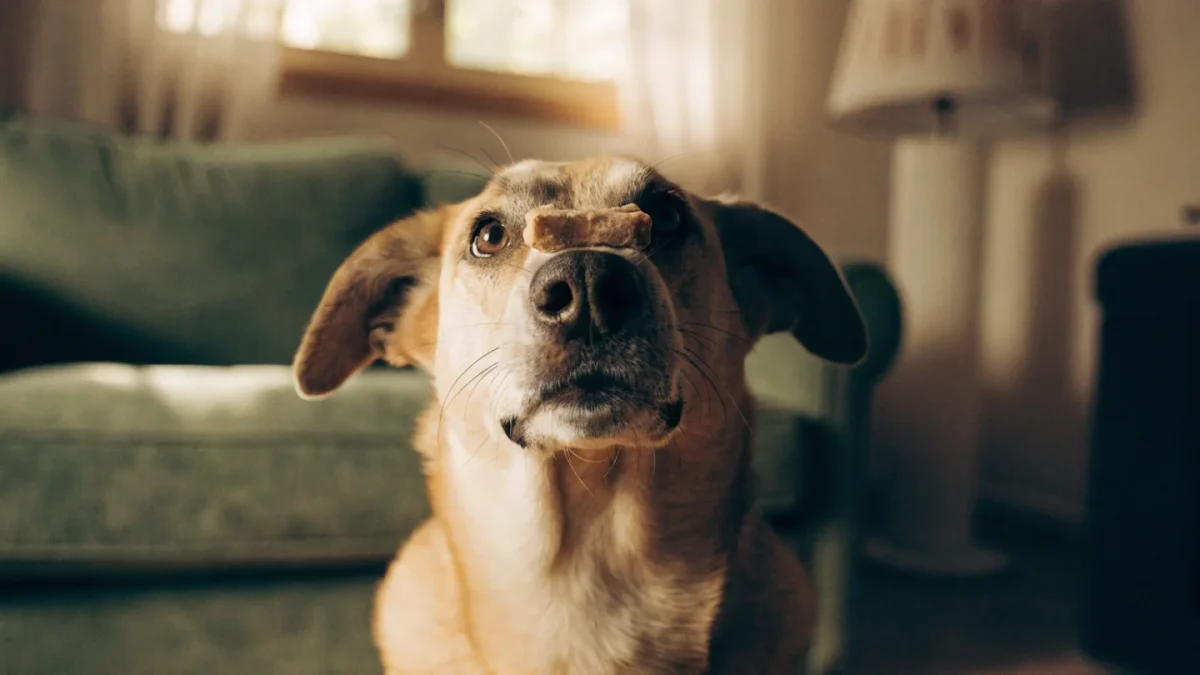
Balance on nose: Ask for a sit-stay with solid duration. Place a treat on the dog's nose. Mark and release with "get it." This takes patience — start with short durations and don't use food the dog will immediately flick off. Dry treats work better.
Paw to face (cover): Dab a small piece of tape or a sticky note on your dog's nose. They'll paw at it. Click the paw-to-face motion. Remove the tape, ask again. Most dogs generalize this to a cue quickly.
Tricks That Build Off Down
Play dead: From a down, lure the dog onto their side and reward. Extend duration. Name it "bang" or "dead" with a finger-gun gesture if you want the full effect.
Roll over: From a down, lure the dog to continue from their side all the way over. Use a circular motion with your hand. This one takes several sessions for most dogs — it requires confidence to roll fully.
Crawl: From a down, lure forward motion while the dog stays low. If the dog stands up, criteria too high — lure in smaller increments. Name it "army crawl" or just "crawl."
Tricks That Build Off Targeting
Shaping to teach complex behaviors is what makes these possible without luring every step.
Spin: Ask for a nose touch to your hand, then move your hand in a small circle until the dog has completed a full revolution. Click at the end of the full spin. Fade the hand target over sessions.
Weave through legs: With your feet in a wide stance, use a hand target to guide the dog through your legs in a figure-eight. Most dogs catch on within 2-3 sessions once nose targeting is solid.
Object interactions: Teach the dog to push a ball, close a door or drawer, pick up specific toys by name, or put toys in a basket. All start with nose or paw targeting to the object.
When to Name a Trick
Name a trick only after it's reliable — meaning your dog is doing it correctly 8 out of 10 times with the physical lure or target. Adding a verbal cue too early means the cue becomes meaningless.
Once the behavior is solid, say the cue word just before the signal. Over 20-30 reps, fade the physical prompt. Eventually the word alone should work.
Keeping It Fresh
Rotate which tricks you practice. Dogs get bored of grinding the same behavior over and over. A session that runs through six different tricks at 5 reps each is more engaging than 30 reps of one trick.
Also — combine tricks. A dog that can sit, wave, spin, and play dead can do a "routine." Chain them with a consistent sequence and you essentially have a 30-second performance that requires the dog to maintain focus through multiple transitions. That's harder and more stimulating than any single trick alone.
Your dog is more capable than you probably think. Start easy, get creative, and see where the repertoire goes.